
Two Philosophies of the American Road
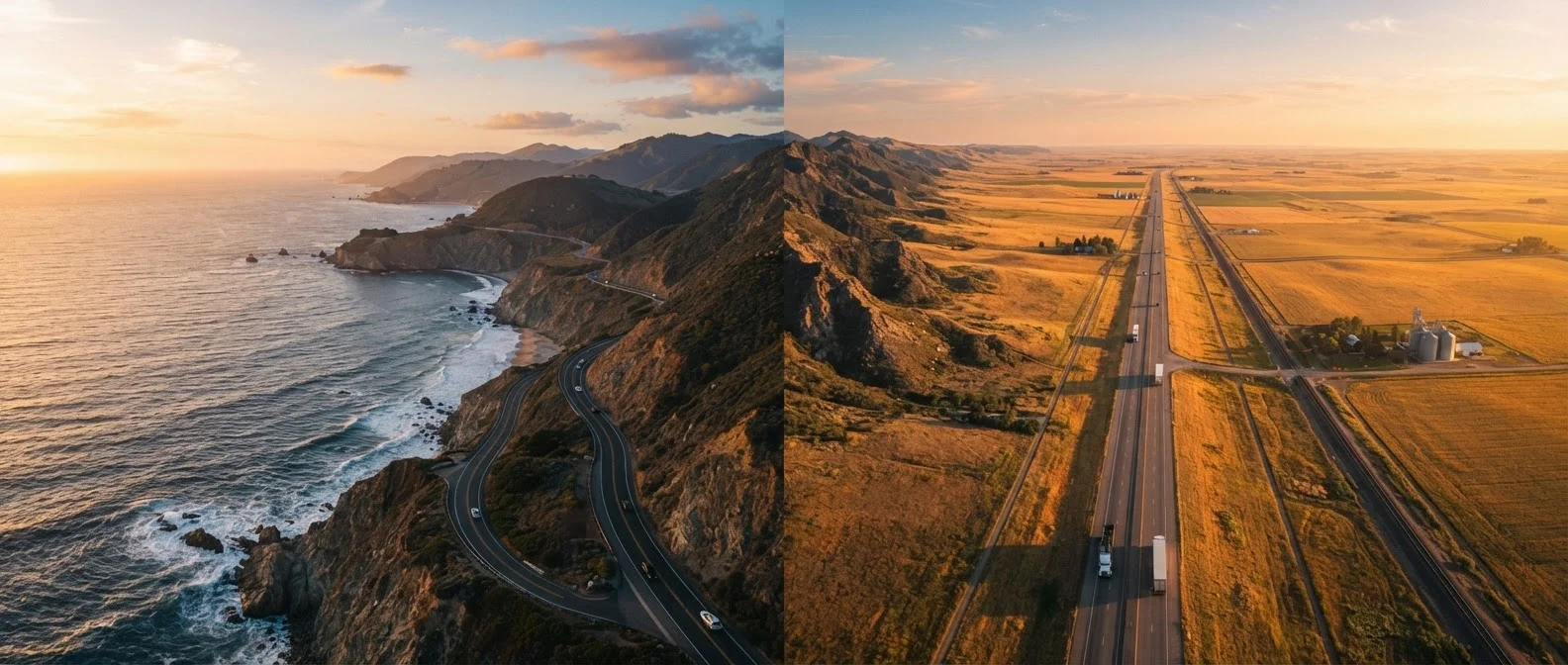
Every American road trip begins with the same fundamental question: do you follow the edge of the country, or do you drive through its heart? Coastal corridors - Pacific Coast Highway, the Atlantic's US-1, the Gulf Coast's US-90 - run along America's dramatic margins, where land meets water and the scenery arrives in cinematic frames. Interior routes - Route 66, the Lincoln Highway, US-50 (sometimes called "The Loneliest Road") - cut straight through the continent's vast middle, where the land itself becomes the event.
These aren't just geographic choices. They reflect two distinct road trip philosophies: the coastal drive that puts spectacle at the windshield, and the inland route that rewards patience, curiosity, and a willingness to stop in towns that don't appear in magazine spreads. Understanding the planning layers behind each type can help you get the experience you're actually after.
The Case for Coastal Drives
Coastal highways deliver immediate, undeniable payoff. The Pacific Coast Highway - particularly California's Highway 1 south of San Francisco - is among the most photographed roads in the world, and for good reason: the Big Sur cliffs drop hundreds of feet into the Pacific, fog rolls in dramatic waves, and pullouts appear every few miles inviting you to just stop and stare. The less-driven northern segments of Highway 1 are equally stunning and far quieter.
The Atlantic side operates differently. US-1 through coastal Maine threads fishing villages, lighthouses, and rocky coves with an almost storybook density. The Overseas Highway through the Florida Keys - a road that is part causeway, part bridge, part engineering marvel - delivers a completely singular experience, unlike anything else in the continental United States.
The trade-offs are real, however. Coastal routes carry heavier summer traffic, higher accommodation prices in peak season, and in some stretches - Big Sur during mudslide recovery, for instance - closures with little warning. Fuel and food are plentiful, but solitude is scarce.
| Coastal Drives | Interior Drives | |
|---|---|---|
| Signature scenery | Cliffs, ocean, beaches, fishing harbors | Plains, canyons, desert, farmland |
| Traffic and crowds | Heavy in peak season, especially summer | Lighter year-round, busier at major landmarks |
| Fuel and services | Abundant; rarely more than 20 miles apart | Sparse in desert and rural stretches |
| Cultural depth | Tourist-oriented towns, resort culture | Historic route towns, vernacular Americana |
| Seasonal risk | Slides, fog, hurricane season on Gulf | Extreme heat in summer, ice in winter plains |
| Lodging density | High; advance booking still recommended | Book ahead in small towns and remote areas |
| Sense of discovery | Familiar landmarks; curated experience | Frequent surprise; rewards curiosity |
The Case for Interior Drives
Route 66 isn't just a highway - it's a cultural artifact. Stretching roughly 2,400 miles from Chicago to Santa Monica, the original alignment passes through eight states and a century's worth of American vernacular architecture: neon-lit diners, ghost motels, muraled water towers, and trading posts that have outlasted the interstate bypasses meant to render them obsolete. The road's communities didn't just survive the highway era - they absorbed it, and many are now experiencing a thoughtful renaissance as travelers reconnect with the route's original purpose: movement as experience, not just transit.
Further north, the Lincoln Highway - America's first coast-to-coast road, established in 1913 - is a looser concept than a single pavement strip, but following its historic alignment from Times Square to Lincoln Park in San Francisco reveals layers of early 20th-century Americana that no coastal drive can replicate. Paper maps and regional guide books shine on these routes, precisely because the journey rewards wandering off the obvious path.
Interior routes demand more planning around fuel (some desert stretches run 50-plus miles between stations) and lodging (booking ahead matters in small towns), but they return something coastal drives rarely offer: the genuine sensation of being somewhere most travelers skip entirely.
Plan Fuel Stops on Interior Desert Runs
Several interior corridors - particularly stretches of US-50 through Nevada and Route 66 through the Mojave - have fuel gaps exceeding 50 miles. Check current station availability before departure, and carry a small approved fuel container if your tank runs under 15 gallons. This is one of the most common sources of preventable roadside emergencies on western interior routes.
Comparing the Routes Across Key Factors
Choosing between these two driving philosophies comes down to four variables: scenery preference, logistics tolerance, cultural appetite, and - critically - timing. Seasonal windows shift the calculus considerably on both sides of the debate: coastal fog and slides can dampen a Pacific drive in winter, while interior desert routes become genuinely dangerous in July heat.
Interior routes through the southern tier - crossing landscapes like the Delta and the Bayou - carry cultural complexity that rewards travelers willing to look past surface-level impressions. The same applies to Appalachian interior corridors: Appalachia's regional identity goes far deeper than scenic foliage. For a closer look at how to balance scenic ambition with practical progress, see this guide to scenic roads versus highway efficiency.
2,448 mi
Length of historic Route 66 alignment
Route 66 originally ran from Chicago, Illinois to Santa Monica, California, passing through eight states.
~656 mi
Length of California's Highway 1
Highway 1 runs along California's Pacific Coast, with Big Sur representing its most celebrated and visited segment.
150+
National Scenic Byways designated in the U.S.
The Federal Highway Administration's National Scenic Byways Program recognizes roads for scenic, historic, cultural, natural, recreational, or archaeological qualities.
Before You Commit to Either Route
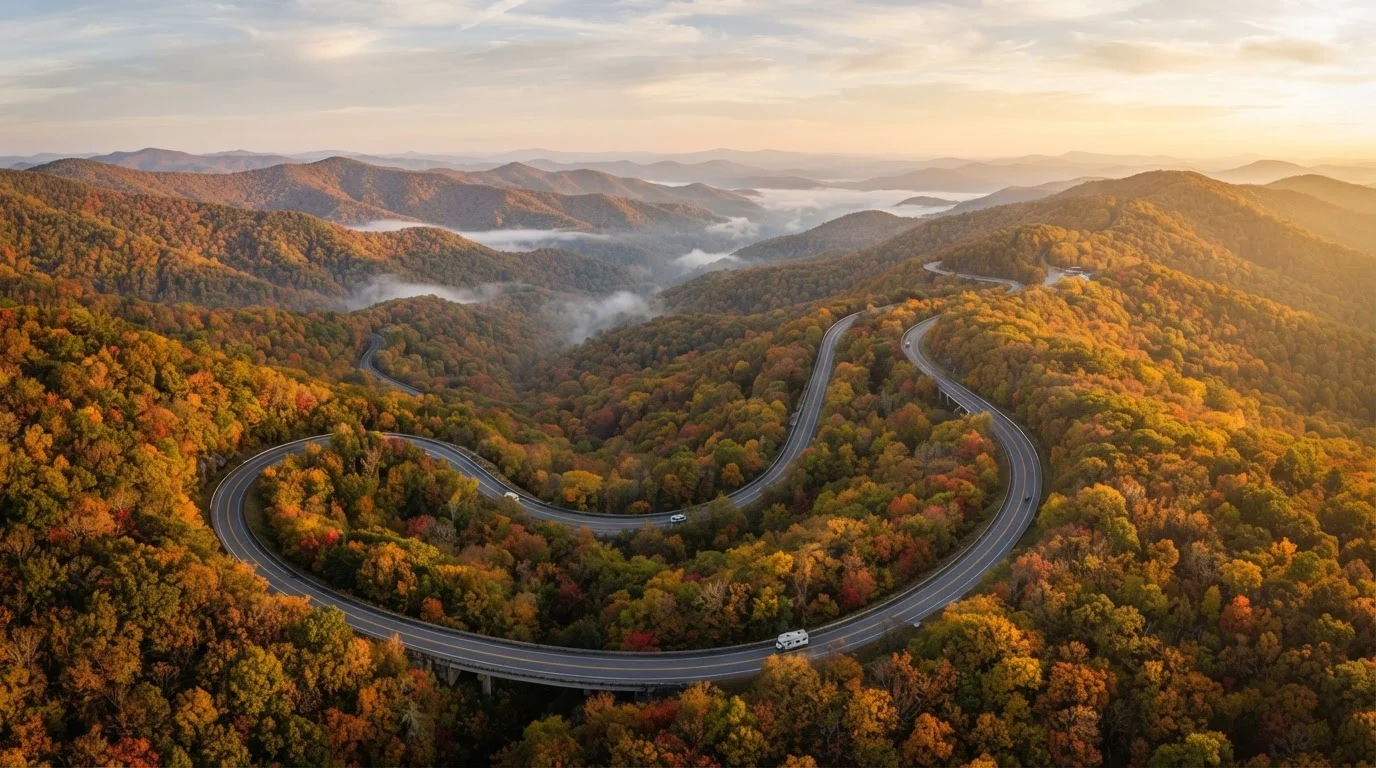
Neither category is monolithic. The Blue Ridge Parkway is technically an interior road but feels as visually saturated as any coastal drive - and it compares fascinatingly with Skyline Drive in the Appalachian chain. The Alaska Highway is neither coastal nor conventionally interior - it's a category of its own that rewards a very specific kind of traveler. America's National Scenic Byways Program covers routes in both categories, and its designation criteria are worth understanding before building your itinerary around a label.
What every serious road tripper eventually learns: the route is the frame, not the painting. Before committing, use a pre-trip readiness checklist to account for permit requirements, fuel gaps, seasonal closures, and road conditions specific to your chosen corridor. The open road rewards preparation - and then rewards you again for being present enough to leave some of that plan behind.