
Where the Program Came From
The National Scenic Byways Program didn't spring from a romantic impulse alone - it was written into transportation law. The Intermodal Surface Transportation Efficiency Act of 1991 (ISTEA, pronounced "ice-tea" by highway planners) directed the U.S. Department of Transportation to identify and celebrate roads with exceptional character. The idea was straightforward: America had poured decades of investment into the interstate system for speed and commerce, but thousands of older, slower roads held irreplaceable cultural and natural value. The program created a formal mechanism to recognize and help preserve them.
The Federal Highway Administration administers the program, working with state departments of transportation, tribal governments, and local planning bodies to evaluate nominations. Routes don't self-certify - they go through a documented review process before the designation sticks.
Historic highway markers often appear along these corridors, giving drivers another layer of context about what made a stretch of road historically significant in the first place.
The Six Intrinsic Qualities - What Reviewers Actually Look For
The heart of the designation process is a structured evaluation against six intrinsic quality categories. A route doesn't need to score in all six - even one is enough for the Scenic Byway tier - but the qualities must be genuinely outstanding, not merely present.
- Scenic: Visually striking landscapes, vistas, or natural features visible from the road corridor.
- Natural: Intact ecosystems, geological formations, or wildlife habitat of notable significance.
- Historic: Sites, structures, or landscapes connected to events or eras of documented historical importance.
- Cultural: Evidence of living traditions, architecture, arts, or community practices that reflect a regional or ethnic identity.
- Archaeological: Prehistoric or early-historic sites and artifacts accessible or visible from the route.
- Recreational: Proximity to opportunities for outdoor activity - hiking, paddling, cycling - that the road itself helps access.
The All-American Road designation layers on an additional test: the route must be a destination in its own right. Drivers, the FHWA reasons, should be traveling to experience that specific corridor - not merely passing through it on the way somewhere else.
1991
Year the program was created by Congress
The National Scenic Byways Program was established through the Intermodal Surface Transportation Efficiency Act, signed into law that year.
~150
Federally recognized scenic byways and All-American Roads
The Federal Highway Administration maintains the current official list, which has evolved since the program's founding as routes are added or lapse.
6
Intrinsic quality categories used in designation review
Routes are evaluated against scenic, natural, historic, cultural, archaeological, and recreational criteria by the FHWA.
What the Label Does (and Doesn't) Do
Earning the designation opens doors but doesn't guarantee transformation. Recognized routes become eligible for certain federal grants - historically through the Transportation Enhancements program and successor funding streams - that can support wayfinding signage, interpretive pullouts, and visitor center development. That eligibility matters enormously in rural corridors where local tax bases are thin.
What the label doesn't do: it doesn't change speed limits, mandate road improvements, or require any specific level of visitor infrastructure. A byway can be officially designated and still have inconsistent cell coverage, limited fuel stops, and unpaved shoulders. Knowing this helps travelers plan realistically.
Check Conditions Before You Drive
Designation signals a route's character, not its current drivability. Seasonal closures, construction, and weather events affect even celebrated byways. Check with the relevant state DOT and consult the FHWA's byway pages for route-specific advisories before departure. Seasonal timing can make the difference between a transcendent drive and a frustrating one.
For drivers choosing between corridor types, the distinction between a scenic byway and a generic state highway is less about pavement and more about intentionality. A designated route has been vetted - someone documented why it's worth your time. That's not nothing. Whether the road fits your trip is a separate question, and one worth thinking through before you commit. Weighing scenic roads against highway efficiency is a practical exercise every road-tripper benefits from doing before departure.
State Programs, Tribal Routes, and the Layered Recognition Landscape
Federal designation is the most visible tier, but it sits atop a layered system. Nearly every state runs its own scenic byway program with independently defined criteria. Some states are rigorous; others apply the label more broadly. A road might carry a state scenic byway sign without ever having been evaluated at the federal level - and conversely, some federally recognized routes pass through states with minimal complementary programming.
Tribal nations have also played an increasingly active role in the nomination process. Several routes crossing or adjacent to tribal lands have received recognition that acknowledges Indigenous cultural landscapes and living traditions, adding a dimension of meaning that pure scenic photography could never capture.
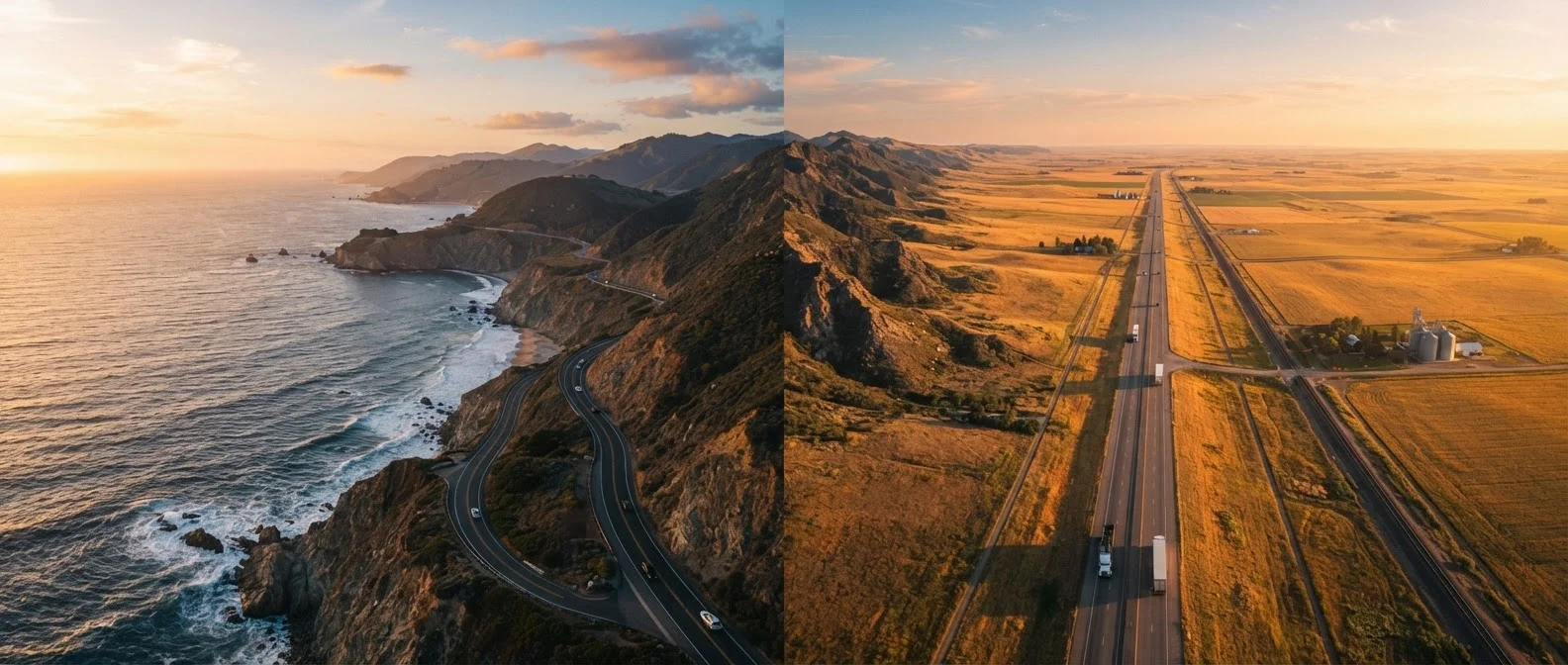
For travelers who want to go deeper than the windshield, understanding these layers of recognition adds texture to the experience. Choosing between coastal and interior drives often leads naturally into scenic byway territory - both coasts and the continental interior host densely designated corridors worth exploring. And once you've committed to a route, a pre-trip readiness checklist keeps logistics from undermining the experience.