
Two Philosophies, One Open Road
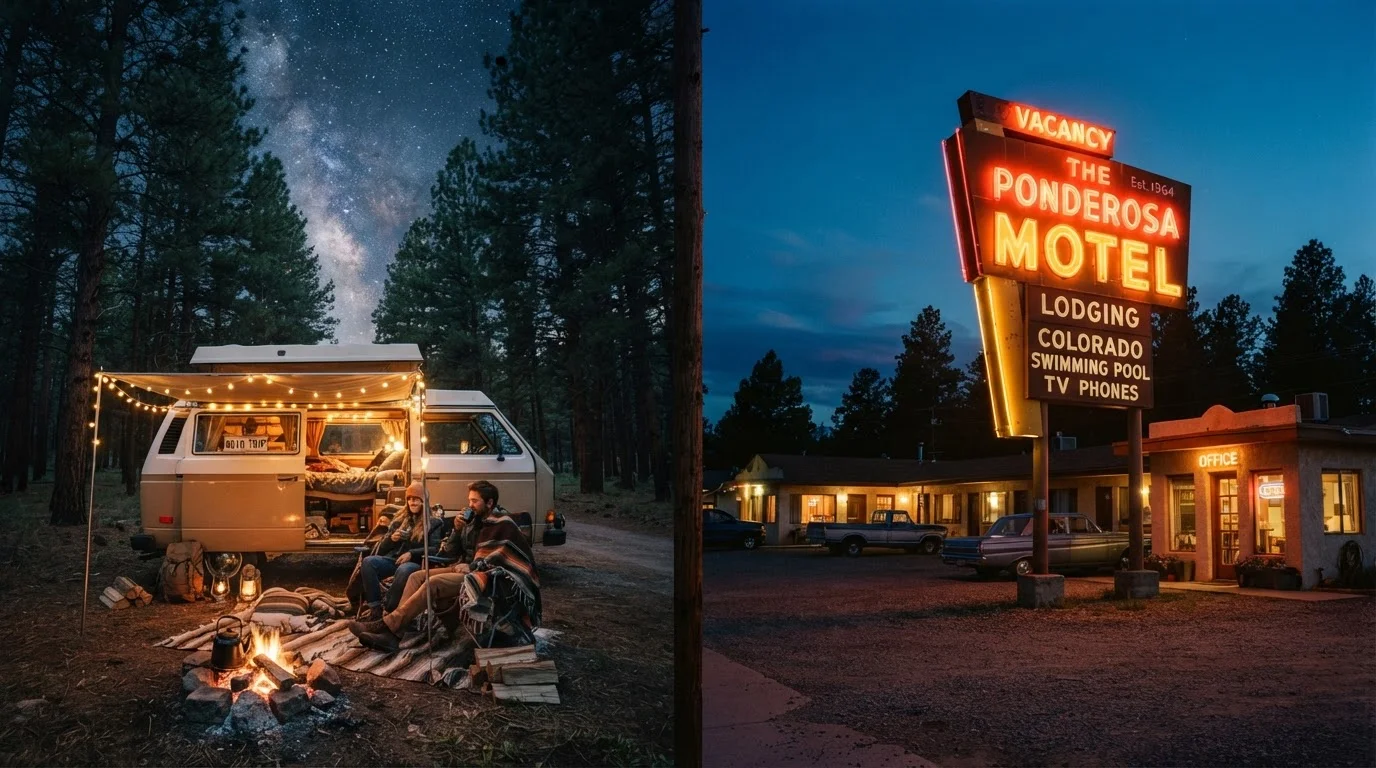
Every road tripper eventually faces the question as the sun starts to sink: pull off into the trees and sleep under the sky, or follow the neon glow of a motel sign into a parking lot? It sounds like logistics, but it's actually a statement of values. As explored in The Road Trip as a Way of Life, the choices travelers make about how they rest reveal what they're actually seeking from the journey itself.
Car camping - sleeping in, on, or directly beside your vehicle at a designated campsite or legally permitted dispersed location - pulls you deeper into the landscape. Motel hopping, the time-honored tradition of booking independent or chain roadside rooms night by night, keeps you threaded through the social fabric of American highway culture. Both are legitimate, storied, and genuinely satisfying. The question is which one fits the trip you're building.
| Criterion | Car Camping | Motel Hopping |
|---|---|---|
| Nightly cost (ongoing) | Low to moderate (after gear) | Moderate to high (varies by region) |
| Setup effort | Moderate - site selection, setup | Minimal - check in and done |
| Connection to landscape | High - immersive environment | Low - insulated from elements |
| Flexibility of timing | High on public land; limited in parks | High - stop when tired |
| Accessibility | Requires physical comfort on ground | Broadly accessible |
| Cultural experience | Nature-centered solitude | Roadside Americana, local interaction |
| Regulatory complexity | Must verify land-use rules | No special permissions needed |
The Case for Car Camping: Freedom With Edges
Car camping's greatest gift is porousness - the boundary between you and the environment stays thin all night. You wake up inside the landscape. Dawn light through pine canopy, cold air off a desert plateau, the sound of a creek ten feet from your tailgate: these aren't incidental, they're the point. For travelers who see the route and its terrain as the destination, this intimacy is irreplaceable.
The trade-offs are real. Responsible car camping demands planning: knowing whether dispersed camping is permitted on a given stretch of public land, checking fire restrictions, understanding Leave No Trace principles, and ensuring your vehicle setup handles temperature swings safely. Myths About Road Trip Freedom addresses exactly this tension - the open road has rules, and the most experienced campers know them cold.
Weather, physical comfort, and safety are genuine considerations. Car camping in summer heat or winter cold requires appropriate gear and sound judgment, not improvisation. Always verify local regulations with land management agencies before settling in for the night.
78%
Car campers who camp from their vehicle
According to the Outdoor Foundation's Outdoor Participation Trends report, the majority of car campers rely on their vehicle as a central part of their sleeping setup rather than hiking to remote sites.
16,000+
Independent motels still operating in the US
Industry estimates suggest tens of thousands of independently owned roadside motels continue to operate across America, preserving the classic motor-court experience.
The Case for Motel Hopping: Culture on the Nightstand
There's a reason the roadside motel became one of America's most iconic cultural institutions. From the motor courts of the 1930s to the independent two-story strip motels that still line stretches of old US highways, these buildings are living history. Checking in for the night isn't just practical - it connects you to generations of travelers who made the same turn off the same highway.
Motel hopping rewards spontaneity of a different kind. You can push miles later into the evening, then choose your stop based on what catches your eye rather than where the trees thin out. You wake up with a shower, fresh coffee from the office counter, and often a conversation with a desk clerk who knows exactly which local diner opens earliest. That human texture is part of what Rituals of the Road celebrates - the small, repeated encounters that give highway travel its distinct social character.
Accessibility is a meaningful advantage. Motel hopping doesn't require gear investment, physical fitness for ground sleeping, or navigating land-use rules. It's the more inclusive default for mixed groups, older travelers, or anyone who simply wants to arrive somewhere and rest without setup overhead.
Before You Book or Park for the Night
Regulations for dispersed car camping on public lands vary significantly by state, land management agency, and season. Always check with the relevant Bureau of Land Management office, National Forest ranger district, or state agency before stopping. Similarly, motel conditions, pricing, and availability can shift - especially in peak travel seasons or remote corridors. Confirming details in advance is always worthwhile.
Choosing Your Philosophy - or Blending Both
The sharpest road trippers often treat these two modes as a toolkit rather than a binary. A two-week Western loop might mean car camping through the canyon country of Utah, then booking a motel for two nights in a town worth exploring on foot, then back to a campsite at the edge of a national forest. This rhythm - explored further in Camping vs. Motels on a Road Trip - lets terrain and mood drive the decision rather than ideology.
If you're still building your road trip identity, Road Trip Planning offers practical frameworks for shaping an itinerary around how you actually want to feel each morning. And if you're curious how sleeping philosophies fit into the broader arc of American highway culture, The Evolution of Road Trip Culture traces the full story from Route 66 motor courts to today's van life communities - proof that how we sleep on the road has always said something about who we are on it.