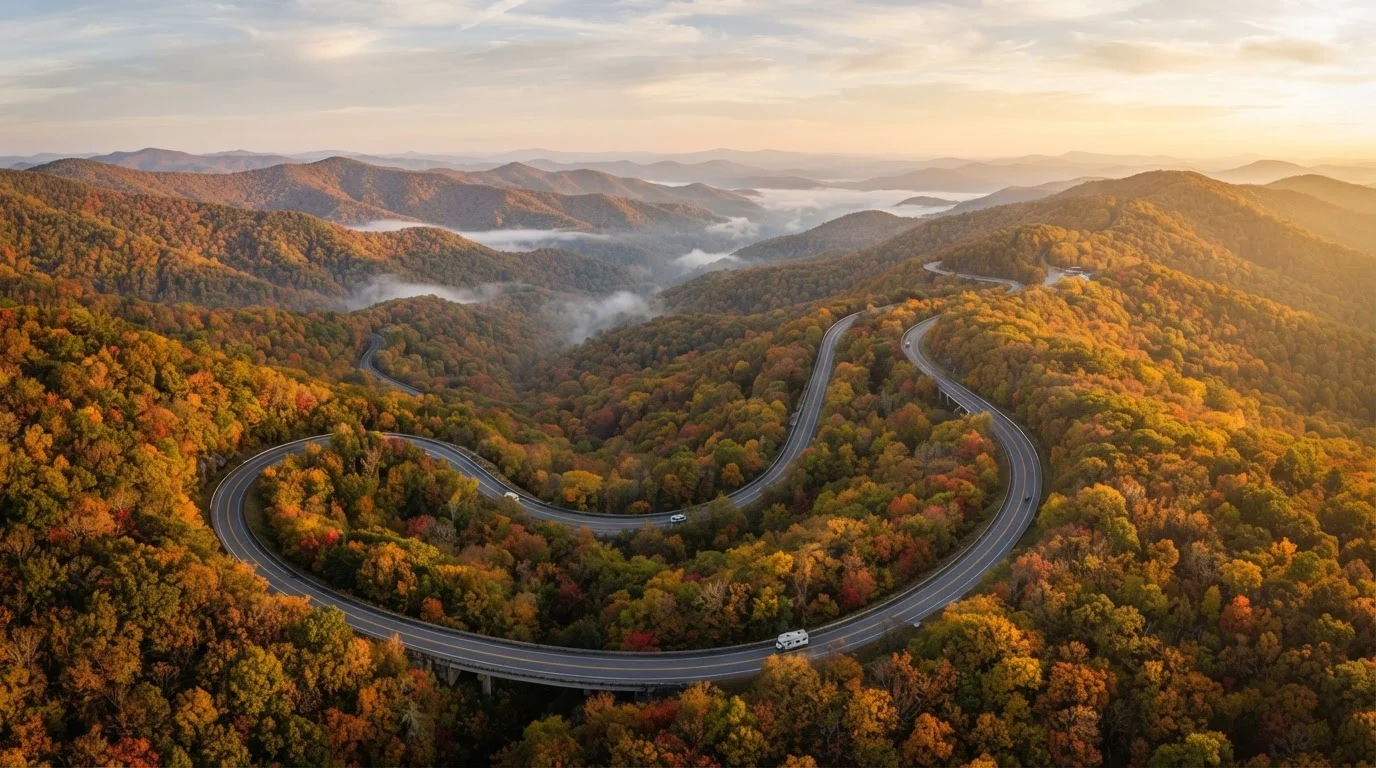


The Dividing Line: Destination Thinking vs. Journey Thinking
Ask a vacationer what their road trip was about and they'll name a place. Ask a lifestyle road tripper the same question and they'll tell you about a conversation at a diner in a town they didn't plan to stop in, a two-lane detour that added four hours and gave them everything.
That's the dividing line - not miles logged, not vehicle type, not whether you slept in a tent or a motel. It's a fundamentally different relationship with motion itself. Vacationers move through the road to reach somewhere. Long-haul travelers move with it, responsive to what unfolds.
This distinction shapes every choice downstream: how loosely a route is planned, how a traveler responds to a closed highway or an unexpected festival, whether an unplanned extra night feels like a failure or a gift. The practical mechanics of trip planning matter, but they serve a fundamentally different philosophy depending on who's behind the wheel.
“The journey, not the arrival, matters. The really important thing is what we learn as we go.”
— T.S. Eliot, Poet and essayist
What Builds a Road Trip Identity Over Time
Lifestyle road trippers don't emerge fully formed. The identity accretes through repetition - the same stretch of highway visited in different seasons, the same roadside stop that becomes a personal landmark, the gradual development of instincts that no map app can replicate.
Rituals are central to this. Small traditions - a specific playlist for crossing state lines, a standing order at a beloved diner - accumulate into a personal road culture that feels as natural as any other part of a person's identity.
Alongside rituals, community plays a sustaining role. Road trip communities - from overlanding groups to van life forums - provide a social scaffold that keeps long-haul travel from feeling isolating. They share route intelligence, mechanical tips, and something harder to name: the validation that this way of moving through the world makes sense.
79%
Americans who consider road trips a meaningful travel experience
According to a survey by the American Automobile Association (AAA), the vast majority of American travelers associate road trips with personal significance beyond simple transportation.
3-5 years
Typical time before road travel becomes habitual identity
Travel behavior researchers generally observe that repeated long-distance self-directed journeys over several years tend to shift from recreational activity to defining personal practice.
62%
Long-haul drivers who report unplanned stops as trip highlights
Road travel surveys consistently find that spontaneous detours and unexpected encounters rank among the most memorable moments for experienced long-distance drivers.
The Psychological Shift That Changes Everything
Psychologists who study travel behavior note that extended, self-directed journeys tend to increase tolerance for ambiguity and sharpen situational awareness. Whether or not you find the academic literature compelling, most long-haul travelers will confirm it experientially: spending weeks navigating uncertainty - weather, detours, mechanical gremlins, unfamiliar towns - recalibrates how you respond to the unexpected.
This is partly why shared long drives shape relationships so profoundly. Hours of confined space, collective problem-solving, and unguarded conversation strip away the social performances people maintain in ordinary life. You learn who someone is. You learn who you are.
The lifestyle road tripper carries this shift beyond the trip itself. The patience learned navigating a washed-out forest road shows up months later in a boardroom. The capacity for solitude developed on a solo crossing of the Great Basin becomes a resource in ordinary stillness. The road doesn't just take you somewhere - it changes your operating system.
Start Small to Build the Habit
You don't need to quit your job or buy a van to begin living the road trip lifestyle. A single weekend drive with no hotel booked past the first night can begin to rewire how you relate to travel. Commit to one unplanned detour and notice what it opens up. The mindset builds through practice, not grand gestures.
Anyone Can Cross the Line - Here's How
The encouraging truth is that the lifestyle/vacationer divide isn't fixed. It's a matter of intention, and intention can be practiced. A few habits accelerate the crossing:
- Plan the route loosely. Build in flex days with no agenda. Consult the most legendary American driving corridors for inspiration, then let yourself deviate.
- Pack with purpose, not abundance. The tension between minimalism and comfort is real - experienced travelers navigate it thoughtfully rather than defaulting to overpacking.
- Manage fatigue like a professional. Driving fatigue is a genuine safety risk that lifestyle travelers treat seriously, building rest into their rhythm rather than fighting through it.
- Engage the places between. The diner in the county seat. The hardware store with the bulletin board. The regional radio station. These are the textures that vacationers skip and that lifestyle travelers collect.
It's also worth being clear-eyed about the romance. The open road is not limitless - there are logistical, financial, and legal realities that matter. Lifestyle road trippers know this and plan accordingly; they're not running from reality, they're running toward a different way of inhabiting it.