

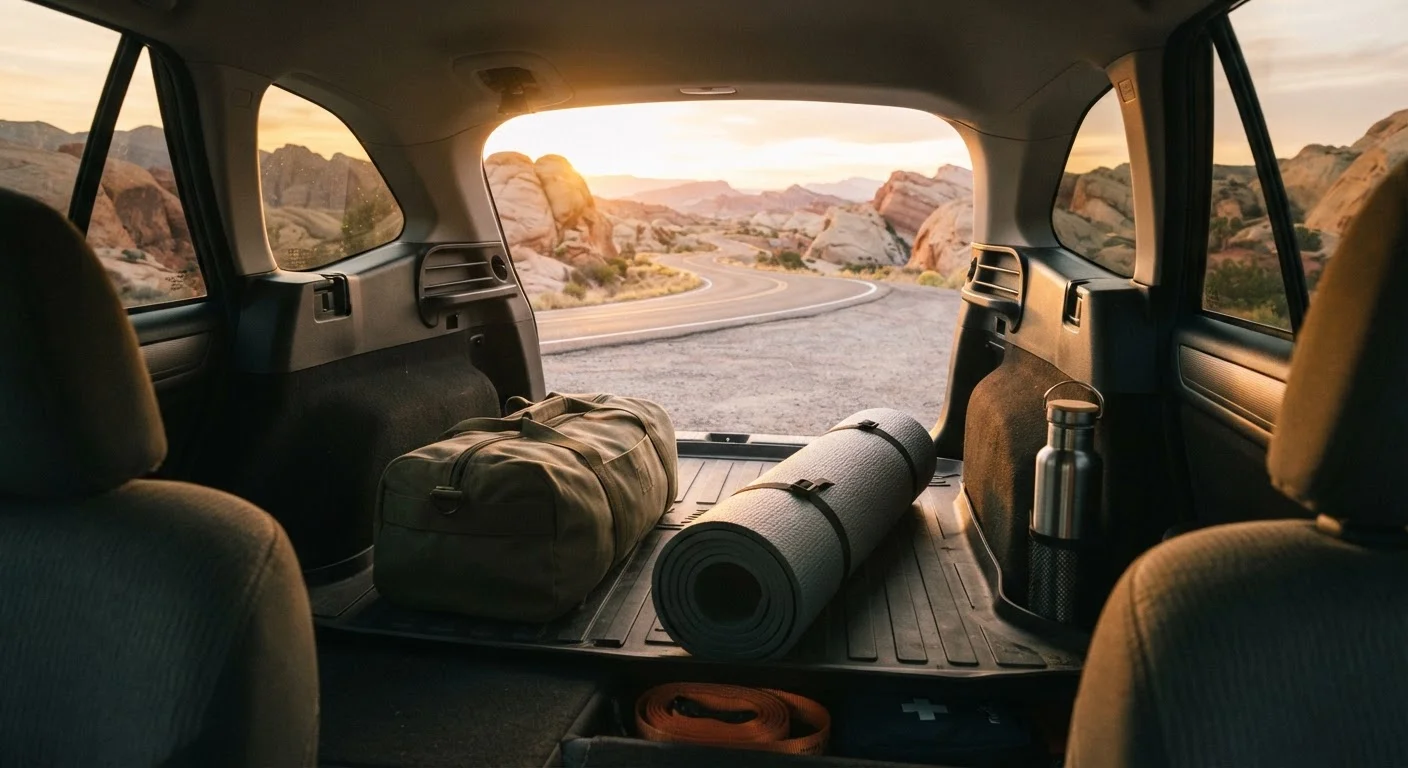
The Road Tripper's Eternal Argument with the Trunk
Stand beside any car before a long road trip and you'll witness a negotiation that's part tetris, part philosophy. One person wants the neck pillow. Another insists they won't survive without the cast-iron skillet. The question of how much to pack - and what earns its spot - sits at the heart of road travel culture, where freedom of movement collides headfirst with the desire to feel at home on the road.
Minimalist packing has gained real momentum among long-haul road travelers, and for good reason. But comfort isn't frivolous - the right pillow or the familiar coffee press can quietly determine whether day five feels like adventure or attrition. This article examines both sides honestly, so you can make a call that matches your actual travel style rather than someone else's aesthetic.
For a complementary look at how seasoned travelers think about lifestyle versus vacation mindset, see what separates long-haul travelers from vacationers.
The Case for Packing Light
There's a reason veteran road trippers often brag about fitting everything into a single bag. Lighter loads reshape the daily rhythm of a trip in ways that compound over hundreds of miles.
Faster stops, easier loading and unloading
Less gear means less time managing it at every gas station, trailhead, and motel. That recovered time is better spent on the actual journey.
More usable space inside the vehicle
A less-loaded car allows passengers to shift, stretch, and store day-use items within reach - a practical comfort gain that overpacking actively destroys.
Greater flexibility to change plans
Traveling light makes it easier to accept an unexpected detour or swap accommodations without the dread of hauling and repacking an overstuffed trunk.
Lower physical strain at each stop
Repeatedly lifting heavy bags in and out of cars accumulates into real fatigue by mid-trip. Lighter loads reduce that drain on energy you'd rather spend exploring.
Simpler decision-making throughout the trip
Fewer items mean fewer choices each morning - what to wear, what to carry for the day, what to leave in the car. Reduced decision fatigue is a genuine psychological benefit.
Perhaps the less obvious benefit is psychological. A car with room to breathe feels less like a storage unit and more like a mobile home base. Unloading at a motel takes three minutes instead of twenty, and that recovered time adds up across a week on the road. For guidance on organizing what you do bring, smart car packing principles offer a practical framework beyond any simple checklist.
The Case for Keeping Your Comforts
Minimalism has its evangelists, but road travel isn't a competition for who suffers most stylishly. Creature comforts exist because they work - they regulate sleep, reduce physical strain, and keep morale intact through the grinding mid-trip miles.
Missing key items creates real discomfort
A forgotten neck pillow or adequate warm layer on a cold-night drive isn't a minor inconvenience - it can degrade sleep and mood for days, affecting the whole trip.
Minimalism pressure can lead to poor planning
The push to pack light sometimes causes travelers to leave behind genuinely useful items out of aesthetic commitment rather than honest assessment of need.
Some routes genuinely demand more gear
Remote stretches without services, variable weather corridors, or camping-heavy itineraries require contingency supplies that simply can't be minimized away.
Comfort items protect physical health on long drives
Lumbar support, hydration tools, and quality footwear aren't luxuries on a multi-day route - they manage fatigue and prevent the kind of strain that cuts trips short.
Re-purchasing forgotten items is costly and wasteful
Packing too light often results in buying replacements on the road - an outcome that defeats both the budget and the minimalist goal simultaneously.
The nuance here is distinguishing between comforts that are genuinely restorative and items brought out of habit or anxiety. A quality lumbar pillow on a 1,200-mile drive is a medical-grade decision. A second pair of dress shoes for a camping route is not. Thinking through your actual itinerary - whether you're camping or motel-hopping - makes it easier to identify which comforts earn their weight.
Finding the Balance: What Experienced Travelers Actually Do
Most seasoned road trippers don't land on a permanent system - they develop an evolving one. A few principles surface consistently across traveler communities and long-distance driving culture.
The One-Use Rule
If an item serves only a single, narrow purpose, it needs to justify that specificity. A rain jacket protects you and doubles as a pillow cover in a pinch. A bulky bathrobe does not. Multi-use items resolve a surprising amount of the packing vs. comfort tension without requiring sacrifice.
Pack for the Hardest Day, Not the Average One
Think about your most demanding day on the itinerary - the longest stretch, the coldest night, the day with no services for 80 miles - and pack for that. On easier days, you'll simply have more than you need, which is fine. On the hardest day, you'll be ready.
Treat the Packing List as a Living Document
After each trip, experienced travelers note what they never touched. That item leaves the list next time. Over several trips, the list converges on what actually matters for that person's style and typical routes. It's an iterative skill, not a one-time decision.
Your Itinerary Should Drive Your Packing List
A coastal highway trip in June and a high-desert crossing in October are fundamentally different packing scenarios, even if the mileage is similar. Before finalizing any list, map your actual stops, overnight options, and likely weather ranges. Gear appropriate for your specific route will always outperform a generic minimalist or maximalist template.
Budget-conscious travelers often find that packing light and spending wisely are natural partners. Stretching a travel budget without cutting experiences explores how strategic deprioritization - in spending and in packing - keeps the meaningful parts intact.