

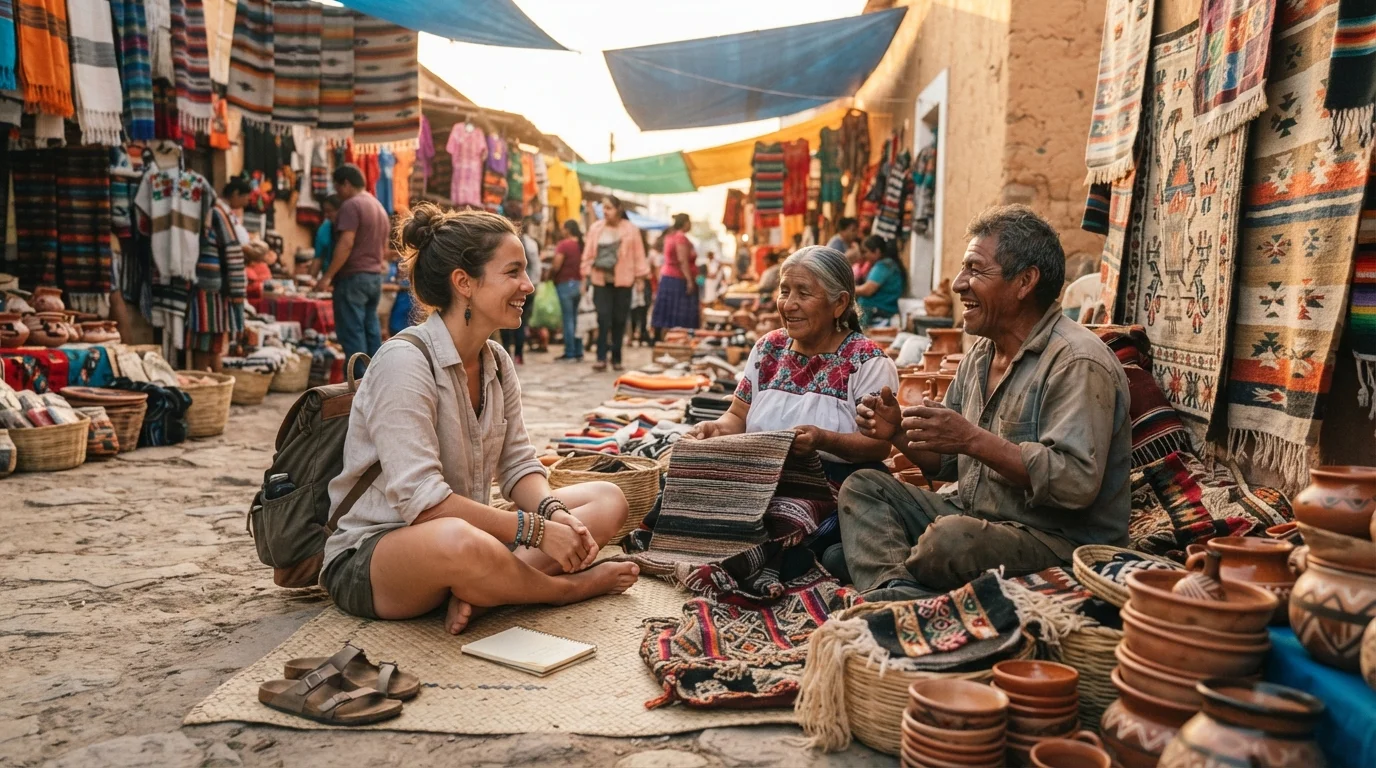
What Culturally Immersive Travel Really Means
Culturally immersive travel is not defined by the number of landmarks visited or local dishes sampled. It is a deliberate practice of engaging with the rhythms, values, and everyday life of a place - on that community's terms, not your itinerary's. Understanding what cultural immersion actually means before you board a plane changes every decision that follows, from how you structure your days to where you sleep and eat.
At its core, immersive travel asks you to shift from observer to participant. That might mean joining a family for a communal meal, apprenticing briefly with a traditional craftsperson, attending a neighborhood ceremony open to respectful guests, or simply navigating a local market without a guided tour. The common thread is presence - sustained, attentive, and reciprocal.
72%
Travelers seeking authentic local experiences
According to Booking.com's Sustainable Travel Report, a significant majority of global travelers express a desire for authentic cultural experiences over conventional tourist activities.
$8.8T
Global tourism industry contribution to GDP
The World Travel & Tourism Council estimates tourism's total economic contribution, underscoring the scale of impact traveler choices collectively have on local communities worldwide.
3x
Longer average stay for immersive travelers
Research from cultural tourism organizations consistently suggests that travelers focused on cultural engagement tend to stay significantly longer in fewer destinations than standard sightseeing tourists.
Choosing the Right Destination
Not every destination offers equal access to authentic cultural exchange. Before selecting a location, ask whether the local community genuinely benefits from tourism, whether independent travelers can engage meaningfully beyond resort corridors, and whether the cultural practices on offer are living traditions or staged performances designed for outsiders.
Destinations with strong community-based tourism infrastructure - cooperative guesthouses, locally led walking tours, artisan cooperatives - tend to offer richer immersive experiences than those dominated by large resort enclaves. Consider regions where language, craft, cuisine, or spiritual life remains distinctly rooted: rural Japan, indigenous Andean communities, West African cultural capitals, or the medinas of North Africa are examples where depth of experience is accessible with proper preparation.
Travelers transitioning from conventional itineraries will find practical framing in a first-timer's path to meaningful cultural travel, which maps destination selection to traveler readiness.
Arrive at your destination with a list of specific local questions - not about attractions, but about daily life. Ask your host what neighborhood restaurant locals actually eat at on weekday evenings, or what the biggest local event of the upcoming month is.
Specific questions unlock specific, unscripted responses. Generic curiosity yields generic recommendations that steer travelers back toward tourist circuits.
Learn at least one culturally significant phrase beyond pleasantries - such as a traditional greeting used at a specific time of day or a term of respect for elders - before you arrive. Use it at an appropriate moment and be prepared to laugh at yourself if you get it wrong.
Demonstrating even partial fluency with culturally embedded language signals genuine engagement and typically opens more doors than any amount of spending or sightseeing.
Pre-Trip Preparation: Research, Language, and Mindset
Preparation is where immersive travel diverges most sharply from conventional tourism. Effective pre-trip work includes cultural research beyond Wikipedia summaries, basic language acquisition (even 50 words of a local language signals genuine respect), and an honest audit of your own cultural assumptions and biases.
Study the social norms governing dress, greetings, dining, photography, and religious practice in your target destination. Understand the historical context that shapes the community's relationship with outside visitors - some communities have navigated centuries of colonial extraction and are appropriately cautious about tourism. Arriving aware of that context is not a burden; it is the foundation of respectful engagement. The pre-departure checklist for culturally immersive journeys covers each of these dimensions in actionable detail.
Start Your Language Prep Early
Even 15-20 minutes of daily language practice in the six weeks before departure can meaningfully change how locals respond to you. Focus on greetings, expressions of gratitude, and asking for permission - the phrases most likely to arise in genuine community interactions. Free audio-based language tools make this accessible regardless of your starting level.
Where You Stay Shapes What You Experience
Accommodation is one of the most consequential, and most underestimated, decisions in immersive travel planning. A large international chain hotel insulates you from the local environment by design. A family-run guesthouse, cooperative lodge, or historically rooted boutique property does the opposite - it places you inside the social fabric of a neighborhood from day one.
Look for stays that are locally owned, staffed predominantly by community members, and situated in residential or working neighborhoods rather than tourist districts. Hosts at such properties routinely become the most valuable guides you will encounter - not because they sell tours, but because they can introduce you to their community with the social credibility an outsider cannot manufacture alone. For a thorough framework on identifying and vetting these kinds of properties, see the independent traveler's guide to boutique and unique stays.
“Tourism that respects local communities and the environment is the only kind of tourism with a sustainable future. The traveler who asks 'what can I learn here?' rather than 'what can I consume here?' is the traveler who benefits everyone - including themselves.”
— Megan Epler Wood, Founder of the International Ecotourism Society and researcher in sustainable travel
Engaging Respectfully With Local Communities
Respectful engagement is less about following a rulebook and more about adopting a posture of genuine curiosity combined with consistent deference to local norms. Practical principles include: always asking permission before photographing people or sacred spaces; participating in activities when invited rather than inserting yourself uninvited; spending money at locally owned businesses rather than international franchises; and being willing to feel uncertain, slow, and occasionally lost - that discomfort is often where the most meaningful exchanges occur.
Volunteer tourism deserves special scrutiny. Many well-intentioned programs extract more value from communities than they contribute. If you choose a service-oriented element for your trip, prioritize programs designed and led by community organizations, with clear long-term benefit to local participants.
Photography Requires Explicit Permission
In many cultures, photographing people - especially in ceremonial, religious, or domestic settings - without explicit permission is considered deeply disrespectful or even harmful. A camera pointed at someone without consent can signal that you view them as a subject rather than a person. Always ask first, accept refusal graciously, and consider whether a photograph is truly necessary or whether the moment is better experienced without a lens between you.
Travelers pursuing overland or multi-country itineraries will encounter this dynamic across many cultural contexts - a challenge explored through a different lens in the complete guide to overland travel in remote Africa.
Sustaining the Connection After You Return
The most durable outcomes of immersive travel unfold after you land home. Travelers who document their experiences thoughtfully - through journaling, photography reviewed with cultural sensitivity, or conversations with fellow travelers - retain and deepen the insights gained in the field. Those who maintain relationships with hosts, artisans, or guides they encountered often find these connections evolve into ongoing cultural education and, sometimes, return visits with entirely new depth.
Consider how you share the experience publicly. Avoid social media framing that exoticizes communities or reduces rich cultures to aesthetically pleasing backdrops. Instead, center the humanity and complexity of the people you met. That discipline in storytelling is itself a form of cultural respect - and it influences how others in your network understand what purposeful travel can look like.
GSTC Cultural Tourism Standards
The Global Sustainable Tourism Council publishes criteria for evaluating whether tourism operations genuinely support cultural heritage and community benefit - a useful framework for assessing any program or operator you are considering.
Community-Based Tourism Directory
Several nonprofit platforms maintain searchable directories of community-owned and community-led tourism enterprises worldwide, allowing travelers to identify locally rooted stays and experiences by region.
Pre-Departure Cultural Research Template
A structured worksheet covering the key cultural, historical, and social dimensions to research before any immersive trip - from social norms and religious calendar to tipping customs and photography etiquette.
For broader travel planning structure that supports immersive goals, the complete framework for planning any trip provides an end-to-end itinerary-building approach adaptable to cultural travel priorities.