

What Overland Travel in Africa Actually Means
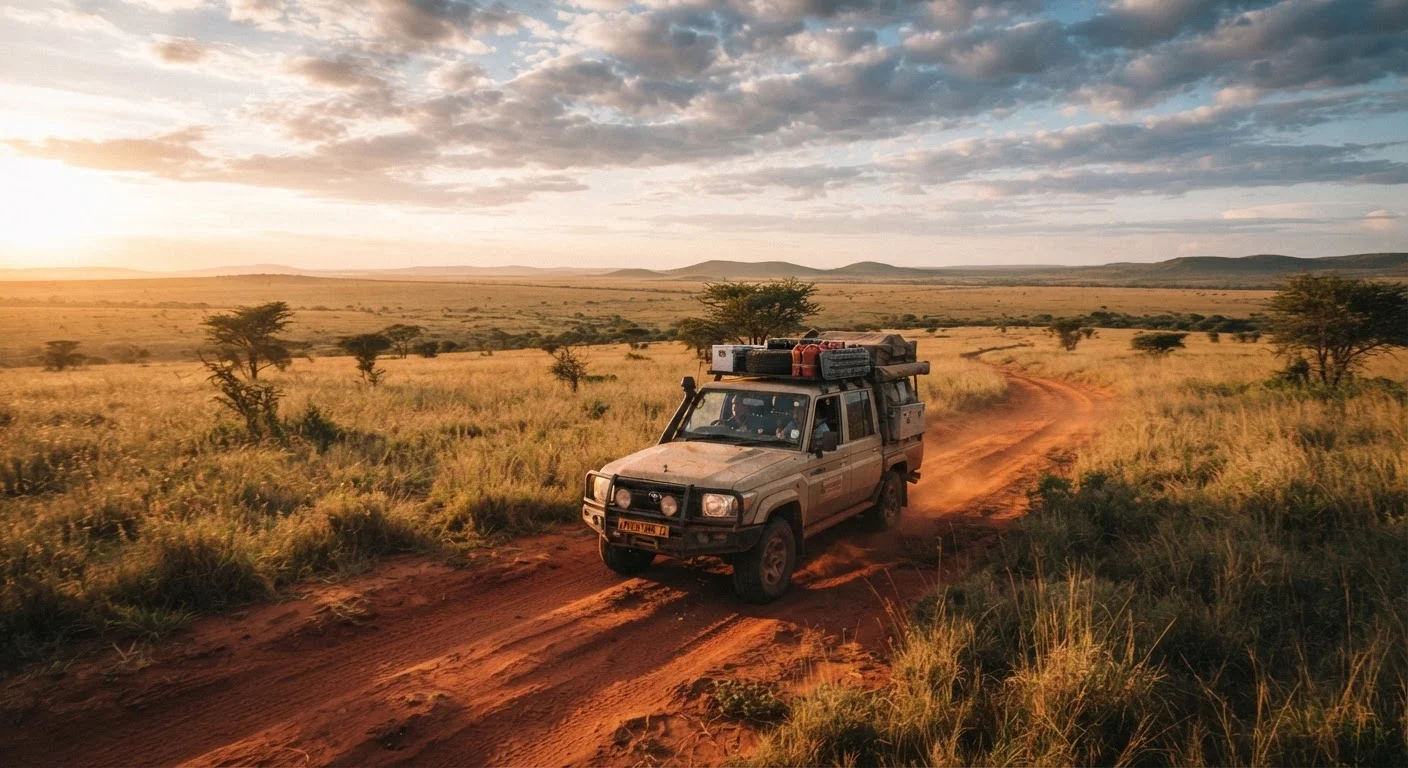
Overland travel in Africa is not a road trip with a scenic backdrop. It is an immersive, multi-country journey conducted primarily over land - through national parks, across deserts, along river corridors, and through border posts that may see only a handful of vehicles per week. The continent's scale and diversity make it unlike any comparable experience on earth.
The classic overlanding concept involves a purpose-built or modified 4x4 vehicle carrying shelter, water, fuel, and provisions for extended periods of self-sufficiency. Routes can span weeks or months, crossing a dozen countries from Cairo to Cape Town on the iconic north-south corridor, or arcing from Nairobi west through Central Africa into West African coastal nations. Each configuration presents entirely different terrain, infrastructure, and logistical challenges.
For travelers already comfortable with popular African safari destinations, overlanding represents a significant step up in independence and complexity - and a corresponding leap in raw reward. Multi-day expedition planning principles apply here at a continental scale, compressed or stretched depending on your timeline.
Carry a laminated one-page vehicle and personal document summary - photocopies of your passport bio page, vehicle registration, and insurance - stored separately from originals. Border officials often want to hold documents briefly; copies protect you.
Document loss or theft at remote border posts can strand travelers for days. Separation of copies from originals is a standard risk-management practice among veteran overlanders.
Program your satellite communicator with pre-set check-in intervals and share your live track with a trusted contact at home. Establish a clear protocol for what action they should take if a check-in is missed.
In genuinely remote corridors, mobile coverage may be absent for days. A satellite communicator with an established check-in protocol is the single most impactful safety measure available to solo or small-group overlanders.
Choosing Your Route and Region
Africa's overland routes broadly divide into three axes: the north-south Cairo-to-Cape Town corridor, the east-west trans-continental routes through Central or West Africa, and shorter regional loops within East or Southern Africa. Each demands a different tolerance for road conditions, border complexity, and infrastructure gaps.
East and Southern Africa remain the most accessible for first-time overlanders. Tarmac coverage is higher, tourist infrastructure exists in key nodes, and border procedures - while still demanding - are relatively well-documented. Countries such as Tanzania, Zambia, Botswana, Namibia, and Zimbabwe offer spectacular diversity within a manageable logistical envelope.
West and Central Africa are a different proposition entirely: dense jungle corridors, unpaved roads that become impassable during wet season, and border posts requiring significant patience and local knowledge. These routes reward seasoned overlanders willing to invest in deep preparation.
54
Countries comprising the African continent
Each country has distinct visa policies, road conditions, and entry requirements - underscoring why route-specific research is essential for overland travelers.
~30%
Of African roads that are paved
According to African Development Bank infrastructure assessments, the majority of the continent's road network remains unpaved, directly shaping vehicle and route decisions for overlanders.
Cairo to Cape Town
Classic north-south overland route distance
The full Cairo-to-Cape Town corridor covers roughly 12,000 km and typically takes three to six months to complete, depending on pace and border delays.
Seasonality is non-negotiable. The wet season closes routes across Central and West Africa and degrades road quality throughout the continent. Most overlanders plan their movements around the dry season for their target region, accepting that flexibility in schedule is not a luxury - it is a requirement.
Vehicle Selection and Preparation
Your vehicle is your shelter, workshop, and lifeline. The vast majority of experienced African overlanders rely on proven platforms - Land Rover Defenders, Toyota Land Cruisers, and Mercedes-Benz G-Class variants appear across the continent for sound reasons: parts availability and mechanical knowledge among local mechanics in remote towns. Choosing a vehicle that can be repaired with components found in a regional market town is a genuine survival consideration.
Beyond the base vehicle, key preparation elements include a secondary fuel tank (range of 800+ km is advisable for remote stretches), dual-battery systems, a rooftop or ground tent, water storage of at least 50 liters, a comprehensive tool kit, a high-lift jack, and recovery gear including sand ladders and a kinetic rope. A satellite communicator - not just a cell phone - is essential for stretches without mobile coverage.
Carnet de Passage: Don't Leave Without It
Traveling across African borders in a privately owned vehicle without a carnet de passage can result in your vehicle being impounded and significant fines. The carnet serves as a customs guarantee - proof that you will not sell your vehicle in the destination country without paying import duties. Obtain one through your national automobile association well before departure, as processing takes weeks and requires a financial guarantee or bond.
For travelers who prefer to rent rather than ship a personal vehicle, specialist overland rental operators exist in Southern and East Africa, though availability varies. Thoroughly inspect any rental vehicle's documentation, particularly the carnet de passage (a customs document that serves as a vehicle passport for international travel). Vehicle preparation checklists from road trip planning guides provide a useful baseline that should be substantially expanded for African conditions.
Border Crossings, Visas, and Documentation
Border crossings are where overland Africa travel is won or lost in terms of time and morale. Requirements shift frequently - entry fees, visa-on-arrival policies, and vehicle import duties change without wide notice. Verifying current requirements through official embassy sources and traveler forums within weeks of your crossing is essential.
Core documents to carry for each crossing typically include: your passport (with significant blank pages remaining), a carnet de passage for the vehicle, the vehicle registration document, proof of insurance valid in the destination country (the COMESA Yellow Card covers much of East and Southern Africa), and a letter of authority if driving a rental.
Always Verify Entry Requirements Officially
Visas and entry requirements across Africa's 54 nations vary enormously and change frequently. Never rely on outdated guidebook information or traveler anecdotes as authoritative. Consult your government's official travel advisory and the destination country's embassy website before every crossing. For health-related entry requirements including vaccination certificates - particularly yellow fever - verify current rules with official sources well in advance of travel.
Visas and entry requirements across Africa's 54 nations vary enormously and change frequently. Never rely on outdated guidebook information or traveler anecdotes as authoritative. Consult your government's official travel advisory and the destination country's embassy website before every crossing. For health-related entry requirements including vaccination certificates - particularly yellow fever - verify current rules with official sources well in advance of travel.
COMESA Yellow Card Explained
The COMESA Yellow Card is a regional motor vehicle insurance scheme recognized across much of East and Southern Africa, currently covering countries including Kenya, Tanzania, Uganda, Zambia, Zimbabwe, and others. It simplifies obtaining valid third-party vehicle insurance across multiple borders under a single policy. Confirm which countries your card covers before travel, as membership and recognition can change.
Budget significant time at borders. Even straightforward crossings can consume two to four hours; complex ones in Central Africa can span an entire day. Maintaining patience, keeping documents organized and accessible, and carrying small denominations of local currency for legitimate fees prevents most avoidable delays.
Safety, Health, and Emergency Planning
Safety in remote Africa overlanding is multi-dimensional: mechanical, medical, and situational awareness all factor equally. Breakdown preparedness is as important as knowing current security conditions along your planned corridor. Government travel advisories from your home country (the U.S. State Department, for example) provide region-by-region assessments that should inform route planning - not be ignored in favor of optimism.
Medical preparation deserves particular attention. Malaria prophylaxis, comprehensive first-aid training, a well-stocked medical kit, and a clear plan for evacuation from remote areas are non-negotiable. Travel health insurance with medical evacuation coverage is essential - evacuation from central Zambia or the DRC is an operation that can cost tens of thousands of dollars without coverage. Consult a travel medicine specialist well before departure for vaccination and prophylaxis guidance specific to your route.
This article provides general travel information and is not a substitute for professional medical advice. Consult a qualified travel medicine physician before undertaking any trip to regions with elevated health risks.
Guided vs. Self-Drive: Making the Right Call
The question of guided versus self-drive overlanding is rarely about ability alone - it intersects with experience, risk tolerance, language, and how deeply you want to engage with logistics versus landscape.
Guided overland expeditions, typically conducted in purpose-built overland trucks carrying groups of 10-24 travelers, handle border paperwork, vehicle mechanics, campsite booking, and route decisions. They are not the same as luxury touring: participants cook communal meals, help with camp setup, and share close quarters for weeks on end. The tradeoff is reduced logistics stress in exchange for reduced independence.
Self-drive overlanding offers genuine freedom - the ability to linger where a place grabs you, to take unmarked tracks, and to experience Africa on a genuinely personal timeline. It demands real mechanical competence, navigation skill, and comfort with ambiguity. Many experienced overlanders recommend first completing a guided or semi-guided journey across a complex corridor before committing to self-drive across multiple countries. Cultural immersion travel principles also apply: the quality of your engagement with local communities often deepens the more independently you travel. For unique overnight options along your route, independent stays and boutique lodge guidance can supplement bush camping with memorable local experiences.
Start With a Shorter Regional Loop
If this is your first African overland experience, consider a 2-3 week loop within Southern or East Africa before committing to a multi-month trans-continental journey. Routes through Namibia, Botswana, and Zimbabwe, for example, offer genuine remoteness with comparatively manageable logistics. This builds the mechanical familiarity, border experience, and situational judgment that longer routes require.