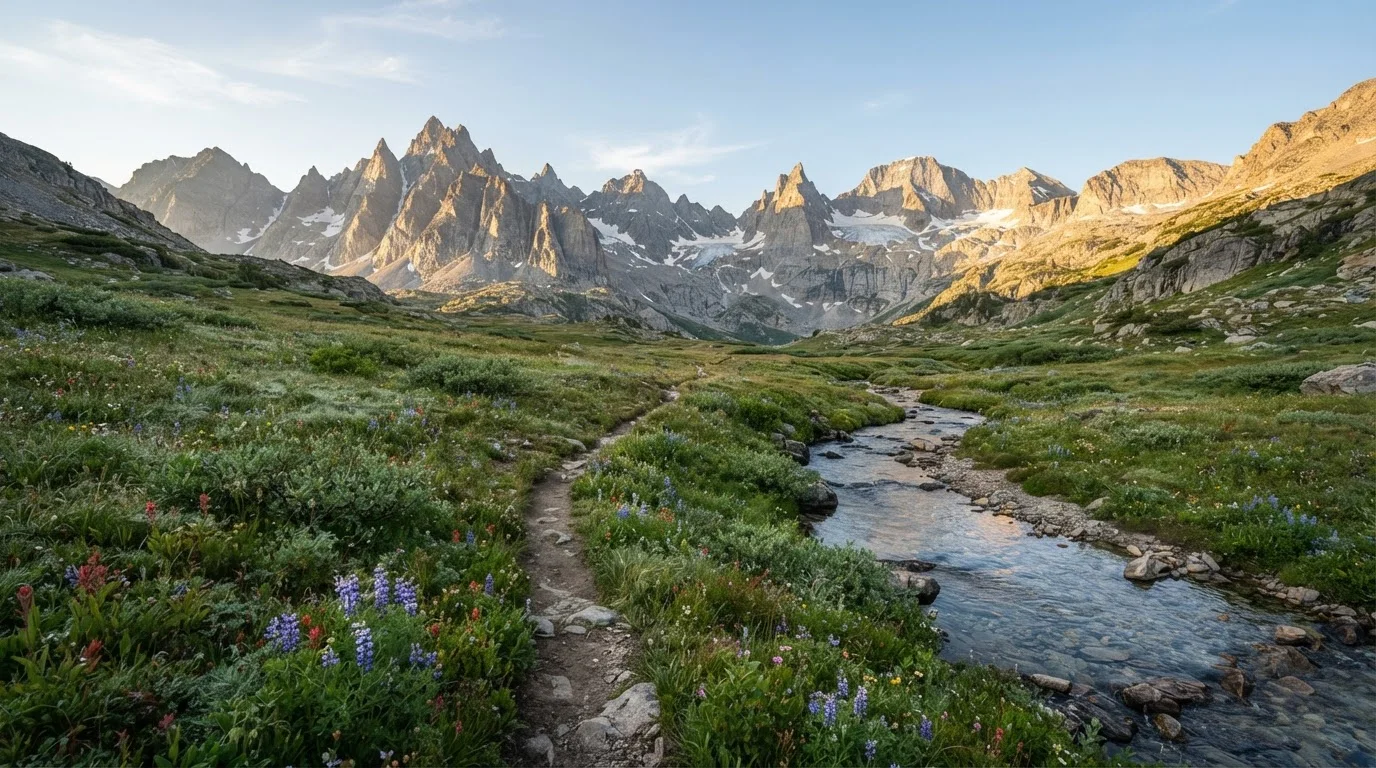


Why Standard Policies Fall Short for Adventure Travelers
Most travel insurance policies are built around conventional tourism: delayed flights, stolen luggage, a sprained ankle at a beach resort. The moment your itinerary involves technical climbing, backcountry skiing, or multi-day wilderness trekking, standard language starts working against you rather than for you.
The mechanism is the hazardous activities exclusion - a clause present in virtually every standard policy that voids coverage for injuries or losses arising from activities the insurer deems high-risk. What qualifies as hazardous is not intuitive. Guided glacier hiking might be excluded while recreational cycling is not. Some policies flag activities by altitude alone, cutting off coverage above 4,500 meters regardless of the activity involved.
For travelers already comfortable exploring beyond mainstream destinations, understanding this distinction is foundational. As explored in what adventure travel actually means, the category spans an enormous spectrum - and your insurance policy may draw its line somewhere in the middle of it.
Always Read the Full Policy Document
Summary cards and marketing materials highlight what a policy covers - the full document specifies what it excludes. For adventure travel, the exclusions section is where coverage decisions are actually made. Request the complete policy wording before purchasing, not after.
Decoding the Key Terms in Your Policy
Adventure travel policies live and die by their definitions sections. Several terms carry specific contractual meanings that diverge significantly from everyday usage.
- Hazardous activities: Each policy lists covered and excluded activities explicitly. The list is not standardized across the industry. Check that your specific planned activities - not just the general category - appear as covered.
- Search and rescue (SAR): Some policies include SAR as a standalone benefit; others fold it into emergency evacuation or exclude it entirely. Policies that do include SAR often apply sub-limits - for example, covering up to $10,000 of a rescue that may cost several times that in remote terrain.
- Emergency medical evacuation: This benefit covers transport to an appropriate medical facility. Key variables include whether air evacuation is included, whether the insurer or you must arrange it, and whether transport back to your home country is covered separately.
- Professional or competitive sports: If your adventure involves any organized race, competition, or guided commercial expedition categorized as professional, coverage may be voided even when the same activity would be covered recreationally.
- Altitude limits: Policies may specify a maximum elevation for covered activities. Kilimanjaro summits at 5,895 meters; Everest Base Camp sits at 5,364 meters - both exceed common altitude thresholds.
$50,000+
Typical helicopter rescue cost in remote mountain terrain
Search and rescue operations in remote alpine areas commonly exceed $50,000 depending on distance, conditions, and country - a figure that can far outpace standard SAR sub-limits in many adventure policies.
5,364 m
Altitude of Everest Base Camp
Many standard adventure policies cap altitude coverage at 4,500 meters, meaning one of the world's most popular trekking objectives sits above the threshold at which coverage may be voided.
Varies widely
Activity-specific exclusion lists across insurers
There is no industry-standard list of 'hazardous activities' - each insurer defines the term independently, making policy-level comparison essential rather than relying on general category descriptions.
The hidden costs of adventure travel extend directly into insurance - rescue coverage gaps can represent tens of thousands of dollars in out-of-pocket exposure.
What to Verify Before You Purchase
Rather than comparing brand names, compare policy language. Specifically, pull the full policy document - not just the summary - and work through the following:
- Activity schedule: Confirm your planned activities are named as covered, not merely excluded from the exclusions list (these are different constructions).
- SAR sub-limits and conditions: Determine whether the policy requires government coordination of the rescue or permits private rescue services to be reimbursed.
- Medical evacuation trigger: Some policies only activate evacuation benefits when the attending physician authorizes it; others allow the insurer's assistance line to coordinate independently.
- Cancellation coverage for adventure-specific triggers: Standard cancellation clauses cover illness and some emergencies but may not cover route closures, government-issued activity bans, or guide cancellations common in adventure contexts.
Travelers heading into genuinely remote terrain should also consider how their insurance intersects with emergency preparedness - the backcountry risk overview covers the hazard landscape your policy may need to address.
For those building a broader financial safety net, sizing a travel emergency fund alongside your policy is worth considering - insurance sub-limits mean some costs will always fall to you directly.
Coverage Differs From Cruise and Standard Policies
Adventure travel insurance operates under fundamentally different assumptions than cruise travel insurance or standard vacation policies. If you've previously relied on a cruise-specific or general travel policy, note that the benefit structures, evacuation triggers, and activity coverage are not interchangeable. Cruise insurance coverage follows its own logic and should not be assumed equivalent to adventure coverage.
This article is for general informational purposes only and does not constitute insurance, legal, or financial advice. Policy terms vary by insurer and are subject to change. Always review the full policy document and consult with a licensed insurance professional before purchasing. Verify entry requirements, safety advisories, and coverage details with official government and provider sources prior to travel.