
Why Adventure Travel Budgets Almost Always Come Up Short
Most experienced travelers know to factor in baggage fees, airport transfers, and the odd overpriced meal. Adventure travel operates on an entirely different financial logic. The moment you swap a city break for a multi-day backcountry trek, a whitewater rafting expedition, or a high-altitude mountaineering route, an entirely new tier of costs enters the picture - costs that don't show up on any booking confirmation.
This isn't about adventure being prohibitively expensive. As common misconceptions about extreme sports travel often obscure, many adrenaline-fueled pursuits are more accessible than they appear. But financial surprises in the backcountry carry consequences that a forgotten museum entry fee simply does not. Running short on funds mid-expedition, or discovering your insurance doesn't cover a helicopter evacuation, is a different category of problem entirely.
Understanding where the money actually goes - before you commit - is the foundation of any well-executed adventure trip. See the Trip Budgeting hub for broader planning frameworks that apply across travel styles.
Treating the flight and accommodation cost as the baseline budget without accounting for activity-specific fees.
Why it happens: Standard travel planning tools surface transport and lodging prominently; permits, guide fees, and gear rentals require separate, destination-specific research that many travelers skip at the planning stage.
Assuming standard travel insurance covers search-and-rescue or emergency helicopter evacuation.
Why it happens: Most travelers purchase insurance through booking platforms that default to general-purpose policies, which routinely exclude 'hazardous activities' or cap medical evacuation benefits well below real-world costs.
Not budgeting for acclimatization or weather-related extra days at destination.
Why it happens: Itineraries are built around ideal conditions, and travelers optimize for the minimum trip length to control costs - leaving no financial buffer when weather closes a pass or an extra rest day is medically advisable.
Skipping pre-travel medical consultations and ignoring altitude or endemic-disease preparation costs.
Why it happens: Medical preparation feels separate from travel planning and is easy to defer; many travelers also underestimate how destination-specific health risks translate into real expenses.
Underestimating gear rental costs or assuming personal gear is sufficient for the environment.
Why it happens: Travelers accustomed to urban or resort travel rarely own technical equipment, and rental costs at remote adventure hubs are seldom listed on mainstream booking platforms.
Ignoring tipping norms and mandatory gratuities for guides, porters, and local crew.
Why it happens: In many adventure destinations - particularly in the Himalayas, East Africa, and Central America - tipping local staff is a deeply embedded professional norm that isn't included in package pricing, and it's rarely disclosed upfront.
The Costs That Derail Even Careful Planners
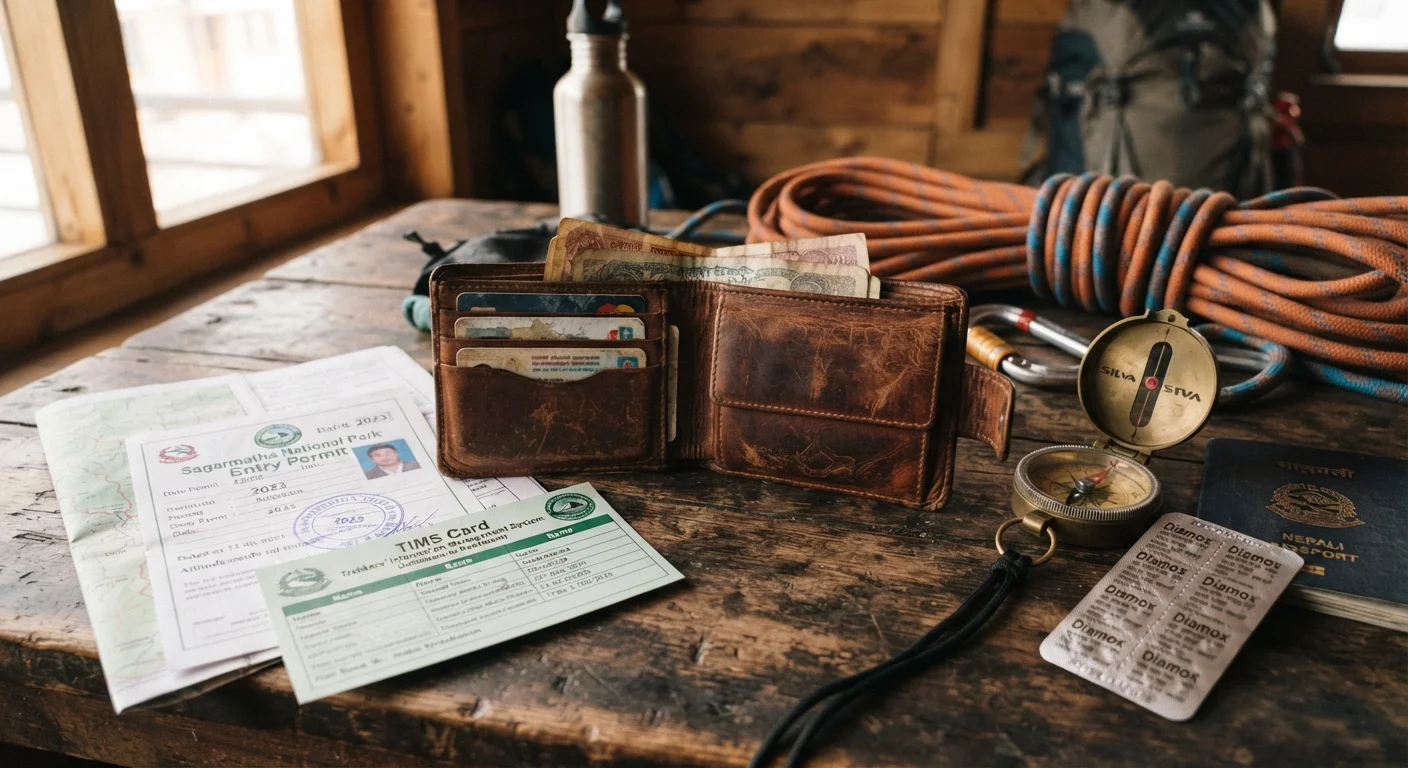
Beyond the mistakes individual travelers make, certain cost categories are structurally easy to miss because they sit outside the standard travel booking workflow. Permits, for example, are rarely sold through the same channels as flights or accommodation. Rescue insurance is a niche product most general travel insurers don't surface prominently. Gear rental is location-specific and difficult to price from home.
$5,000+
Typical helicopter evacuation cost in remote alpine terrain
Emergency helicopter evacuations in high-altitude or remote wilderness regions can range from several thousand to well over ten thousand US dollars depending on distance and terrain, often exceeding standard travel insurance limits.
40%
Travelers who underestimate adventure trip total costs
Travel industry surveys and expedition outfitters consistently report that a substantial share of first-time adventure travelers significantly underestimate their total out-of-pocket costs once permits, gear, and medical preparation are included.
6-8 weeks
Advance notice needed for some high-demand trekking permits
Popular routes such as Peru's Inca Trail require permits that sell out months in advance; late applications either fail entirely or require premium-priced last-minute alternatives through licensed operators.
Medical preparation is another area where costs accumulate invisibly. Altitude sickness prophylactics, required vaccinations for certain regions, and a pre-travel consultation with a travel medicine specialist can collectively add several hundred dollars to a trip's real cost. Always consult a qualified healthcare professional regarding any medications or vaccinations - general information here is not a substitute for personal medical advice.
For a granular breakdown of what adventure-specific insurance actually covers - and the policy language that matters - see what adventure travel insurance policies actually cover. Separately, understanding backcountry risk factors provides essential context for why certain costs - like evacuation coverage - are non-negotiable rather than optional. Always verify entry requirements, health advisories, and border rules with official government and provider sources before traveling, as conditions change.
Evacuation Costs Can Be Financially Catastrophic
In remote wilderness or high-altitude environments, emergency medical evacuation is not a hypothetical - it is a realistic scenario that many adventure travelers face each year. Without specialist coverage, out-of-pocket evacuation costs can reach tens of thousands of dollars. Do not rely on credit card travel benefits or standard trip insurance to cover this exposure without reading the policy in full first.
Permit Closures and Quota Systems Are Increasingly Common
Protected wilderness areas and heritage trekking routes are implementing stricter permit quotas in response to environmental pressure. Failing to secure required permits before arrival can mean being turned away at the trailhead with no refund on non-refundable flights or accommodation. Always confirm current permit rules with official park or government authorities - not third-party booking sites - before finalizing plans.
The financial picture also shifts significantly depending on whether you travel independently or with a guide. Guided versus independent adventure travel involves more than a price difference - guides often bundle permits, safety equipment, and evacuation logistics that independent travelers must source and pay for separately. Neither approach is inherently more expensive, but the cost structure is fundamentally different.
First-time high-altitude trekkers in particular will benefit from reviewing permit logistics and altitude preparation before finalizing a budget. For a broader look at which travel expenses genuinely have flexibility, where travel costs are genuinely negotiable offers useful context alongside hidden costs that catch even seasoned travelers off guard.