

Why the Fixed vs. Flexible Distinction Matters
Most travel budgets collapse not because travelers spend too much in one place, but because they apply the same level of scrutiny to every expense category - wasting energy chasing savings where none exist, while missing real flexibility in categories they assumed were locked in.
Before you finalize a trip budget, it pays to sort your expected costs into two honest buckets: costs that respond to timing, behavior, or negotiation, and costs that simply do not. That mental map - more than any deal-hunting tactic - is what separates efficient travel planning from frustrating budget theater.
For a practical framework to build on, see Building a Travel Budget That Actually Survives Contact With Reality. The categories below are where the negotiable/non-negotiable divide plays out most concretely.
Airfare: Variable, but Not Infinitely Flexible
Flight prices move with demand, route competition, and booking timing - but there's a ceiling to how much strategy can bend them. Midweek departures, shoulder-season travel, and flexibility on origin airports can produce meaningful differences. However, heavily trafficked routes or thin-market destinations often have little competitive pressure, meaning prices stay stubbornly high regardless of when you book.
The honest limit: once you've optimized your travel dates and departure airport, further price-chasing yields diminishing returns. Set a realistic price range based on historical averages for your route, not on rare sales you've heard about secondhand.
Route competition - not booking tricks - is the real driver of airfare flexibility.
Accommodation: Genuinely Negotiable in the Right Contexts
Hotel rates published on booking platforms are not always the final word, particularly for independent properties, guesthouses, and longer stays. Calling a smaller hotel directly and asking about extended-stay rates or low-season pricing is a legitimate tactic with a reasonable success rate. Hostels and locally owned guesthouses often have more pricing flexibility than branded chains, whose rate management is typically centralized.
What doesn't move: resort fees, mandatory charges layered on top of the room rate, and taxes. These are effectively fixed costs - factor them into your real nightly cost before comparing properties. For a fuller picture of what accommodation trade-offs actually look like beyond price, see Accommodation Trade-Offs Every Budget-Conscious Traveller Should Understand.
Independent properties and longer stays offer the most realistic room for accommodation negotiation.
Ground Transport: More Flexibility Than Most Travelers Use
Private drivers, locally arranged taxis, and informal transport in many destinations are genuinely negotiable - especially when you're arranging multi-day or multi-stop service directly rather than through a tour operator's markup. Research local going rates before any negotiation so you have a realistic anchor, not just a wish.
Fixed-rate transit - metros, national rail, and official airport shuttles - is not negotiable and rarely worth the time. Car rental pricing responds primarily to booking lead time and pickup location (off-airport locations typically carry lower base rates), not to in-person bargaining at the counter.
Pre-arranged private transport and multi-day drivers offer the clearest negotiation opportunities on the ground.
Tours and Activities: Bundled Pricing Obscures Real Value
Organized tours and packaged experiences often appear cheaper at first glance because costs are bundled - but that bundling also makes true price comparison difficult. Independent booking of individual activities sometimes costs more per item yet gives you more control over pacing and quality. Conversely, multi-day adventure packages can deliver genuine savings on logistics.
The key question isn't whether a tour is negotiable - some operators do accept group discounts or off-peak pricing - but whether the bundle actually matches your itinerary needs. Paying for a full-day tour when you only want two hours of a specific activity is a hidden cost in its own right. For specialty and adventure travel specifically, The Hidden Costs of Adventure Travel Nobody Talks About covers the financial picture in more depth.
Bundled tour pricing can look efficient while quietly padding costs you'd otherwise skip.
Visa, Entry, and Government Fees: Treat These as Fixed
Visa application fees, arrival taxes, national park entrance fees, and similar government-set charges are non-negotiable. Attempting to circumvent or reduce them is not a viable budget strategy - and in some cases, attempting to avoid entry requirements creates legal and practical risk. Build these costs into your trip budget as hard numbers from the outset.
What can be managed is timing: some destinations waive or reduce fees under specific conditions (length of stay, nationality, entry point), so researching the official fee structure for your specific passport and entry method is worth doing early. Always verify entry requirements with official government and embassy sources before traveling, as these rules change and vary by individual circumstance.
Government entry fees are fixed costs - build them into your budget as hard numbers, not estimates.
Local Markets and Informal Commerce: Where Negotiation Actually Works
In many destinations, fixed-price retail is the exception in local markets and informal vendor settings - not the rule. Negotiating on souvenirs, handcrafts, and fresh produce in these environments is culturally normal and expected. That said, approach it as a fair exchange, not a sport: paying a reasonable price that reflects the seller's livelihood is both more ethical and more sustainable for the destinations you visit.
The skills that help here - knowing approximate local prices in advance, being willing to walk away genuinely rather than theatrically, and transacting in local currency where possible - transfer across markets and regions. Booking Strategies covers the broader toolkit for securing good value across all travel categories.
Local market negotiation works best when you know the going rate before you start.
Building a More Honest Budget
Separating fixed costs from flexible ones doesn't mean abandoning your search for savings - it means directing that search where it will actually pay off. Lock in your non-negotiables early and accurately so they stop functioning as a source of false hope in your spreadsheet.
The costs where you do have leverage - accommodation length and category, ground transport choices, discretionary activities - deserve real attention. Stretching a Travel Budget Without Cutting the Experiences That Matter goes deeper on deprioritizing without sacrificing what actually matters to you on the road.
Track Fixed Costs First, Then Flex
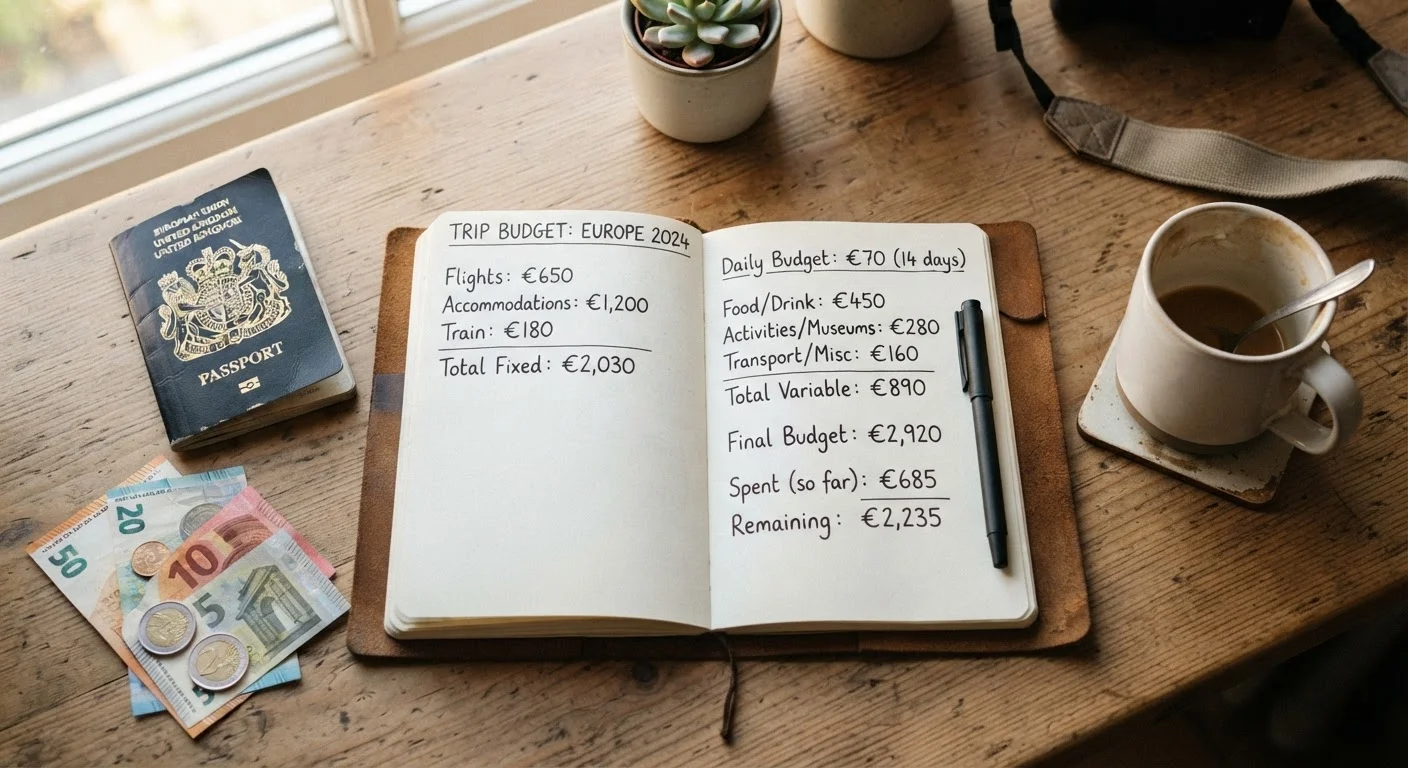
When drafting your trip budget, list all your genuinely fixed costs - visa fees, taxes, mandatory surcharges, prepaid transport - and total them before you allocate anything flexible. This prevents the common mistake of underestimating fixed obligations and overestimating how much you have left to work with. Your flexible categories become clearer - and more realistic - once the non-negotiables are locked in.
Also worth reading before you finalize numbers: The Hidden Costs of Travel That Catch Even Seasoned Explorers Off Guard, which covers the expenses that quietly appear after you've already committed to a destination.