
Why Most Travel Budgets Break Down
Most travel budgets don't fail because travelers spend too freely - they fail because the budget was structurally incomplete before the trip started. Common failure patterns include: estimating only the headline costs (flights and hotel) while leaving food, transport, and activities to chance; using aspirational figures instead of real quotes; and building no buffer for the inevitable surprises. If any of this sounds familiar, understanding why travel budgets fall apart is worth reviewing before you build the next one.
The framework below treats budgeting as an engineering problem: structure it correctly, load it with real inputs, and it holds under pressure. Skip the structure, and any surprise - a delayed flight, a rainy day that adds three museum entries, a meal that costs twice what you expected - breaks the whole thing.
What you will need
Step-by-Step: Building the Budget
Work through these steps in order. Each builds on the previous, and skipping ahead typically means going back. If this is your first time building a structured travel budget, trip budgeting from scratch covers the foundational concepts in more detail.
Spreadsheet or Budget App
Captures fixed and variable cost estimates in one place and allows daily on-trip tracking against those estimates.
Flight Fare History Tool
Provides historical price data for a route so your flight estimate reflects realistic market costs rather than best-case assumptions.
Destination Cost-of-Living Index
Helps calibrate daily variable spend assumptions (food, transport, activities) to the actual price level of your destination.
List Every Cost Category Before Attaching Numbers
Before you price anything, build the full inventory of what your trip will cost. Group costs into three buckets: fixed (flights, accommodation, rail passes, visas - things you pay upfront at a known price), variable (food, local transport, activities - things that fluctuate daily), and discretionary (souvenirs, upgrades, splurge meals). Missing an entire category - say, airport transfers or baggage fees - is the most common reason budgets collapse in week one.
Anchor Fixed Costs With Real Quotes
Get actual numbers for every fixed cost - not approximations. Pull live flight quotes or use fare history data (see how to build a flight-watch routine) to set a realistic ceiling. Price accommodation based on current availability for your dates, not last year's rates. For visas, entry fees, and travel insurance, check the official source. Fixed costs are the budget's skeleton - imprecision here compounds everything that follows.
Build Variable Costs Around a Daily Spending Cap
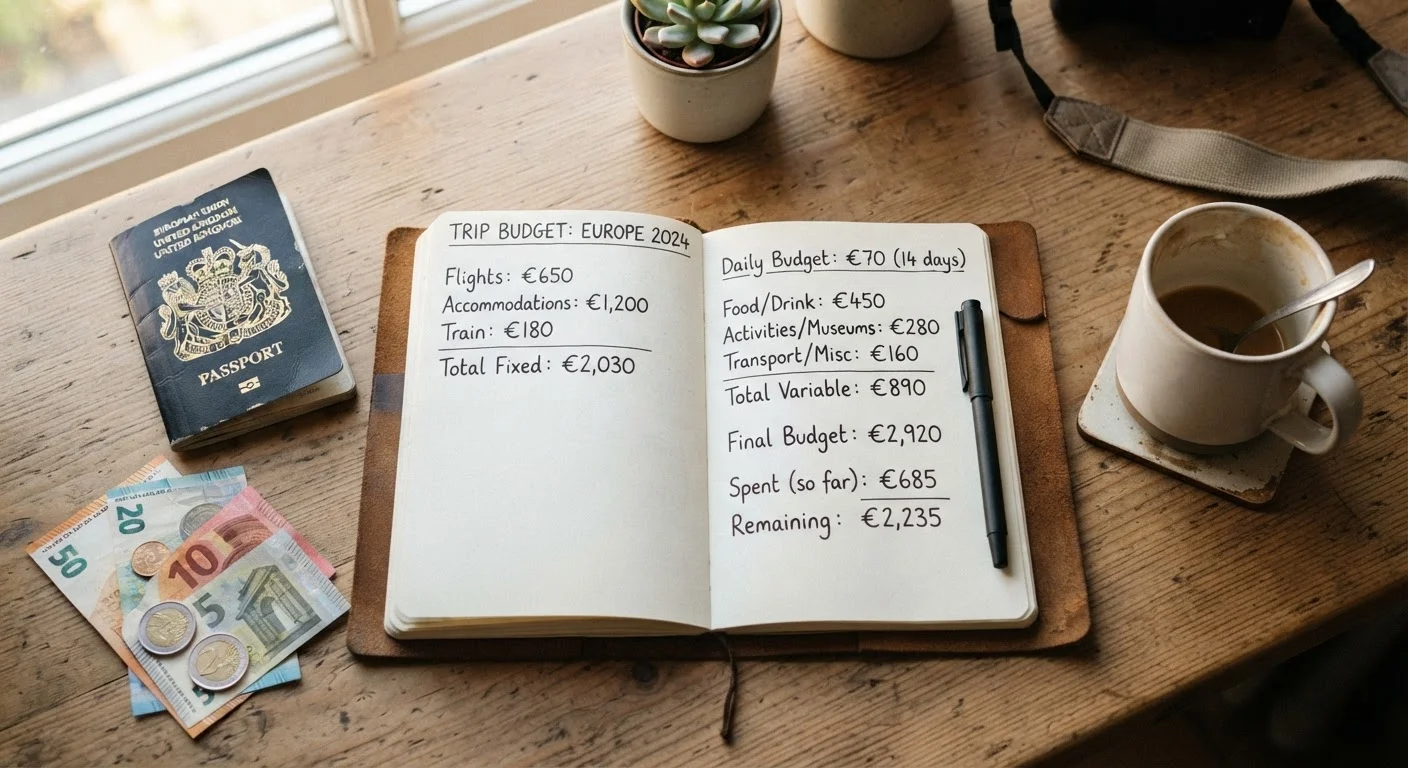
Rather than estimating total food spend for the whole trip, set a daily cap for each variable category, then multiply by trip days. Research what a realistic day of spending looks like at your destination - a destination cost-of-living index or traveler forums can calibrate your assumptions. Factor in that some days will run over (arrival days, activity-heavy days) and some under. Your daily cap should reflect the average, not the minimum.
Add a Contingency Buffer on Top of Everything
After totaling fixed and variable costs, add a contingency buffer - typically 15-20% of the combined estimate. This isn't a slush fund; it's a named line item in your budget that covers delays, price changes, unexpected fees, or a medical expense. If your trip is to a destination with limited infrastructure, higher language barriers, or significant seasonal weather risk, push closer to 20%. Travelers who skip this step tend to cover shortfalls with credit - which turns a travel budget problem into a financial one.
Track Daily on the Road - Not Weekly
A budget you don't track is just a number on a page. Log every expense at the end of each day, not in a weekly catch-up session. Daily tracking surfaces drift early - if you're running 20% over on food by day three, you can adjust before the damage is done. A simple running total against your daily cap is often enough; you don't need a sophisticated system, just a consistent habit. See envelope budgeting vs. spreadsheet tracking for approaches that suit different traveler styles.
Run a Post-Trip Actuals Review
After every trip, compare what you spent against what you planned - category by category. Where did you overspend? Where did your assumptions hold? This review transforms your budget from a one-time document into a calibration tool. Your next budget will be meaningfully more accurate because it's built on real data rather than estimates. For a structured approach to this, the end-to-end travel budgeting guide covers the full review process.
Contingency Is Not Optional
Every experienced traveler has a story about an unexpected expense - a cancelled flight, a medical co-pay, a broken bag. A contingency buffer isn't pessimism; it's the structural mechanism that keeps a budget intact when reality arrives. Without it, any surprise forces an unplanned decision under pressure.
Don't Budget in Round Numbers
Estimating flights at 'about $500' or hotels at 'maybe $100 a night' compounds into thousands of dollars of imprecision across a two-week trip. Use real quotes or historical data for every fixed cost and be specific about variable assumptions - even a rough daily food spend of $45 beats a vague 'food budget' with no grounding.
Keeping the Budget Alive on the Road
Building the budget is the easy part. Maintaining it across a two-week trip - when you're tired, distracted, or just had an unexpectedly long day - is where most travelers lose discipline. The key is lowering the friction of tracking to near zero. You don't need a complex system; you need a consistent one.
Use Last Trip's Actuals as Your Starting Point
If you've traveled before, your real spending data is the most reliable input you have. Pull receipts, bank statements, or app exports from a comparable trip and use those as anchors for the new estimate. Adjust for destination price differences and trip length rather than starting from scratch.
When you're running over in a variable category, the decision framework is simple: identify which discretionary spend you can reduce in the next 24-48 hours to rebalance. Cutting back on one dinner or skipping a paid attraction recaptures more than you'd expect. For road trips specifically, cost patterns look different - where money really goes on a road trip provides a useful reference for fuel, tolls, and overnight costs. For broader strategies on spending less without hollowing out the experience, see stretching a travel budget without sacrificing experience.