
Why Most First-Time Budgets Fall Short
The most common budgeting failure isn't spending too much - it's estimating too little from the start. First-time planners typically nail the big-ticket items (flights, hotel) and forget everything that fills the gaps: airport parking, checked luggage fees, travel insurance, local SIM cards, daily transit, entry fees, and the spontaneous costs that show up every single day on the road.
The result is a budget that looks complete on paper but collapses by day three. For a fuller look at why this happens structurally - and how to design something more resilient - see why travel budgets fail. This guide focuses on building yours right the first time.
List Every Cost Before You Estimate Amounts
Don't start by researching prices - start by listing every possible cost category first. A complete list of line items, even with rough estimates, beats a precise figure for only half the costs. Once your categories are solid, fill in the numbers.
The Core Cost Categories to Account For
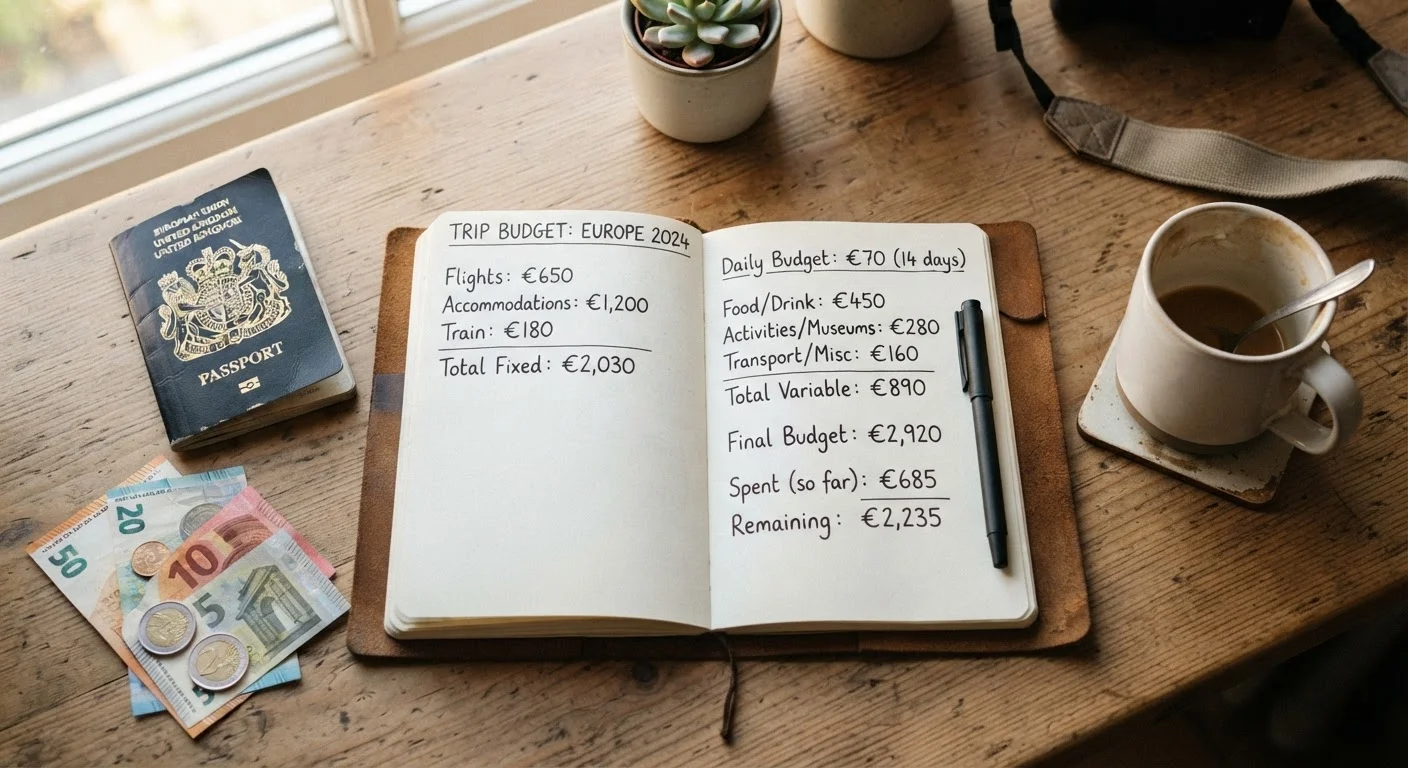
Organize your budget into two layers: fixed costs (amounts you know before you leave) and variable costs (amounts that depend on daily decisions). Fixed costs include flights, accommodation booked in advance, travel insurance, and any pre-purchased passes or tours. Variable costs cover meals, local transport, activities, shopping, and incidentals.
Fixed costs
Travel expenses you can confirm and pay before departure - such as flights and pre-booked accommodation - where the amount doesn't change based on daily decisions.
Variable costs
Expenses that fluctuate depending on choices you make while traveling, such as meals, local transport, and activities.
Daily travel budget
The average amount you plan to spend per day on variable costs during a trip. It's calculated by dividing total variable spending by trip length.
Budget buffer
An additional percentage (typically 10-15%) added on top of your estimated total to cover unexpected costs without derailing your plan.
Travel fund
A dedicated savings pool - often a separate bank account - set aside specifically to accumulate money for an upcoming trip.
Within those layers, use these categories as your checklist:
- Transportation: Flights or other intercity travel, airport transfers, local transit, car rental if applicable
- Accommodation: Nightly rate multiplied by nights, plus any resort fees or taxes not shown in the listed price
- Food and drink: A realistic daily estimate based on the destination's price level - not just one meal
- Activities and entry fees: Museums, tours, parks, experiences you've identified in your itinerary
- Travel insurance: Often underbudgeted or skipped entirely; verify what coverage you actually need with your provider
- Miscellaneous: Souvenirs, currency exchange costs, tips, connectivity, medication, and anything destination-specific
If you're building an itinerary at the same time, your itinerary planning structure can directly inform which activity costs to include.
How to Estimate Realistic Numbers
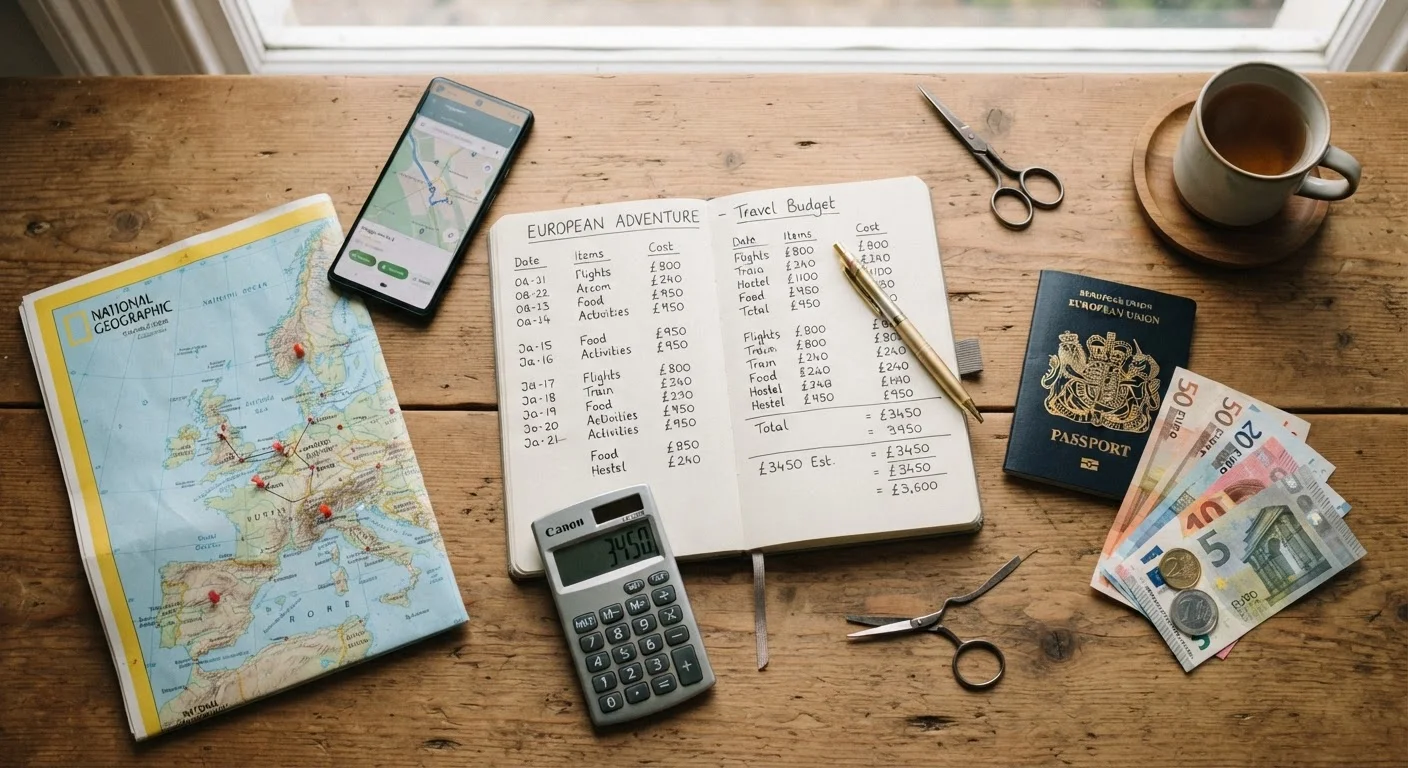
Estimation is where most planners either guess too low (optimism) or freeze up (overwhelm). A practical approach: anchor each category to a daily rate, then multiply by trip length.
For destination-level pricing, travel forums, recent blog posts, and government tourism resources can give you a realistic sense of what meals, transit, and activities cost locally - just weight recent sources more heavily than older ones. For flights specifically, search across multiple date windows; fare patterns vary significantly by season, day of week, and how far in advance you book. Our flight planning guidance covers the timing mechanics in more detail.
Understanding how a daily travel budget works is one of the most practical skills you can build. Once you have a reliable daily figure for your destination, multiply it by your trip length, add your fixed costs, then add a buffer of 10-15%. That buffer isn't laziness - it's discipline. It absorbs the costs you didn't anticipate without forcing you to make stressful decisions mid-trip.
Visa and Entry Requirements Affect Your Budget
Visa fees, reciprocity fees, and arrival taxes can add meaningful cost for certain destinations - and they're non-negotiable. Always verify current entry requirements and associated fees with official government and embassy sources before finalizing your budget, as these figures can change.
Building Your Travel Fund
Once you have a total target, work backward to a savings plan. Divide the total by the number of months until your trip to get a monthly savings target. If that figure is uncomfortably high, either extend your timeline or revisit the destination or travel style.
Keeping travel savings in a separate, clearly labeled account (rather than mixed with everyday money) makes it easier to track progress and harder to dip into unintentionally. Automate a transfer each pay period if you can - even modest, consistent amounts build meaningfully over six to twelve months.
For a comprehensive view of budgeting across the full trip lifecycle - from saving through to post-trip review - travel budgeting end to end covers the complete picture.
Tracking and Staying on Budget While Traveling
A budget you don't track is a guess. The method matters less than the habit: whether you use a notes app, a dedicated expense tracker, or a simple spreadsheet, log spending at least once per day. Daily logging takes two minutes and prevents the end-of-trip shock of realizing you overspent a category three days ago.
Check your running total against your daily rate every morning. If you're consistently over, adjust the next day's discretionary spending - skip one paid activity, eat one meal at a market instead of a restaurant. Small real-time corrections are far less painful than running out of money.
For a side-by-side look at structured tracking approaches, envelope budgeting vs. spreadsheet tracking outlines how each method performs in practice. And before you depart, run a pre-departure budget audit to confirm nothing has been overlooked.
Don't Rely on Your Buffer as Spending Money
The 10-15% buffer exists to absorb genuine surprises - flight delays, medical needs, lost items - not to extend your discretionary spending. Treating it as extra fun money is one of the fastest ways to end a trip in financial stress.