
Why End-to-End Budgeting Matters
Most travelers budget once - before departure - and then stop paying attention. That single-phase approach is why so many trips end with a credit card statement that feels like a surprise. Effective travel budgeting runs through three distinct phases: planning before you book, monitoring while you travel, and reviewing after you return. Each phase feeds the next, and skipping any one of them creates a gap that costs you money or experience.
This guide covers the full cycle with practical mechanics, not general platitudes. Whether you're managing a two-week international itinerary or a long weekend road trip, the same framework applies. For a broader look at how budgeting fits into the full planning process, see The Complete Framework for Planning Any Trip.
10-15%
Recommended contingency buffer
Travel finance planners generally recommend reserving 10-15% of total estimated trip costs for unplanned expenses.
3x
Food cost variance across destinations
Daily food budgets can vary by a factor of three or more between comparable destination types depending on dining style and local price levels.
Building Your Pre-Trip Budget
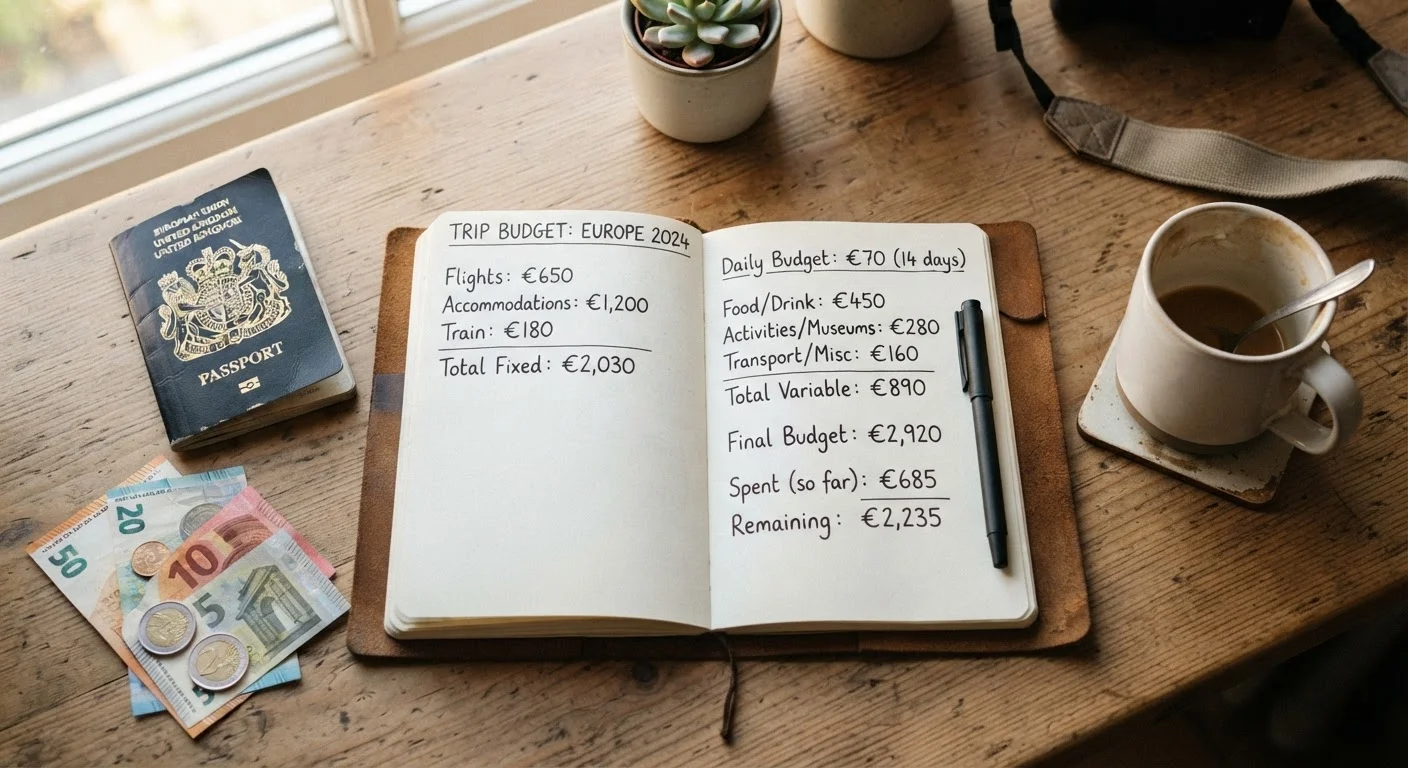
Start with five cost categories that cover virtually every travel expense: transportation (flights, rail, car rental, fuel), accommodation, food and drink, activities and entry fees, and a contingency buffer. Assign a daily estimate to each, then multiply by the number of travel days. This gives you a working total you can stress-test before committing.
Transportation and accommodation are usually the largest fixed costs and the easiest to research with precision. Use published fare ranges and average nightly rates for your destination and travel window - not best-case figures. Food and activities are variable and harder to pin down, but destination-specific traveler forums and government tourism sites often publish reliable average daily spend figures.
Build your accommodation and transport estimates from published rate ranges for your specific travel window, not annual averages - seasonal pricing swings can shift costs by 40% or more.
High-season pricing is not always obvious from general research; destination-specific timing data gives you a realistic baseline rather than a misleading midpoint.
When estimating food costs, divide your daily food budget into three tiers - one restaurant meal, one mid-range option, and one self-catered meal - and price each separately for the destination.
Blanket per-day food estimates routinely miss how much meal mix affects the total; tiered estimates produce far more accurate daily figures.
The contingency buffer is not optional. A general rule of thumb is 10-15% of your total estimated budget. This absorbs flight delays, unexpected entry fees, medical expenses, or itinerary changes without derailing the trip. For planning a road trip component, the Road Trip Planning guide covers fuel estimates, vehicle costs, and overnight lodging budgeting in detail.
Underestimating Variable Costs Is the Most Common Budget Failure
Fixed costs like flights and hotels are easy to research precisely, so travelers often anchor their entire budget to those figures and treat variable costs as an afterthought. Food, local transport, tips, and entry fees frequently exceed estimates by 20-30% in practice. Price these categories conservatively and give them as much attention as your headline costs.
Saving Strategically Before You Go
Once you have a target budget number, work backward to a savings timeline. Divide the total by the number of months until departure to get a monthly savings target. If that figure isn't feasible, either extend the timeline or identify which budget category can be trimmed without materially affecting the experience.
Booking sequencing matters here. Locking in flights and accommodation early reduces your largest fixed costs and lets you direct remaining savings toward experiences. Flexible booking timing - particularly for flights - can shift costs meaningfully. The Booking Strategies hub covers timing, fare patterns, and accommodation booking approaches in depth.
Automate Your Trip Savings From Day One
Set up a dedicated savings account and schedule an automatic transfer on payday for your monthly savings target. Treating the trip fund like a fixed expense - rather than saving whatever is left over - dramatically improves the likelihood of hitting your target on schedule. Even a modest recurring transfer compounds meaningfully over a six-to-twelve-month saving window.
Tracking Spending While Traveling
Pre-trip budgets are estimates. Real trips introduce variables no spreadsheet fully anticipates. Active tracking - logging expenses as they happen rather than reconstructing them later - is the only way to stay calibrated. You don't need a sophisticated system: a notes app, a travel-specific budgeting app, or a simple daily running total in a shared doc all work. The tool matters far less than the habit.
Check your running total against your daily budget at the end of each day. If you're consistently over in one category, identify why and decide consciously whether to adjust behavior or pull from the contingency buffer. The key discipline is making that decision deliberately rather than discovering the damage after checkout.
Digital Payments Complicate Real-Time Tracking
When expenses are split across credit cards, digital wallets, and cash, it's easy to lose visibility on daily spend. Consider consolidating travel purchases to one card where practical, and log cash transactions immediately - cash spending is the category most likely to go untracked and unrecorded.
Currency conversion is a common tracking blind spot. If you're spending in a foreign currency, record amounts in your home currency at the exchange rate you actually received - not the mid-market rate - so your tracking reflects real cost.
Post-Trip Financial Review
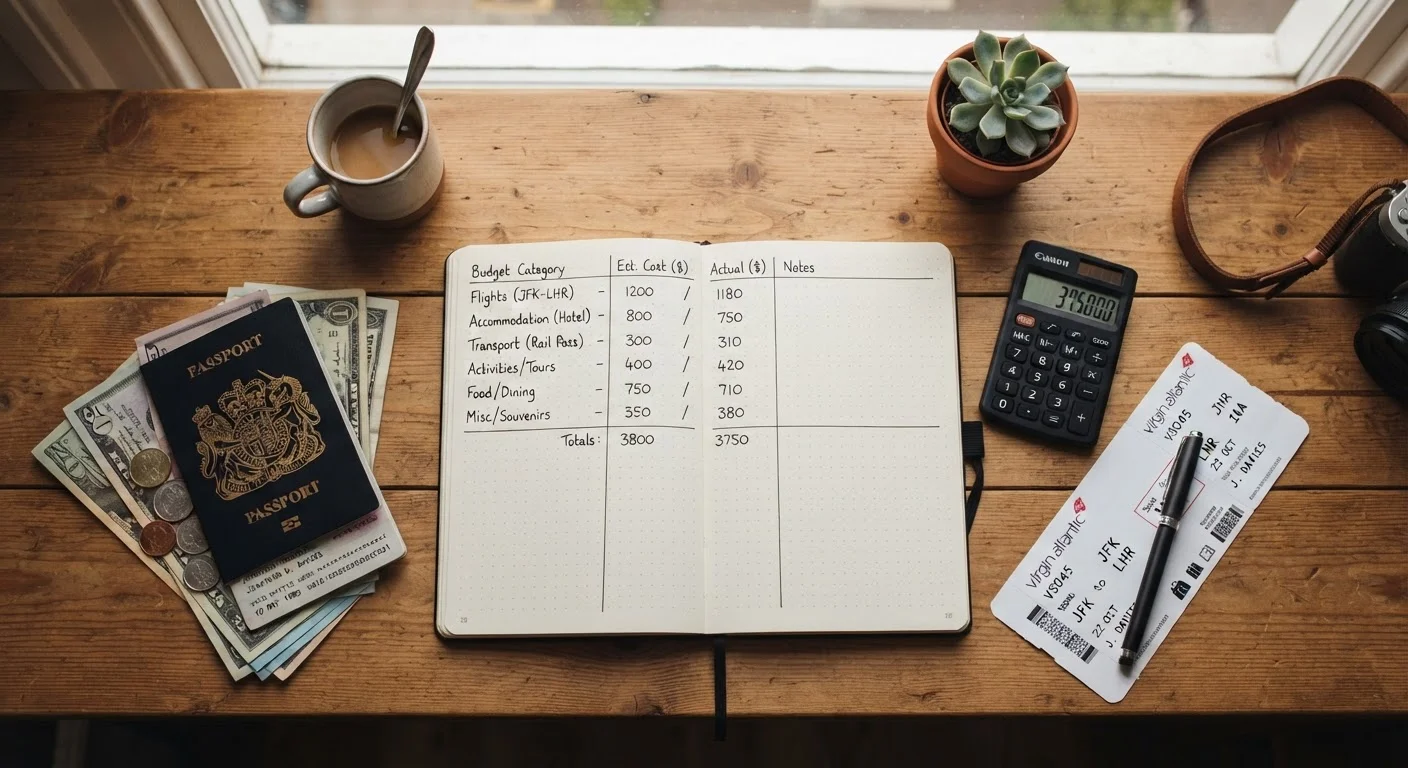
The post-trip review is the step most travelers skip entirely, and it's the one with the highest long-term return. Within a week of returning, total your actual spending by category and compare it to your estimates. Identify where you were significantly over or under, and ask why.
This analysis does two things: it validates or corrects your estimation instincts for future trips, and it surfaces systemic patterns - maybe you consistently underestimate food costs in urban destinations, or overestimate activity spending. Documented patterns make every subsequent budget more accurate from day one.
“A budget is telling your money where to go instead of wondering where it went. That principle applies just as much to a travel fund as it does to a household budget.”
— Dave Ramsey, Personal finance author and radio host
Store your actuals in a simple format you'll actually find again - a shared spreadsheet, a note tagged by destination, or a travel journal entry. Over several trips, this personal spend database becomes one of the most useful planning tools you'll have. For road trip-specific budgeting review, the Road Trip Planning hub offers destination-specific cost context that pairs well with your own historical data.
Trail Wallet / TravelSpend
Mobile apps designed specifically for logging travel expenses by category in real time. Useful for maintaining daily awareness of spend against a set budget while on the road.
Google Sheets Trip Budget Template
A flexible, shareable spreadsheet for pre-trip estimation, daily tracking, and post-trip comparison. Easily customized to any destination or trip structure.
Official Government Travel Advisory Sites
Primary sources for visa requirements, entry fees, health documentation mandates, and safety advisories. Always verify current requirements directly before booking.