
What the Number Actually Measures
A daily travel budget is a planning and tracking tool, not a promise. It represents the average spend per day you need to stay within your total trip allowance. The distinction matters: averages smooth over real variation, which means some days will run well above the figure and others well below - and that's expected, not a failure of planning.
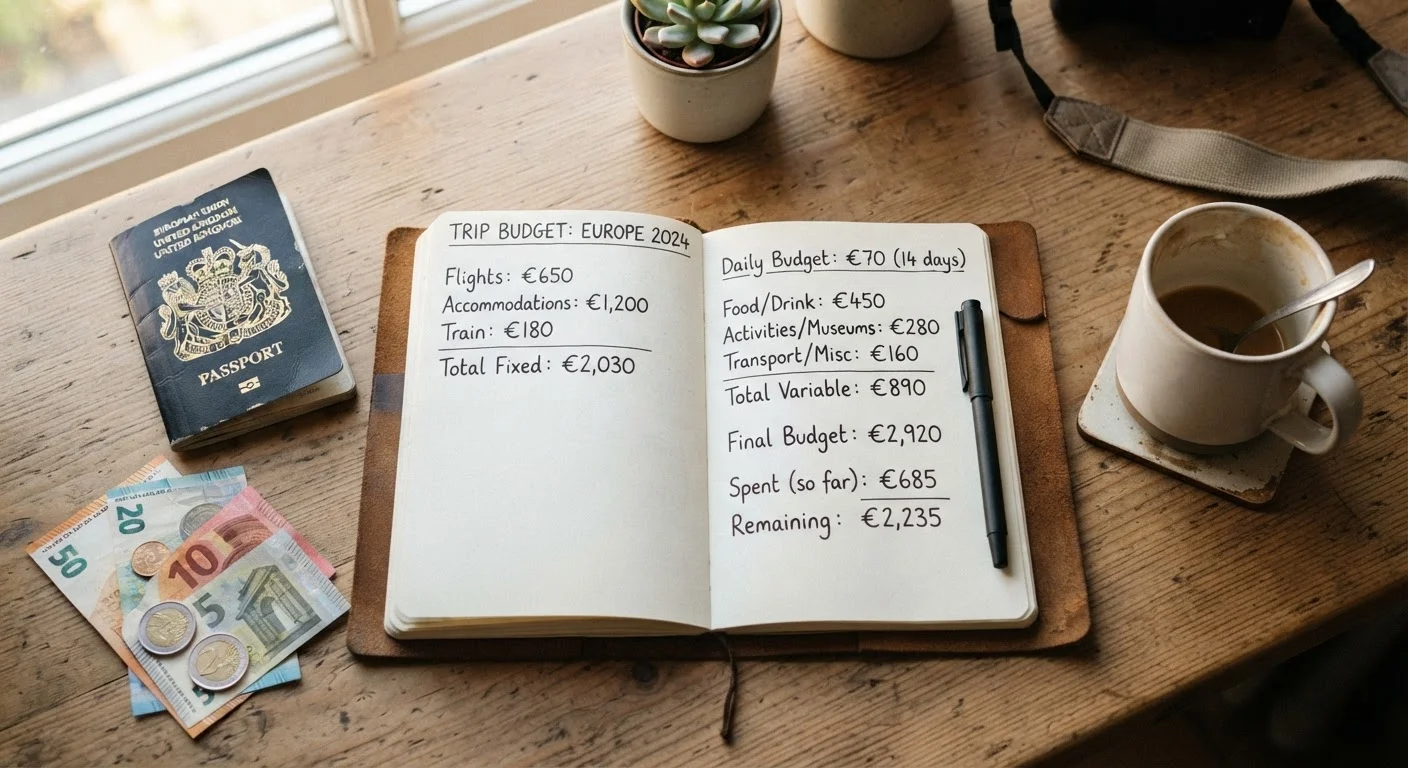
The core formula is straightforward: take your total on-the-ground budget (excluding pre-paid, fixed costs like international flights), divide by your number of travel days, and you have your daily target. If you've budgeted $2,100 for a 14-day trip, your daily figure is $150. Every day you spend $120, you're banking $30 against a day that costs $200.
What makes this number genuinely useful is that it turns an abstract lump sum into something you can assess in real time. Checking whether you spent $148 today against a $150 target is actionable. Wondering whether you've blown your $2,100 trip budget by day five is harder to answer without that daily frame of reference.
~20%
Typical budget overrun from miscellaneous costs
Travel finance planners broadly estimate that incidentals and unplanned expenses account for 15-25% above travelers' initial daily estimates for international trips.
$150-$250
Average daily cost for mid-range Western Europe travel
Mid-range independent travel in major Western European cities - covering accommodation, meals, transit, and one paid activity - generally falls in this range, though costs vary widely by city and season.
14 days
Average international leisure trip length for U.S. travelers
U.S. Travel Association research has consistently shown that the average international leisure trip for American travelers runs approximately two weeks, making daily budgeting particularly relevant at this scale.
The Categories Most Travelers Undercount
A daily budget that only accounts for accommodation and meals is incomplete and will consistently underperform. The categories travelers most frequently omit or underestimate include local transit (taxis, metro cards, ride-shares), entrance fees for sites and museums, tips, travel insurance daily cost attribution, and incidentals like bottled water, sunscreen, or a last-minute umbrella.
None of these are large in isolation, but together they can add 15-25% to your expected daily spend. A useful practice is to run a rough daily cost breakdown by category before the trip - accommodation, food, transport, activities, miscellaneous - and stress-test each line against what that destination actually costs, not what you hope it costs.
For road trips specifically, fuel, tolls, and parking compound quickly. See our road trip cost breakdown for a detailed look at where that category of spend tends to surprise travelers.
Build a Miscellaneous Line Into Every Day
Add a flat $10-$20 miscellaneous line to your daily budget from the start. This absorbs the small, unpredictable costs - a convenience store run, a coin-operated locker, an entry fee you didn't anticipate - without forcing you to reclassify your spending. Unused miscellaneous funds roll into your buffer.
Why Daily Averages Lie - and How to Work Around It
Treating every travel day as equivalent is one of the most common daily budget mistakes. Arrival days often include airport transfers, a larger meal, and settling-in costs. Tour days carry activity fees. Transit days - where you're on a train or bus for eight hours - may cost almost nothing beyond your seat. Averaging across these creates a number that's wrong for most individual days, even if it's right across the full trip.
A more accurate approach is to sketch a rough itinerary and tag days by expected cost level: high, medium, or low. Allocate more of your daily budget to high-cost days and less to low-cost ones. The total still needs to match your allowance, but you'll set more realistic daily targets and be less likely to panic when a touring day runs $50 over your flat average.
If you're building a budget from scratch, this guide to first-time trip budgeting walks through how to estimate costs before you have real data to work from.
Using the Number to Course-Correct on the Road
The daily budget's real value is as a mid-trip instrument. Travelers who set a number and never look at it again are doing half the work. Checking your running daily average every two or three days tells you whether you're on track, trending over, or carrying a surplus you can spend on something worthwhile.
When you're running over, the fix is a recalculation: remaining funds divided by remaining days gives you an updated target. Then you ask which upcoming line items have flexibility. Accommodation already booked has none. Meals, activities, and discretionary shopping usually do.
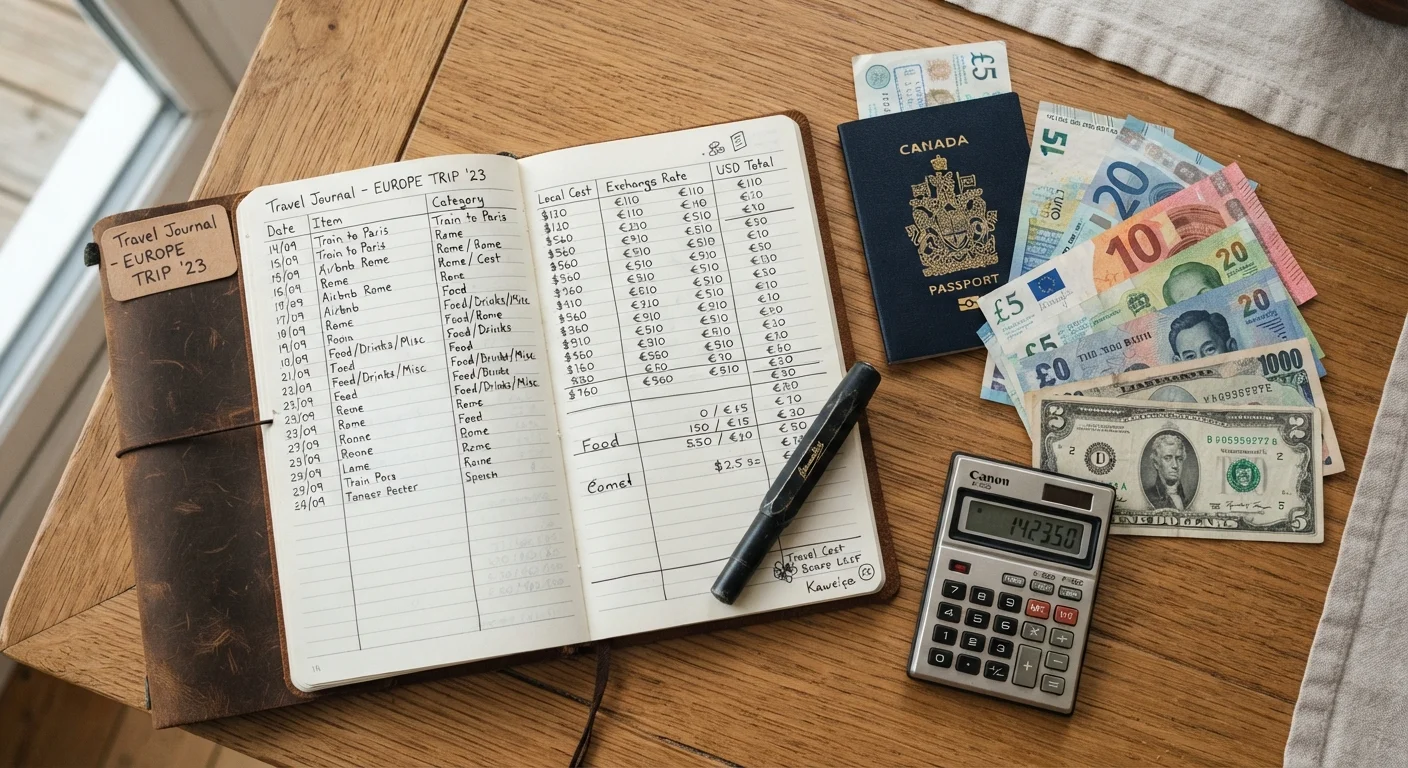
For a complete framework - including how to build a buffer and handle variable costs - see building a travel budget that survives reality. And if you want a method for tracking spend day-to-day, envelope budgeting versus spreadsheet tracking compares two practical approaches side by side.
Daily Budgets Work Best as Averages, Not Hard Limits
Treat your daily figure as a running average rather than a ceiling that resets at midnight. Rigidly capping each individual day can lead to poor decisions - skipping a meaningful experience on day three to stay under budget, then spending freely on day eight because you're "ahead." The goal is to end the trip within your total allowance, not to make every day identical.