

How Each Method Works
Envelope budgeting is a pre-commitment system. Before the trip, you divide your total travel allowance into named categories - accommodation, food, transport, activities, emergencies - and allocate a fixed amount to each. Historically done with physical cash envelopes, the same logic applies digitally using dedicated sub-accounts or budgeting apps that mimic the envelope structure. When a category runs dry, you either stop spending there or consciously pull from another envelope.
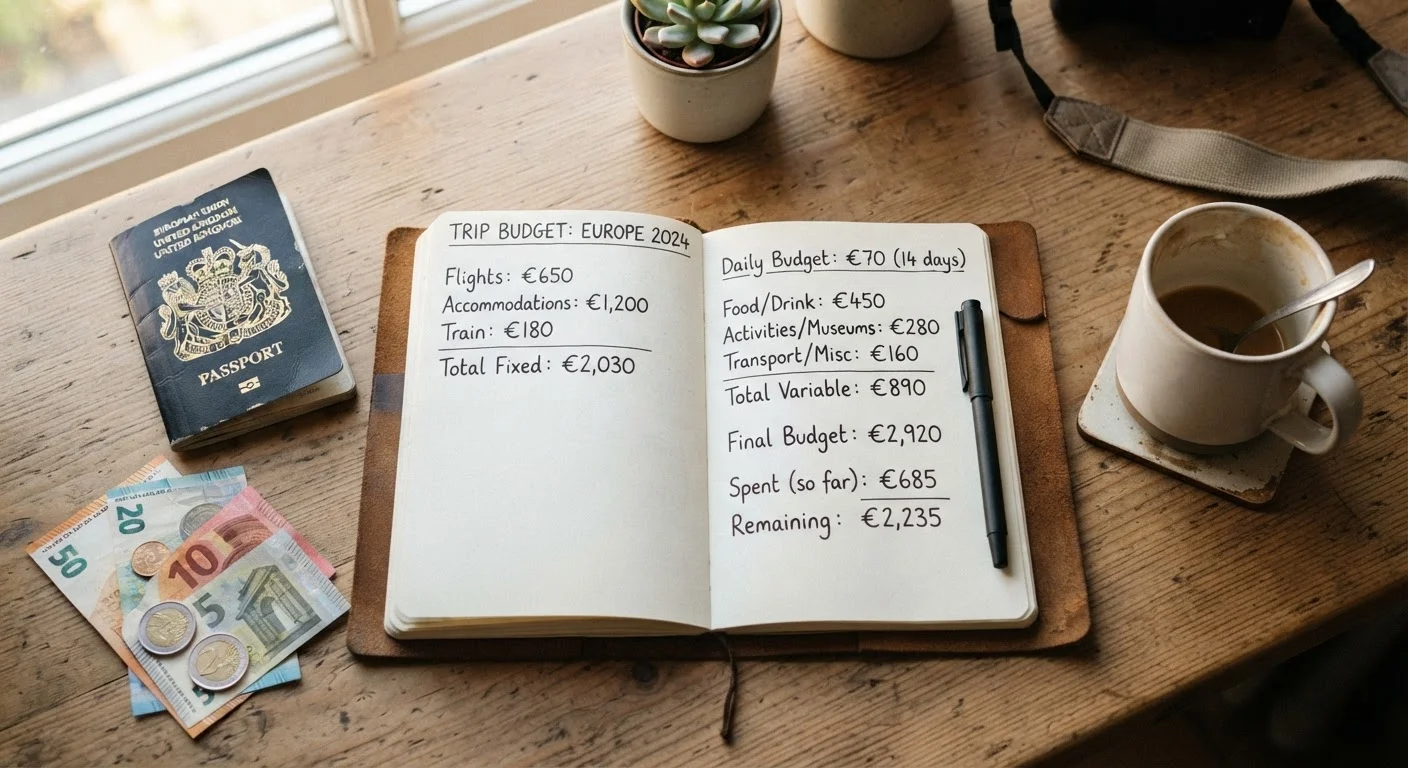
Spreadsheet tracking is a logging system. You start with estimated figures for each category, then record every actual expense as the trip unfolds - usually at day's end or in real time via a mobile sheet. The spreadsheet shows variance between planned and actual spend, flags categories drifting over budget, and produces a complete financial record when the trip ends. For a solid framework on building those initial estimates, see our trip budgeting primer.
| Envelope Budgeting | Spreadsheet Tracking | |
|---|---|---|
| Core mechanism | Pre-allocate cash to fixed categories | Log actual spend against estimates |
| Spending control | Hard stop - money runs out | Soft signal - shows overspend after the fact |
| Flexibility | Low - rebalancing is cumbersome | High - easy to adjust categories |
| Setup effort | Low - divide and label | Medium - build template, set estimates |
| Best trip length | Short (1-7 days) | Medium to long (7+ days) |
| Cash-heavy destinations | Strong fit | Works but requires discipline |
| Post-trip insight | Limited | Strong - full expense record |
| Risk factor | Cash theft or loss | Incomplete logging, data gaps |
Where Each Method Struggles
Envelope budgeting's core weakness is inflexibility. Travel costs rarely land in neat categories - a single meal might blend transport (a ferry ticket sold at the restaurant dock) with food spend. Rebalancing envelopes mid-trip is cumbersome, and carrying physical cash introduces theft and loss risk. In destinations where cards dominate, maintaining separate cash pools becomes logistically awkward.
Spreadsheet tracking's weakness is latency and discipline. It only works if you log consistently. Miss two days of entries after a busy stretch and you're reconciling receipts from memory - exactly the scenario where errors creep in. The spreadsheet also doesn't stop you from overspending; it only tells you afterward that you did. For travelers who struggle with impulse spending, a record-keeping system without a hard limit offers little behavioral friction.
Don't Rely on Memory for Expense Logging
Spreadsheet tracking breaks down fast when entries are delayed. Even a 24-hour gap can mean forgotten small purchases - market snacks, transit top-ups, tips - that quietly push you over category limits. Build a habit of logging at meal breaks or at the end of each day, not when you get home. Photo-capturing receipts in the moment is a practical backup for high-spend days.
Matching the Method to Your Trip Profile
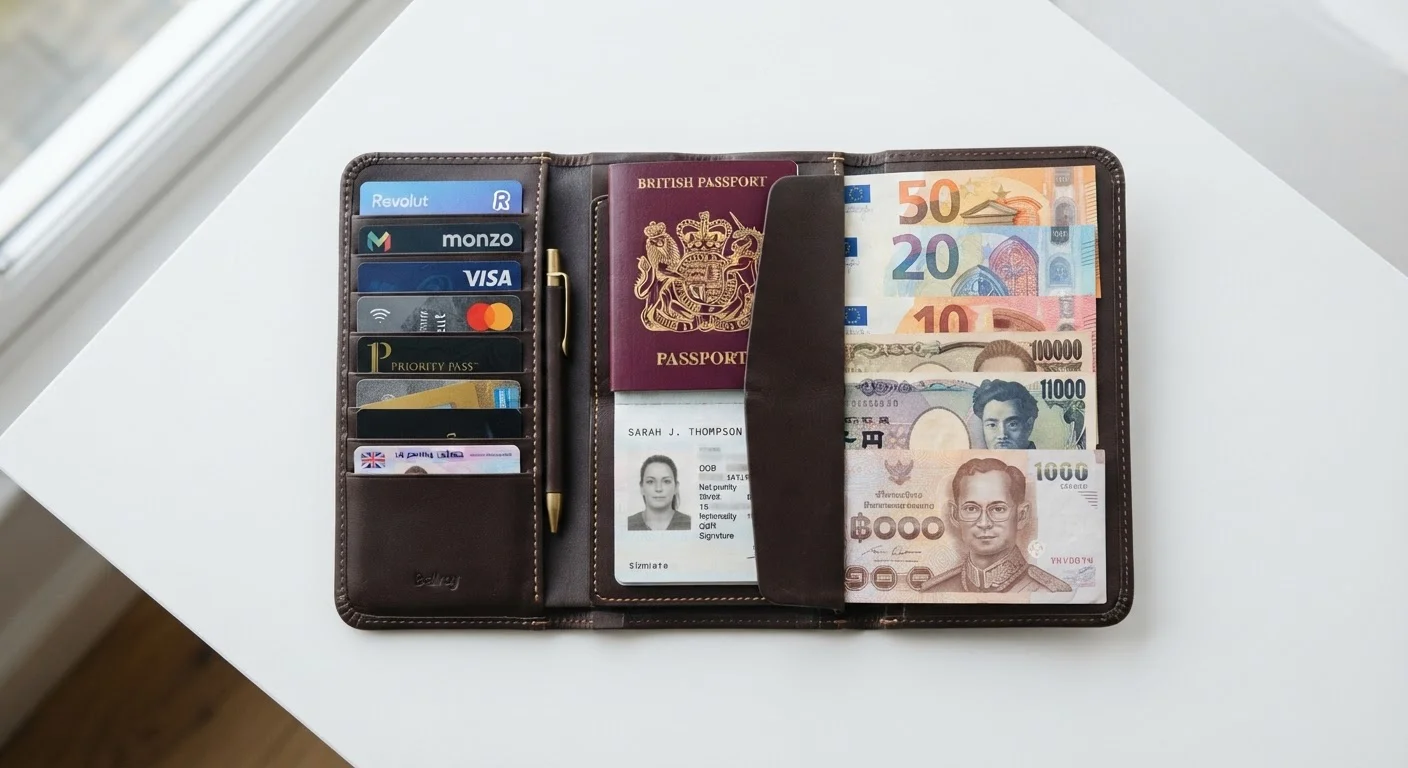
Trip length, destination type, and your own spending patterns should drive the decision. Short trips - a long weekend or a week - suit envelope budgeting well. The simplicity is an asset when there are few categories to manage and a finite cash supply is easy to monitor. For destinations where cash is still king (parts of Southeast Asia, rural Europe, much of Latin America), physical envelopes align naturally with how money moves on the ground.
Longer, multi-destination itineraries generally benefit from spreadsheet tracking. Variable costs across cities and countries - fluctuating transport legs, shifting accommodation price points, currency differences - generate complexity that cash envelopes handle poorly. A well-structured spreadsheet, updated daily, gives you the variance data to adjust pacing or cut a planned activity before the damage compounds. The concept of a daily travel budget figure pairs naturally with spreadsheet tracking: calculate your per-day allowance, then use the sheet to verify you're hitting it.
Start with a Daily Spending Cap
Whichever method you choose, anchor it to a realistic daily number before you leave. Divide your total discretionary budget by trip days, then use that figure as your envelope total or spreadsheet baseline. Travelers who skip this step often find they've burned through the first half of their budget by the midpoint of the trip. See how to calculate a meaningful daily travel budget for a practical walkthrough.
The Case for a Hybrid Approach
Many experienced travelers land on a middle path: use envelope-style pre-allocation to set firm category limits, then log actuals in a spreadsheet to maintain visibility. In practice, this means deciding before departure that, say, food gets $X and activities get $Y - the envelope logic - while a simple running sheet tracks where within those limits you actually land each day.
This approach captures the behavioral guardrails of envelopes and the analytical clarity of tracking. It also makes post-trip review far more useful. When you can see which categories consistently ran over across multiple trips, you can calibrate future budgets with real data rather than guesswork. For a broader framework on building a budget that holds up on the road, this step-by-step budgeting guide covers buffers, variable costs, and mid-trip adjustments in detail. And if you're thinking about how your money moves across borders and currencies, understanding your currency and card options is worth reading alongside whichever tracking method you choose.