

What a Travel Emergency Fund Is Actually For
Most travelers build a trip budget and then assume the margin for error is whatever they didn't spend on dinner. That's not a contingency plan - it's optimism. A travel emergency fund is a deliberate, pre-funded reserve built to absorb costs that your regular budget was never designed to handle.
The scenarios that drain travelers fastest aren't dramatic disasters. They're logistical failures: a cancelled flight that requires an unplanned hotel stay, a stomach illness that requires a clinic visit and prescription medications in a country where you don't have local payment options set up, or a bag that gets lost and forces you to replace clothing and toiletries before a formal event. These are the real draws on an emergency fund - not earthquakes.
The fund is also distinct in purpose from travel insurance. Insurance is a reimbursement mechanism - it pays you back, eventually, for losses it covers. An emergency fund is immediate liquidity. When you need to pay a foreign clinic before they'll treat you, or rebook the last seat on a morning flight, there's no time to wait on a claims adjuster. Both tools matter; they operate on different timelines. For a deeper look at how insurance coverage interacts with real-world gaps, see our guide to cruise travel insurance coverage.
The Real Cost Categories to Plan Around
Sizing an emergency fund correctly means knowing which cost categories actually matter. Here's where the money goes when things go wrong:
- Medical treatment and evacuation. This is the highest-severity category. Emergency room visits in many countries require upfront payment. Medical evacuation - being transported to a facility capable of treating your condition - can run into tens of thousands of dollars in remote regions.
- Emergency rebooking. Last-minute flights are priced at a premium. A missed connection that strands you in a hub city can mean a full-fare seat purchase, not a cheap standby option.
- Unplanned accommodation. Extended stays due to illness, weather, or disruptions add hotel nights at walk-in or last-minute rates, which are typically well above advance-booking prices.
- Replacing lost or stolen essentials. Documents, devices, medications, and clothing all have replacement costs. Some, like prescription drugs, can be difficult and expensive to source in unfamiliar locations.
- Emergency transportation. Ground transport to a different airport, a taxi during a strike, or a private transfer when public options fail - these are small but real costs that accumulate.
$50,000+
Typical cost of medical evacuation from remote regions
The U.S. State Department notes that medical evacuations from remote international locations can exceed $50,000 depending on distance and required care - costs rarely covered in full by standard travel insurance.
10-15%
Recommended emergency fund as share of trip budget
Travel planners commonly cite 10-15% of total trip cost as a practical emergency buffer baseline, adjusted upward for remote or high-risk itineraries.
1 in 6
Travelers who experience a significant trip disruption
Industry surveys on travel disruptions consistently suggest a meaningful proportion of international travelers encounter at least one significant unplanned expense per trip, including medical, transport, or accommodation costs.
Adventure travelers face a specific additional layer: search-and-rescue operations and helicopter evacuations in wilderness areas often fall outside standard insurance definitions. If that describes your travel style, see our breakdown of adventure travel insurance policy language before you set your fund size.
How to Size and Structure Your Fund
There's no universal number, but there are defensible starting points. A general rule used by many travel planners is 10-15% of total trip cost, with these floors: approximately $500 for domestic trips and $1,000-$2,000 for international travel. Adjust the ceiling upward for:
- Remote or medically underserved destinations
- Trips longer than three weeks
- Activities classified as high-risk by most insurers (diving, trekking, motor sports)
- Travel to regions with known infrastructure instability
Test Your Access Before You Leave
Before departure, confirm that your emergency fund is reachable internationally - check daily ATM withdrawal limits, foreign transaction fees, and whether your card requires a PIN for foreign transactions. Call your bank if necessary. Finding out your card doesn't work as expected is not a problem you want to solve from a hospital waiting room.
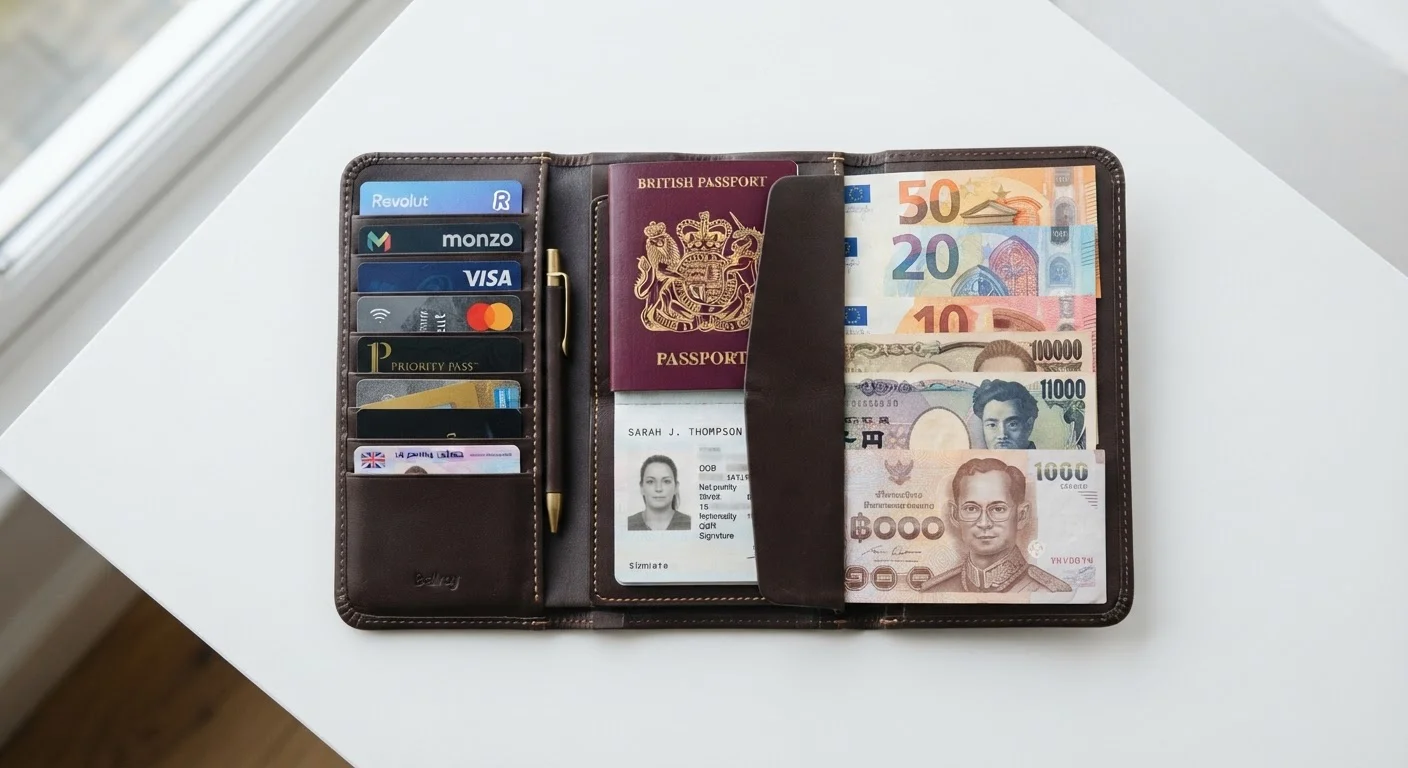
Structure matters as much as amount. Keep the fund in an account that's accessible internationally without punishing fees or daily withdrawal caps. A credit card with a meaningful limit and no foreign transaction fees acts as a strong backbone - but pair it with a modest amount of local currency for situations where cards aren't accepted.
Critically, don't commingle your emergency fund with daily spending money. A separate sub-account or a dedicated card reserved only for genuine emergencies prevents the slow erosion of the reserve through normal trip spending. This principle connects directly to the broader framework covered in our trip budgeting guide and the end-to-end approach in travel budgeting from planning to post-trip review.
Common Mistakes That Leave Travelers Exposed
Even experienced travelers get this wrong. The most common errors:
- Assuming insurance covers everything upfront. It doesn't. Most policies reimburse after the fact, meaning you need liquid funds regardless of your coverage level.
- Setting a fund based on best-case scenarios. If you size your buffer for a minor inconvenience, a genuine emergency will blow straight through it. Model the worst plausible scenario for your specific itinerary, not the average trip.
- Not rebuilding after a draw. If you use the fund mid-trip, it doesn't reset automatically. A depleted emergency reserve heading into the final days of a long trip is no reserve at all.
- Keeping it inaccessible. A fund locked in a savings account with a $300 daily ATM limit isn't accessible in the moment it's needed. Test your access mechanisms before departure.
If your past trip budgets have come apart at the seams, the structural reasons are worth examining. Our analysis of why travel budgets fail covers the root causes and how to correct them before your next trip.