

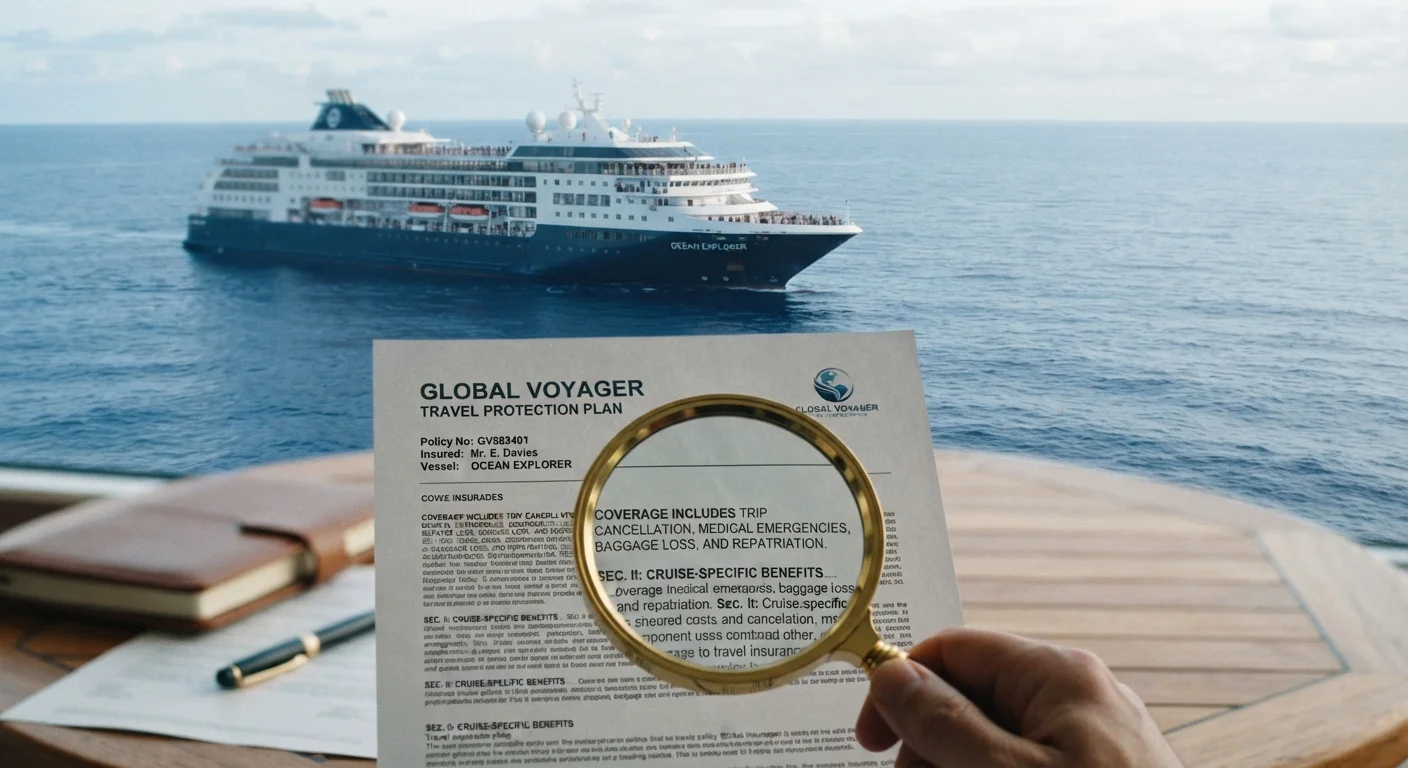
Why Standard Travel Insurance Often Isn't Enough
A cruise vacation concentrates a large share of its cost into non-refundable, prepaid bookings — cabin fares, specialty dining, prepaid excursions — long before you ever step aboard. It also places you in an environment where the nearest hospital can be hundreds of miles away and where medical care, when needed, carries price tags that dwarf those of a land-based trip. These realities make cruise-specific insurance a different calculation than the generic annual travel policy many frequent flyers carry.
Standard travel insurance is built around the most common claim types: flight delays, lost luggage, and modest trip cancellations. Cruise travel introduces exposures those policies weren't designed to address at adequate limits — most notably, emergency medical evacuation from international waters and the cascading financial effect of a missed embarkation port.
Experienced cruisers who also research ship selection carefully — as outlined in our guide on what seasoned cruisers check before booking — treat insurance review as an equally important pre-booking step, not an afterthought.
$50K–$200K+
Typical cost range for maritime medical evacuation
Industry estimates from travel insurance analysts and air medical transport providers reflect the wide variability based on location and type of evacuation required.
14–21 days
Typical window to qualify for pre-existing condition waiver
Most third-party cruise travel insurance policies require purchase within this window after the initial trip deposit to waive the pre-existing condition exclusion.
50–75%
Typical reimbursement rate for cancel-for-any-reason riders
CFAR upgrades generally reimburse a portion of non-refundable trip costs rather than the full amount; terms vary by policy.
Core Coverages in a Cruise Policy
A well-structured cruise travel insurance policy typically includes the following categories, each with its own sublimits and conditions:
- Trip cancellation and interruption: Reimburses prepaid, non-refundable costs if you must cancel or cut short your cruise due to a covered reason — illness, injury, death of a family member, or select unforeseen events. Covered reasons are defined in the policy; voluntary cancellations generally are not included unless you've added a "cancel for any reason" (CFAR) rider.
- Emergency medical coverage: Pays for onboard medical treatment and hospitalization at ports of call. Limits of $100,000 or more are worth seeking, given that onboard medical facilities charge at private-pay rates and shipboard care is just the beginning of potential costs.
- Medical evacuation: Covers the cost of transporting you to an appropriate medical facility — potentially by air ambulance or coast guard coordination. This is arguably the most critical cruise-specific coverage; costs can reach six figures. Some policies specify which facilities are approved, so read this clause carefully.
- Missed connection and missed port: Compensates for specific out-of-pocket losses when a port call is skipped or you miss embarkation due to a covered transportation delay. This coverage does not restore the experience of a missed destination — it addresses documented financial loss only.
- Baggage and personal effects: Similar to standard policies, with per-item sublimits that may not adequately cover high-value electronics or jewelry.
Understanding itinerary change risk alongside your insurance terms is useful context — our article on why cruise itinerary changes happen explains the operational reasons behind port skips and route alterations.
Buy Insurance Shortly After Your Deposit
The pre-existing condition waiver and, in some cases, cancel-for-any-reason eligibility are tied to how quickly you purchase after making your first trip deposit. Waiting until a few weeks before sailing closes off these protections permanently. Set a reminder to evaluate and purchase coverage within 14 days of booking.
The Gaps That Catch Cruisers Off Guard
Even a purpose-built cruise policy has exclusions and sublimits that can surprise claimants. The most common gaps include:
- Pre-existing conditions without a waiver: If you or a traveling companion has a health condition that existed before the policy's "look-back period" (typically 60–180 days before purchase), related claims may be denied. The waiver that eliminates this exclusion has a time-sensitive purchase window.
- Low evacuation sublimits on cruise-line plans: Some cruise line–branded protection plans cap evacuation at $25,000–$50,000 — a figure that a single helicopter evacuation from a remote itinerary can exceed. Third-party policies often offer higher limits, though they vary.
- Adventure activity exclusions: Shore excursions involving zip-lining, scuba diving, or off-road vehicles may be classified as hazardous and excluded from medical coverage. The policy language around adventure activities requires specific scrutiny.
- Itinerary changes vs. cancellations: Most policies cover trip cancellation but not financial disappointment from itinerary changes. If the cruise line reroutes your sailing away from a marquee destination, you're generally not entitled to a claim unless the policy has a specific itinerary change benefit.
- Embarkation day disruptions: Flight delays causing a missed departure are covered only if the delay meets the policy's minimum threshold and the cause is a listed covered event. Self-inflicted timing errors — booking a flight arriving too close to embarkation — are not covered.
Cruise Line Plans vs. Third-Party Policies
Cruise line–branded insurance plans are sold for convenience and may be adequate for straightforward itineraries with healthy travelers. However, they frequently carry lower medical evacuation limits and more restricted cancellation terms than comparable third-party options. Neither type is universally superior — the right choice depends on your health history, itinerary remoteness, and flexibility needs. Reading both policy documents before deciding is always worthwhile.
Visa and Entry Requirements Are Not Covered
Travel insurance does not protect against denial of boarding or entry due to missing documentation — passports, visas, or health requirements. Always verify current entry requirements for each port of call directly with official government sources and your cruise line well in advance of departure.
How to Evaluate a Policy Before You Buy
Rather than defaulting to the plan offered at checkout by a cruise line, consider these evaluation steps:
- Calculate your actual at-risk cost. Add up all non-refundable, prepaid expenses — cruise fare, air, prepaid excursions, hotels — to determine the coverage amount you need. Our article on sizing a travel emergency fund offers useful context for thinking about out-of-pocket risk beyond insurance.
- Prioritize medical and evacuation limits. For itineraries that take you to remote waters — Alaska's inside passage, the South Pacific, Antarctica — evacuation costs are a real and significant risk. Seek policies with evacuation limits that reflect this reality.
- Check the CFAR terms if flexibility matters. "Cancel for any reason" riders add cost but expand your options. Understand that they reimburse a percentage of trip cost — not the full amount — and they typically must be purchased within days of your initial deposit.
- Read the look-back period and waiver eligibility. If you or any traveler on the booking has a health condition, identify the policy's look-back period and confirm whether purchasing early qualifies you for the pre-existing condition waiver.
- Compare at least one third-party policy alongside the cruise line's plan. The cruise line's plan may be adequate for straightforward itineraries, but side-by-side comparison takes minimal time and can reveal meaningful differences in limits and exclusions.
This article provides general informational guidance about cruise travel insurance concepts and is not a substitute for personalized advice from a licensed insurance professional. Policy terms, coverage limits, and eligibility conditions vary by provider and change over time. Always read the full policy document and consult with a qualified professional before purchasing coverage. For health-related claims or concerns, consult a qualified healthcare provider.