

What Veteran Cruisers Know That First-Timers Often Miss
Choosing a cruise ship by itinerary and price alone is how even experienced travelers end up disappointed. The route might be flawless - the Azores, coastal Iceland, or the Mekong Delta - but if the ship doesn't suit your preferences, the voyage will feel off in ways that are hard to articulate until you're already aboard. Seasoned cruisers have learned to evaluate the vessel itself with the same rigor they apply to port schedules.
This checklist captures what that evaluation actually looks like in practice. As a complement to itinerary research, understanding the ship's physical design, operational structure, and service model is the research layer that separates a good booking from a great one. See our pre-sailing research framework for a deeper look at the tools and data sources that support this process.
Ship Class and Build Year
Every major cruise line operates multiple ship classes, and they can differ dramatically in design philosophy, amenity set, and onboard atmosphere - even under the same brand. A vessel built in 2007 operating the same itinerary as one launched in 2019 may have a meaningfully different cabin layout, entertainment infrastructure, and dining footprint. Why the same cruise line can feel completely different on different ships explores exactly this dynamic.
Look up the specific ship name - not just the cruise line - and identify its class, gross tonnage, and original launch year. Then check whether it has undergone a significant drydock refurbishment. A well-maintained older ship can outperform a newer vessel that hasn't been updated, but the specifics matter.
The ship's class and build year often predict onboard experience more reliably than the cruise line's brand promise.
Passenger Capacity and Space Ratio
Total passenger count tells you something; the space ratio - gross tonnage divided by passenger capacity - tells you more. A higher space ratio generally means less crowding in common areas, more relaxed pool decks, and easier access to dining venues without long waits. Ships carrying 5,000-plus passengers operate at a fundamentally different rhythm than those carrying 700.
For travelers who prioritize quiet and access to remote ports, small-ship cruising introduces a format where capacity constraints are a deliberate design feature rather than a trade-off.
Space ratio - tonnage divided by passenger count - is a more useful crowding indicator than ship size alone.
Crew-to-Passenger Ratio
Service quality on a ship is directly influenced by how many crew members are available per passenger. A ratio of 1:2 or better typically correlates with attentive, personalized service; ratios of 1:3.5 or higher often indicate a more self-sufficient, resort-style environment where waits at bars and dining rooms are common during peak hours. Cruise line marketing rarely highlights this figure prominently, but it's available in ship specifications.
Keep in mind that ratios vary by department - a ship may have excellent housekeeping coverage but thinner bar staff, affecting where you notice the difference most.
Crew-to-passenger ratios predict service attentiveness more accurately than brand-level reputation claims.
Deck Plan and Cabin Placement
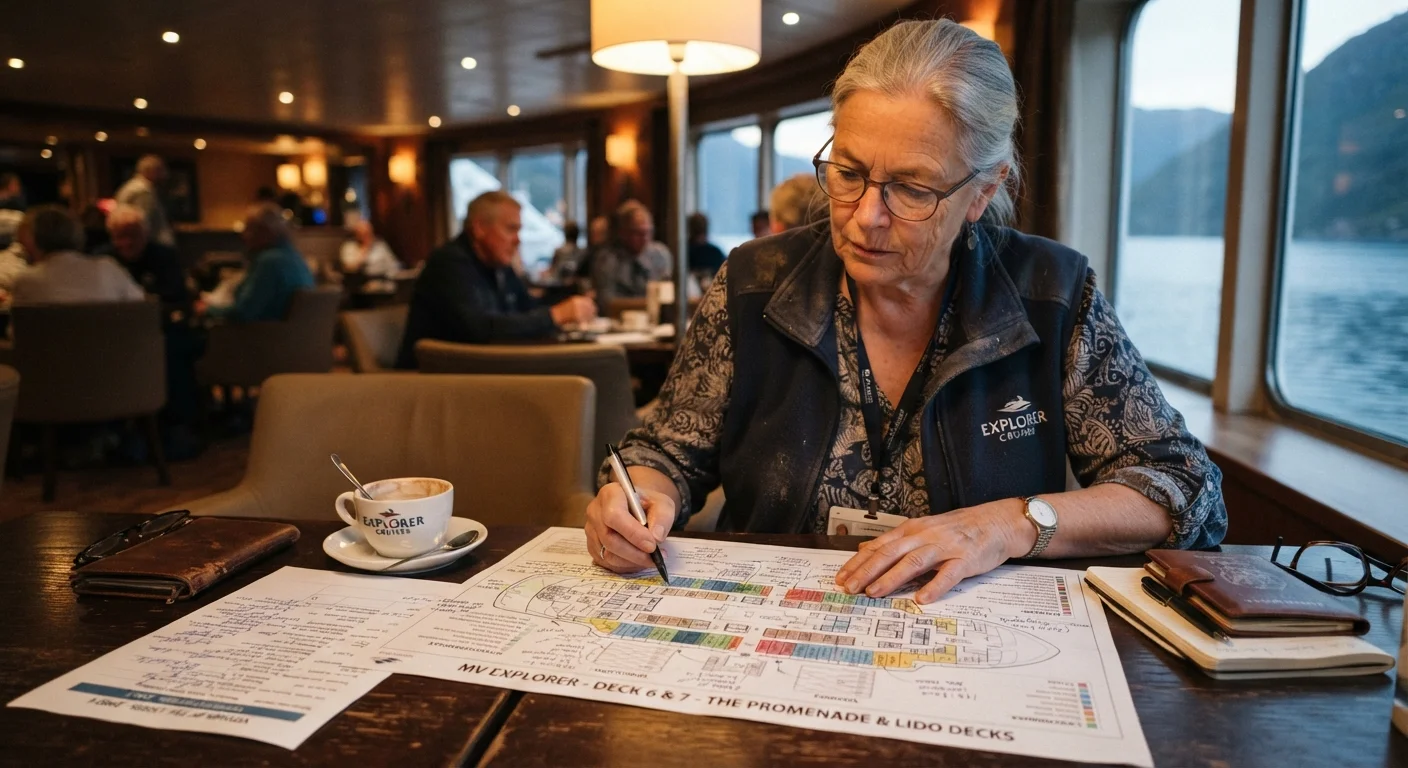
Experienced cruisers download deck plans and study cabin locations before booking. Cabins positioned below the pool deck, adjacent to the theater, or near elevator banks and crew corridors are prone to noise. Cabins at the very forward or aft of the ship experience more motion in rough seas. Mid-ship, mid-deck cabins are the most stable and generally the quietest - and they tend to book earliest.
For motion-sensitive travelers, cross-referencing cabin placement with the typical sea conditions on the intended route adds another layer of due diligence. Our article on seasickness and what actually helps is worth reviewing alongside deck plan research.
Mid-ship, mid-deck cabins minimize motion and noise - and they disappear from availability first.
Dining Structure and Included Venues
The gap between what's included in the base fare and what carries an additional cover charge varies considerably from ship to ship - even within the same cruise line. Some vessels bundle nearly all dining; others rely on specialty restaurants as a significant revenue stream, meaning the main dining room and buffet are effectively the only no-upcharge options. Knowing this before you book helps calibrate both expectations and budget.
Check specifically: how many specialty restaurants exist, whether they require reservations and fees, what the main dining room service style is (fixed seating or any-time), and whether a casual dining alternative is available for port-day evenings. Our overview of dining across the ship explains how each venue type typically functions.
The ratio of included to fee-based dining venues shapes both the daily experience and the true cost of a sailing.
Onboard Amenities That Match Your Travel Style
A ship optimized for families with young children - featuring waterslides, kids' clubs, and arcade spaces - is a very different environment from one built around a spa, library, and enrichment lecture program. Neither is objectively better, but boarding the wrong one for your preferences is a frustrating and avoidable mistake. Look at the amenity footprint holistically: entertainment venues, fitness facilities, adult-only spaces, enrichment programming, and whether the ship skews toward activity or relaxation.
Ships also vary in how well they use their own layout. Underused corners of the ship highlights how experienced passengers find quieter spaces - but only ships with varied deck designs offer those options in the first place.
A ship's amenity mix reflects a deliberate design philosophy - make sure it matches yours before you commit.
Making the Most of Your Research Before You Commit
None of these checks require insider access - deck plans, ship specifications, drydock records, and passenger reviews are all publicly available if you know where to look. Cross-referencing multiple sources, particularly cruise-specific forums where repeat passengers discuss individual ships by name, often surfaces details that official marketing materials omit.
Cross-Reference Ship Reviews by Sailing Date
Passenger reviews written before a major drydock refurbishment may describe a ship that no longer exists in the same condition. When reading reviews, filter specifically for sailings that occurred after any documented refurbishment. Cruise enthusiast forums organized by ship name are often more useful than aggregated review platforms for this level of specificity.
If you're sailing solo, the calculus shifts somewhat - single supplement policies, dedicated solo cabin availability, and social programming quality become primary filters. Our guide on what solo cruisers should look for in a ship walks through those specifics. And once you've booked, transition your attention to the pre-cruise preparation checklist to ensure embarkation day goes smoothly.