
What It Means to Travel Like a Local
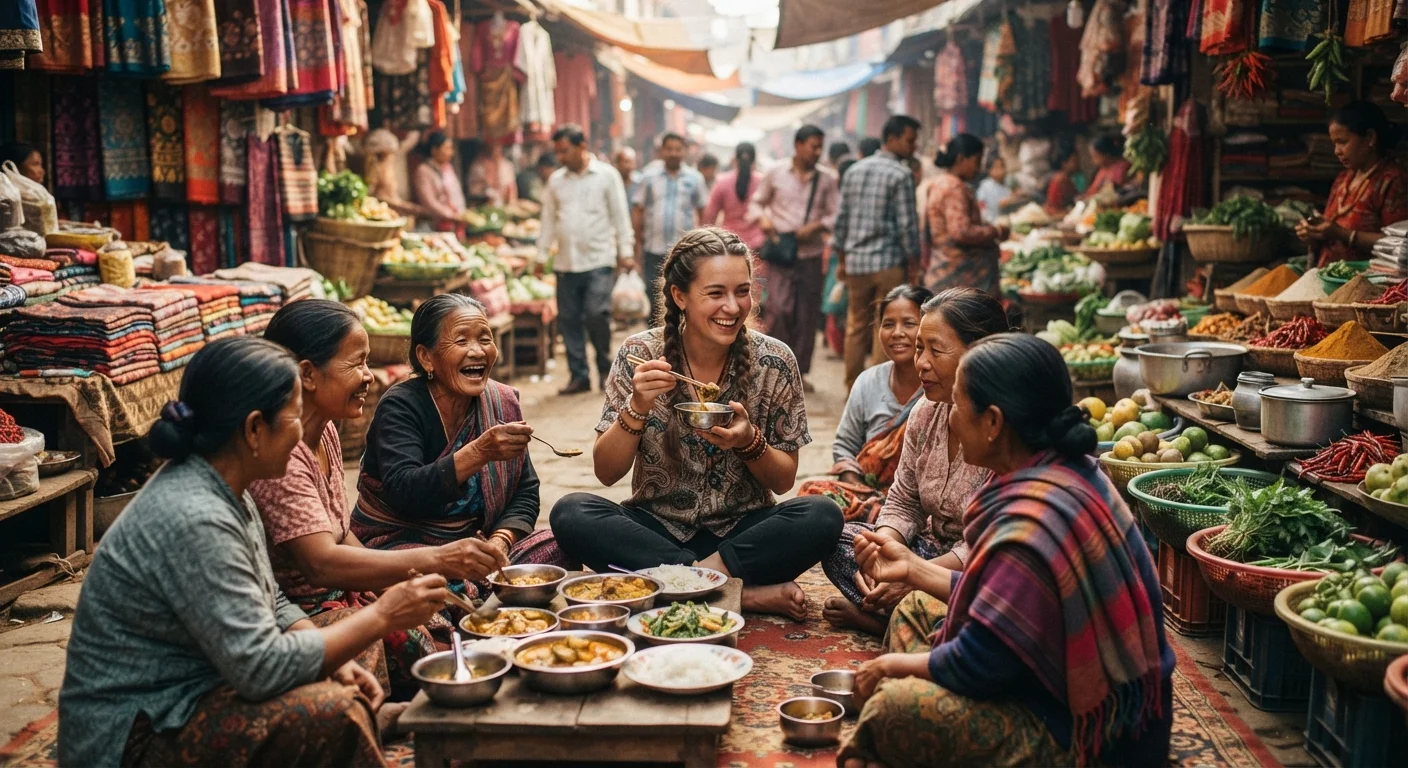
Visiting a famous temple, posing for a photo, and moving on is a form of travel - but it isn't cultural immersion. Living like a local means something more deliberate: choosing to participate in the rhythms of a place rather than simply consuming its scenery. It means waking up to the same morning market, navigating the same crowded bus, and sharing meals where conversation matters more than the menu.
Understanding what immersion actually involves is the necessary starting point for any first-timer. At its core, it's a shift from being a spectator to becoming a temporary, respectful participant in someone else's world. That shift requires intention - and a willingness to be uncomfortable, confused, and humbled along the way.
Cultural immersion
Active, respectful participation in the everyday life of a community you're visiting, as opposed to observing it from a distance as a tourist.
Community-led tourism
Travel experiences designed, managed, and benefited by local communities rather than outside operators, ensuring visitors engage on the community's own terms.
Slow travel
An approach to travel that prioritizes spending extended time in fewer locations, allowing for deeper familiarity, relationships, and cultural understanding.
Voluntourism
Travel that combines tourism with short-term volunteer work in local communities - a practice with both potential benefits and documented risks of unintended harm.
Reciprocal travel
A travel ethic in which the visitor's presence and spending genuinely benefits the host community rather than extracting value from it.
Choosing a Destination with Cultural Depth
Not every destination offers equal access to authentic local life. Heavily touristed areas can make genuine community contact harder, while undervisited regions often provide richer, more reciprocal encounters - provided you approach them responsibly. As the editorial on treating undervisited destinations ethically makes clear, seeking obscurity for its own sake can do more harm than good.
When choosing where to go, ask yourself: Does this community benefit from visitors? Are there locally guided experiences available? Is there infrastructure for respectful, sustained engagement? These questions matter far more than how many Instagram posts a place has generated.
Consider the contrast between urban neighborhoods and rural villages - each setting has distinct rhythms, access points, and cultural textures. Urban neighborhoods offer anonymity and density; rural communities offer intimacy and tradition. Neither is inherently superior, but each demands a different approach.
Start With One Neighborhood, Not a Whole City
First-time cultural travelers often overestimate how much ground they need to cover. Anchoring yourself in a single neighborhood for several days - shopping at the same stalls, greeting the same faces - builds the kind of familiarity that reveals far more than a whirlwind city tour. Depth almost always outperforms breadth when cultural connection is the goal.
Preparing Yourself Before You Arrive
The quality of your cultural experience is largely determined before you board the plane. Preparation isn't about memorizing facts - it's about arriving with enough context to be a thoughtful guest. Learn a minimum of ten phrases in the local language: greetings, expressions of gratitude, and basic questions. Read at least one book written by a local author about the region. Understand the major religious or historical events that shape contemporary life there.
Logistics matter too. For a comprehensive pre-departure checklist covering visas, vaccinations, and ethical considerations, the preparation guide for immersive journeys is an essential companion to this article. Always verify entry requirements and travel advisories through your government's official travel portal - conditions change and published guides can go out of date.
Visa and Entry Requirements Vary Widely
Entry rules, vaccination requirements, and regional travel advisories change frequently and vary significantly by destination and traveler nationality. Always consult your government's official travel advisory portal and the destination country's embassy or consulate for the most current information before booking or departing. Published travel guides - including this one - cannot substitute for official, up-to-date sources.
Engaging Respectfully with Local Communities
Respect is not passive - it's an active practice. Dress appropriately for the settings you enter. Ask before photographing people. Eat at family-run establishments rather than international chains. Attend public cultural events as an observer who is grateful to be included, not an audience member who paid for a performance.
Deeper engagement, like participating in craft traditions or community ceremonies, requires greater care. Living craft traditions - from textile weaving to indigo dyeing - offer some of the most grounded windows into a culture's values, but only when approached with genuine curiosity rather than a desire for content.
Pace also shapes engagement. Slow travel versus packed itineraries is not simply a style preference - it's a structural choice that determines whether real relationships can form. Slowing down allows you to become a familiar face rather than a passing stranger.
Avoid Performative Engagement
Cultural travel can slide into extractive behavior when the goal is content creation rather than genuine connection. Photographing poverty, staging "authentic" moments, or collecting cultural experiences like souvenirs does real harm to communities and to your own understanding of them. Ask yourself regularly whether your engagement serves the people you're with or primarily serves your own narrative.
Sustaining the Mindset Beyond the Trip
Cultural immersion doesn't end when you board your flight home. The most meaningful journeys leave travelers with changed perspectives, ongoing curiosity, and a commitment to continued learning. Stay connected with communities you visited - follow local journalists, support artisans whose work you encountered, and bring genuine stories back to the people around you.
For those ready to move from first-timer to practitioner, the complete guide to culturally immersive travel covers every dimension of planning deeper, longer, and more purposeful cultural journeys. The path to living like a local is cumulative - each trip builds the literacy, humility, and relational skill that the next one requires.
Pre-Departure Cultural Research Guide
A practical companion for researching customs, history, and community norms before an immersive trip. Covers language prep, ethical considerations, and how to source locally written perspectives on your destination.
Slow Travel Planning Framework
A structured approach to building a slow travel itinerary - including how to choose a base neighborhood, identify community-led experiences, and build in unscheduled time for organic encounters.
Cultural Etiquette by Region
An overview of major etiquette norms across global regions, covering dress, greetings, photography, dining customs, and religious site behavior to help travelers show up as informed, respectful guests.