
What Each Setting Actually Offers
The debate over where to find "real" culture is, in many ways, a false one. A neighborhood in Oaxaca City and a village in the Sierra Juárez mountains are both genuinely Oaxacan - they just encode that identity differently. Understanding what each environment is structurally suited to reveal helps you match the setting to your actual intentions as a traveler.
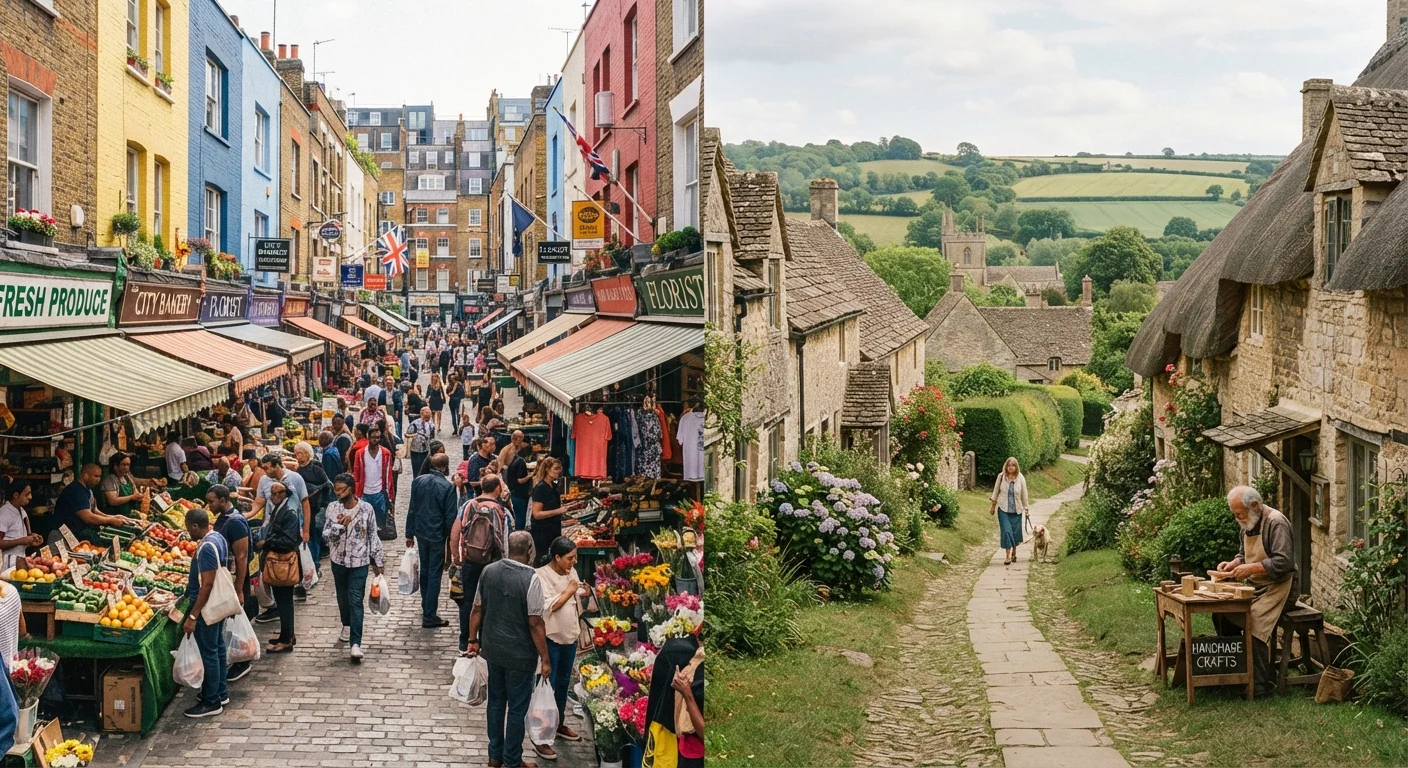
Urban neighborhoods concentrate cultural exchange. Immigration histories layer on top of each other; food traditions mutate and cross-pollinate; art scenes reflect a community's unresolved tensions as much as its celebrations. Spending time in a single urban neighborhood over several days - rather than moving between city highlights - begins to surface these textures. Markets, community centers, local transit, and neighborhood religious observances become entry points.
Rural villages tend to preserve a narrower cultural bandwidth, but with greater depth. Agricultural rhythms, oral traditions, craft lineages, and seasonal ceremonies often survive more intact in settings where outside commercial pressure is lower. The tradeoff is real: rural access can be logistically demanding, and communities in economically marginalized areas may face pressures that complicate a visitor's presence.
For a fuller framework on approaching either setting respectfully, see Before You Go: Preparing for a Culturally Immersive Journey - particularly the sections on ethical engagement and community-first mindset.
| Urban Neighborhoods | Rural Villages | |
|---|---|---|
| Cultural breadth | High - multicultural, layered histories | Narrower but often deeper traditions |
| Pace of engagement | Faster, more self-directed | Slower, more relationship-dependent |
| Language access | Generally easier - more infrastructure | Often more challenging without preparation |
| Logistics | More straightforward for independent travelers | May require guides, local contacts, or planning |
| Traditional customs visibility | Present but often adapted or hybridized | Frequently more intact and regular |
| Tourism pressure | Higher in well-known neighborhoods | Variable - can be low or exploitative |
| Accommodation options | Wide range integrated into daily life | Often homestay or limited local options |
The Authenticity Question - and Why It's the Wrong Frame
Experienced travelers often arrive at a destination suspicious of cities - certain that modernization has bleached out cultural substance - and romantically drawn to villages as repositories of the "true" culture. This framing deserves scrutiny.
Cities have always been engines of cultural production. The barrios, arrondissements, and quartiers that make up the world's major urban centers are not cultural museums but living neighborhoods where identity is actively being negotiated, defended, and reinvented. A Ghanaian neighborhood in London's Peckham, or a Hmong community in Minneapolis's Frogtown, represents a form of cultural vitality that has no rural equivalent - and is no less genuine for existing in an urban frame.
Conversely, rural communities are not static. Rural Quebec beyond Montreal is one instructive example: the French-speaking villages of the interior hold cultural logics entirely distinct from Montreal, yet they too are shaped by economic migration, political history, and generational change. Neither setting is frozen.
Engage with Communities, Not Attractions
Whether you're in a city district or a rural valley, the quality of cultural immersion tracks more closely with how you spend your time than where you are. Attending a local sports event, visiting a neighborhood market at its own pace, or sharing a meal with residents through a community-organized program tends to produce more genuine encounters than scheduled cultural performances designed for visitors. Seek participation over observation wherever possible - and always follow community-set boundaries.
The more useful question isn't which setting is more authentic, but rather: what kind of cultural encounter am I prepared to engage with honestly? That reframing tends to produce more meaningful choices - and more honest travel.
Practical Considerations for Each Setting
Logistics shape cultural access more than most travelers anticipate. Urban neighborhoods generally offer language resources (translation apps work better with internet access), a range of accommodation integrated into daily life, and multiple independent points of cultural entry - a market, a religious site, a community sports league - that don't require a local fixer or guide to access initially.
Rural villages often demand more preparation. Transportation infrastructure can be limited, accommodation may be homestay-dependent, and the absence of a shared lingua franca can either deepen a cultural encounter or create an uncomfortable power imbalance if handled carelessly. Building even basic competency in a local language - or hiring a guide with genuine community ties rather than a tourism-industry relationship - makes a significant difference.
Travelers new to immersive approaches will find Living Like a Local: A First-Timer's Path to Meaningful Cultural Travel a useful starting point for both settings. It's also worth considering pace: Slow Travel vs. Itinerary-Heavy Tours for Cultural Depth addresses how the tempo of a trip fundamentally changes what you're able to absorb - a dynamic that applies equally in cities and villages.
56%
Travelers prioritizing cultural experiences
A widely cited Booking.com survey found that over half of global travelers identified cultural immersion as a primary trip motivation.
3-5 days
Minimum stay for meaningful neighborhood engagement
Cultural travel researchers and practitioners generally recommend spending at least three to five days in a single neighborhood to move beyond surface-level observation.
Designing a Trip That Uses Both
The most culturally textured journeys tend to use urban neighborhoods and rural villages as complements rather than alternatives. A common structure: spend the first portion of a trip in a city neighborhood - orienting, building language confidence, observing how a culture presents itself to itself - then move to a rural area where slower rhythms and closer proximity to traditional practice become accessible.
This sequence works because the urban phase provides cultural context that makes rural encounters legible. When you've spent time in, say, a neighborhood market in Chiang Mai's old city understanding regional produce and Buddhist practice in an everyday context, a visit to a hill community in the surrounding highlands carries significantly more depth than if it were your first encounter.
For travelers open to an even less structured approach, The Complete Guide to Culturally Immersive Travel covers destination selection, community engagement, and how to sustain meaningful encounters across an extended trip. The goal in either setting remains the same: showing up curious, prepared, and genuinely attentive to what a place is actually saying - not just what you hoped to hear.