
Why Rural Quebec Feels Like Another Country
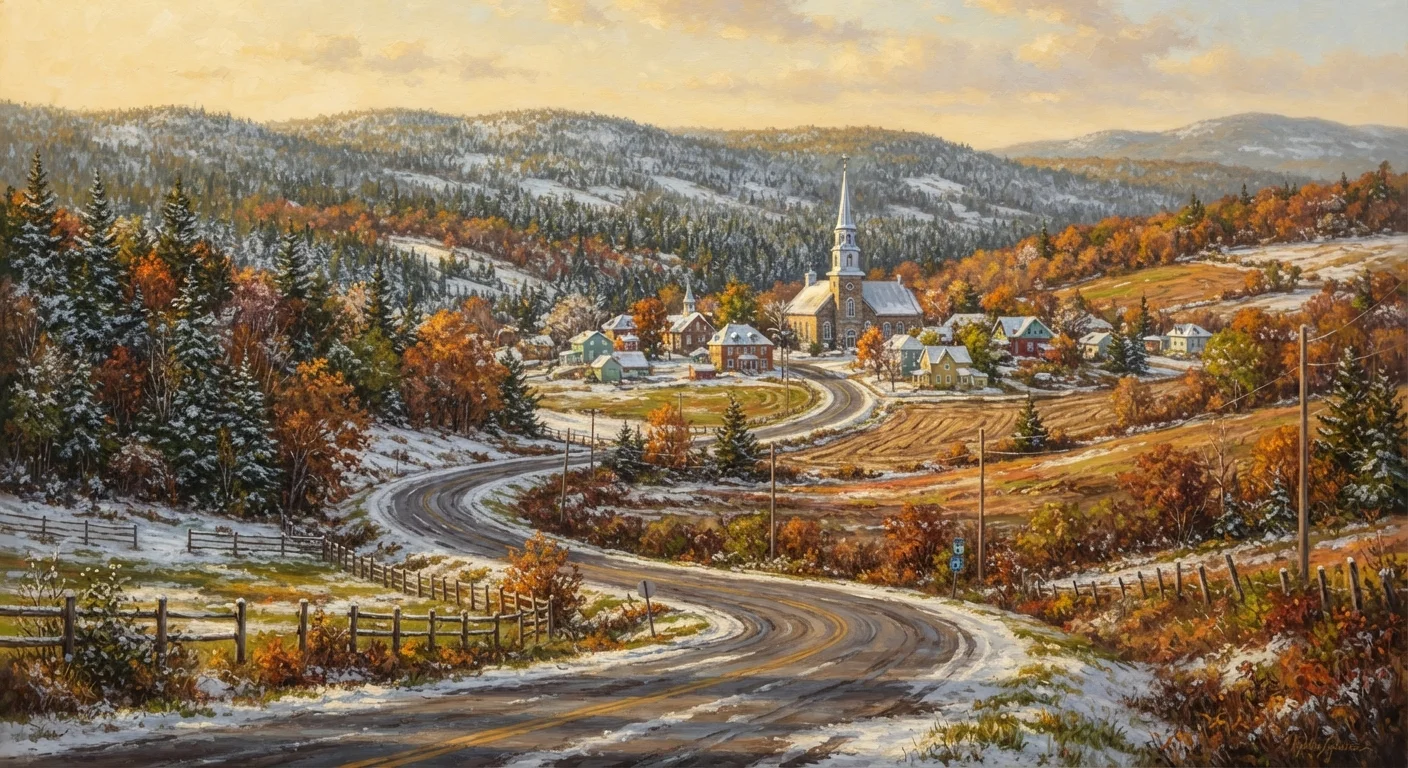
Most North American travelers who visit Quebec confine themselves to Montreal's Mile End and Old Quebec City's ramparts - cosmopolitan, walkable, and conveniently bilingual. But drive two hours in almost any direction and the landscape shifts in ways that are genuinely disorienting in the best sense. The St. Lawrence River widens into something that looks like the sea. Villages appear every few kilometers, each anchored by a rang road system - parallel farm lanes laid out centuries ago under the French seigneurial land tenure system - and a church whose steeple can be seen long before you read the sign.
This is Quebec as a distinct society in the plainest, most lived-in sense: a place where the French language isn't a heritage affectation but the actual operating system of daily life, commerce, government, and culture. The differences aren't superficial. Signage is almost entirely in French. Local radio plays chanson québécoise and country francophone. Humor, storytelling, and the rhythms of social interaction follow patterns that feel genuinely unlike anything in anglophone Canada or the northeastern United States.
For the frequent traveler who has already done the European capitals and the obvious North American highlights, rural Quebec offers something rarer: cultural immersion that doesn't require a transatlantic flight. Rural villages and urban neighborhoods offer fundamentally different cultural textures, and Quebec's countryside leans all the way into what only small-community life can reveal.
Rang road
A parallel farm lane system laid out under the historic French seigneurial land system, still the organizing structure of many rural Quebec communities today.
Seigneurial system
A colonial-era land tenure arrangement in New France where landlords (seigneurs) granted strips of farmland to settlers, creating the distinctive long-lot landscape still visible across rural Quebec.
Gîte
A Quebec-style bed and breakfast, typically in a private home, offering a more personal and culturally immersive stay than a hotel.
Cabane à sucre
A sugar shack - a building in a maple grove where sap is boiled into syrup. Visiting one in late winter or spring is a deeply rooted Quebec social tradition.
Chanson québécoise
A genre of French-language song rooted in Quebec, blending folk, ballad, and popular styles. Hearing it on local radio is one of the most immediate signals that you've left the tourist circuit.
Fromagerie
A cheese-making facility, often small and family-run. Rural Quebec has a thriving artisan fromagerie culture producing cheeses with distinct regional character.
Navigating Language as an Anglophone Visitor
The anxiety English-speaking visitors feel about the language barrier in rural Quebec is usually larger in anticipation than in reality - though it is real and worth taking seriously. Unlike Montreal, where switching to English is common and effortless for most residents, villages in the Gaspésie or along the lower St. Lawrence may have very limited English speakers. This isn't unwelcoming; it's simply accurate.
A few principles help. First, open every interaction in French, even badly. Bonjour, je parle très peu français - hello, I speak very little French - signals respect and tends to produce patience and goodwill. Second, translation apps (used offline, since connectivity drops in remote areas) have become genuinely functional for navigating menus, reading signs, and bridging conversation gaps. Third, accept that some experiences will be partially opaque, and treat that as texture rather than failure.
A Simple Phrase Goes Further Than You Think
Learning five to ten phrases - greetings, please and thank you, a simple apology for limited French - dramatically changes how interactions unfold in rural Quebec. Residents aren't expecting fluency; they're responding to the signal of respect. Even a clumsy attempt is received differently than defaulting immediately to English.
Younger residents and those working in tourism or hospitality are more likely to have conversational English. Older residents in very small communities may have none, and that is worth knowing before assuming a workaround will always be available.
The Regions Worth Slowing Down In
Charlevoix, northeast of Quebec City along the St. Lawrence's north shore, is perhaps the most accessible entry point. The terrain is dramatic - the region sits inside a massive ancient meteor crater - and the combination of river views, auberge culture, and local artisan producers makes it compelling without being remote. Baie-Saint-Paul functions as a small arts hub; the villages of Saint-Joseph-de-la-Rive and Isle-aux-Coudres reward an extra day.
Gaspésie, the long peninsula that juts into the Gulf of St. Lawrence, is for travelers who want emptiness. The Chic-Choc Mountains in the interior carry a wilderness character that holds its own against far more celebrated Canadian ranges. Canada's overlooked national parks offer wilderness that rivals Banff without the crowds - Gaspésie National Park fits that description exactly.
Bas-Saint-Laurent, the Lower St. Lawrence region stretching from Rivière-du-Loup toward Rimouski, offers a slower and more genuinely local experience than either of the above. The small towns here see few foreign visitors. The ferry crossings to the south shore pass near beluga whale habitat. It is the kind of place where you stay in a gîte - a Quebec bed and breakfast - and have unhurried breakfast conversations that range far beyond tourism.
Food, Drink, and the Table as Cultural Window
Québécois rural food culture is not a reconstruction for visitors - it's simply what people eat. Tourtière, the meat pie that varies by region (the Lac-Saint-Jean version is a deep-dish affair that bears little resemblance to the thinner version sold in cities), is a staple. Cretons, a pork spread somewhere between rillettes and pâté, appears on breakfast tables across the province. Cheese production has flourished across rural Quebec; cheeses from small fromageries in the Eastern Townships and Charlevoix have developed genuine reputations.
The cabane à sucre - sugar shack - season in late winter and early spring is a cultural event as much as a culinary one. Families and groups gather in maple groves where fresh sap is boiled into syrup, and the food served (eggs fried in maple syrup, baked beans, tire sur la neige - maple taffy poured onto snow) follows traditions that have changed little in generations.
Microbreweries and Cideries Are Worth Seeking Out
Local microbreweries and cideries have multiplied across rural Quebec over the past two decades. Many are attached to farms or small inns and offer informal tastings. These are among the most unscripted and genuinely local social experiences the region offers to visitors.
Local microbreweries and cideries have multiplied across rural Quebec over the past two decades. Many are attached to farms or small inns and offer informal tastings. These are among the most unscripted and enjoyable social experiences the region offers.
Practical Considerations Before You Go
Cell coverage becomes patchy quickly once you leave major routes like Route 132 along the south shore or Route 138 on the north. Download offline maps and translation tools before departing from a major center. Paper maps still have genuine utility here.
Distances in rural Quebec can be deceptive. The peninsula of Gaspésie alone is over 800 kilometers around its perimeter. Budget more days than you think you need; the region punishes rushed itineraries.
Entry requirements for US and international visitors to Canada - including passport validity, permitted stays, and any health-related documentation - change periodically. Always verify current requirements through official Government of Canada and your home country's foreign affairs sources before travel. The same applies to any advisories about road conditions, which in winter and mud season can be significant in remote areas.
Local Laws May Differ From What You're Used To
Provincial and municipal laws around wild camping, alcohol purchase hours, and wildlife interaction differ from those in neighboring US states and anglophone provinces. Verify local rules before assuming familiar norms apply. Ignorance of local law is not typically accepted as a defense by authorities.
Provincial and municipal laws around wild camping, alcohol purchase hours, and wildlife interaction differ from those in neighboring US states and anglophone provinces. Verify local rules before assuming familiar norms apply.
For travelers interested in the broader wilderness context of eastern Canada, our coverage of Canada's lesser-known national parks provides useful orientation on what the country's park system holds beyond the famous western ranges.