
Why Canada's Park System Deserves a Second Look
Mention a Canadian national park to most international travelers and two words surface immediately: Banff and Jasper. Both are genuinely extraordinary - but their fame comes at a cost measured in tour buses, booked-solid trailheads, and Lake Louise selfie queues stretching well into August. What rarely surfaces in that conversation is that Parks Canada administers 48 national parks and park reserves stretching from the fog-laced shores of the Atlantic to the Arctic Ocean's ice-fractured edge. Most of them receive a sliver of the attention their landscapes warrant.
The parks below aren't consolation prizes. They are, in several cases, ecologically richer, more dramatically remote, and more logistically interesting than their famous counterparts. Getting to them takes planning - regional flights, ferry crossings, or long drives on two-lane highways - but that friction is precisely what keeps their meadows uncrowded and their wildlife undisturbed. For the frequent traveler who already knows Paris and Bali and is quietly searching for what lies beyond the brochure, these are the coordinates worth writing down.
Start With a Park That Matches Your Logistics
Not every underrated park demands expedition-level planning. Gulf Islands and Kootenay are accessible by standard road or ferry travel and suit first-time visitors to the Canadian wilderness. Aulavik and Gwaii Haanas require substantially more lead time and self-sufficiency. Choose your entry point based on your current comfort with remote travel, then build from there.
Six Parks Worth the Journey
Gwaii Haanas, British Columbia
Located on the southern islands of Haida Gwaii - an archipelago off BC's north coast accessible only by float plane or ferry from Prince Rupert - Gwaii Haanas is co-managed by Parks Canada and the Haida Nation under a landmark agreement that has no true parallel elsewhere in the Canadian system. The park protects ancient Haida village sites including SGang Gwaay, a UNESCO World Heritage Site, alongside one of the most intact temperate rainforest and marine ecosystems on the Pacific coast. Visitors arrive by sea kayak or boat charter, moving slowly through channels where humpback whales surface beside their hull. Numbers are deliberately limited, and all visitors complete a mandatory orientation before entering. The logistical investment is real; so is the reward.
Gwaii Haanas is co-managed by Parks Canada and the Haida Nation - a governance model with no true parallel in Canada.
Kootenay, British Columbia
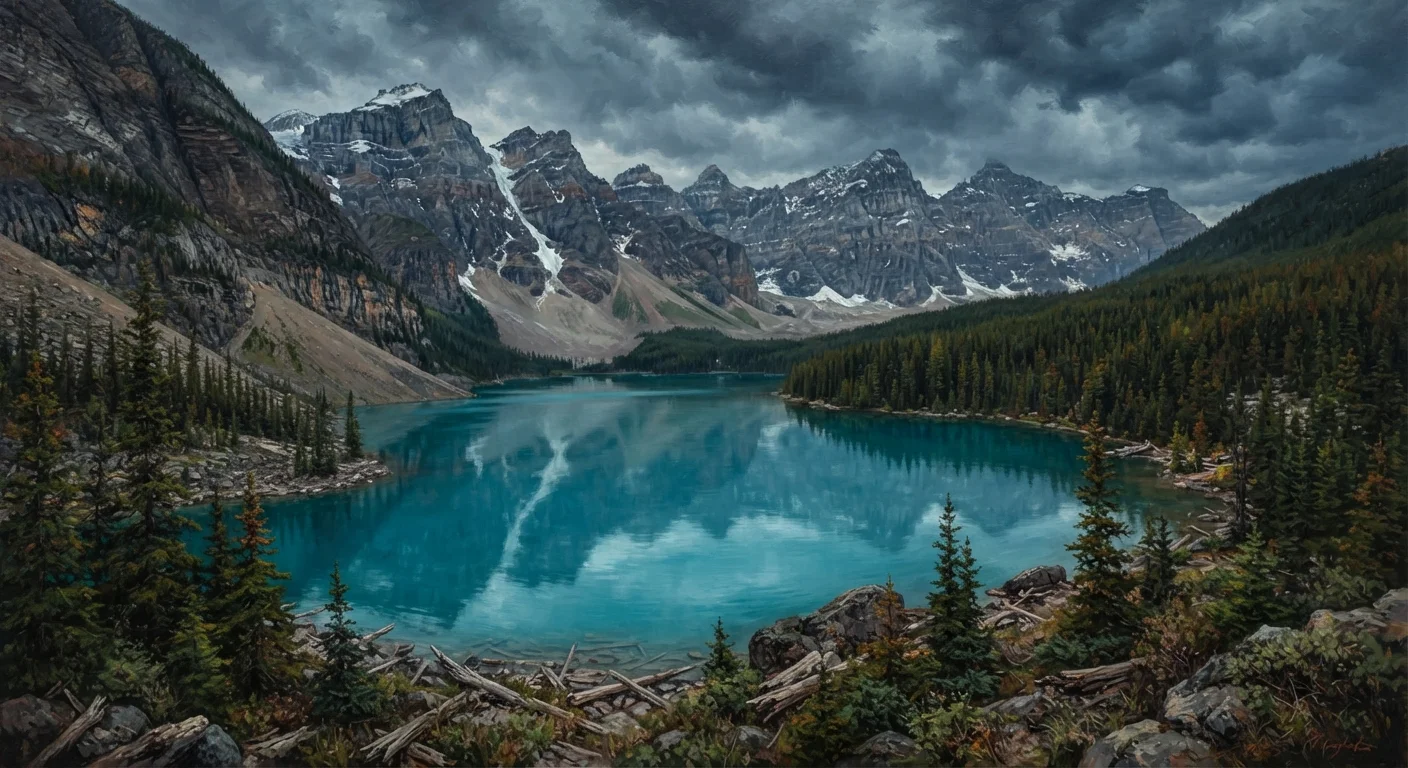
Directly adjacent to Banff along Highway 93 South, Kootenay National Park shares the same Rocky Mountain spine but draws a fraction of the visitors. The Marble Canyon trail - a short but spectacular walk above turquoise meltwater rushing through a narrow limestone gorge - rarely sees a queue. The Paint Pots, ochre-stained mineral springs sacred to Indigenous peoples for centuries, sit at the end of an easy flat walk through old-growth forest. Kootenay also offers access to Radium Hot Springs, a naturally occurring thermal pool at the park's southern entrance. Because it lies along a main highway rather than within a resort town, Kootenay functions more as a drive-through park for most travelers - which means its interior trails stay quiet even in July.
Kootenay shares Banff's Rocky Mountain spine but draws a fraction of the visitors, even in high summer.
Fundy, New Brunswick
The Bay of Fundy hosts the highest tidal range on Earth - up to 16 meters between low and high tide - and Fundy National Park sits directly on its upper reaches. Twice daily, the ocean retreats to expose a vast seafloor of red sandstone and kelp, then returns to submerge it entirely. The park's Fundy Trail Parkway provides access to coastal cliffs and sea stacks that would generate enormous Instagram traffic if they existed closer to a major airport. The interior trail system, covering mixed Acadian forest, is well-maintained and largely uncrowded outside the core summer weeks. For travelers building an Atlantic Canada itinerary, Fundy pairs naturally with a drive through rural New Brunswick and, further east, into the cultural landscape described in detail in rural Quebec.
The Bay of Fundy's tidal range - up to 16 meters - is the largest on Earth, and most travelers still miss it.
Gulf Islands, British Columbia
Scattered between Vancouver Island and the BC mainland, the Gulf Islands National Park Reserve protects a mosaic of rocky shoreline, Garry oak meadows, and calm inland passages. The archipelago is accessible by BC Ferries from Swartz Bay near Victoria, and individual islands including Saturna, Mayne, and the Pender Islands host small year-round communities alongside park land. This is slow travel at its most literal: cycling between ferry terminals, watching harbour seals on tidal rocks, staying in small guesthouses where the innkeeper also runs the afternoon kayak rental. The ecology here is distinctive - the Gulf Islands sit in a rain shadow that gives them a Mediterranean-adjacent dryness unusual for coastal BC - and the Garry oak habitat is considered one of the most threatened ecosystems in Canada.
The Gulf Islands' Garry oak meadows represent one of Canada's most threatened and least-visited ecosystems.
Aulavik, Northwest Territories
On Banks Island in the western Arctic, Aulavik National Park is one of the least-visited protected areas in the world. The park receives fewer than one hundred visitors annually - a figure that reflects both its extreme remoteness and the focused, committed nature of those who reach it. Access requires a charter flight from Inuvik. The landscape is High Arctic tundra: river valleys carved by the Thomsen River (navigable by inflatable canoe), muskox in densities found almost nowhere else on Earth, and an austere treeless terrain that reads differently from any other wilderness in Canada. This is expedition travel in the fullest sense, demanding genuine wilderness competence and pre-trip coordination with outfitters experienced in Arctic logistics. For travelers who have already tested themselves in environments like those compared in Patagonia, Iceland, or Kyrgyzstan, Aulavik represents a logical and profound next step.
Aulavik receives fewer than one hundred visitors annually - making it among the least-visited protected areas on Earth.
Kejimkujik, Nova Scotia
Kejimkujik - known locally as Keji - divides into two distinct units: an inland section of interconnected lakes and portage routes in Nova Scotia's interior, and the Seaside adjunct on the Atlantic coast near Port Joli. The inland section is one of the finest canoe-tripping destinations in Eastern Canada, with multi-day backcountry routes passing ancient Mi'kmaw petroglyph sites on the shores of Kejimkujik Lake. The Seaside unit, reached by a separate drive, delivers crescent beaches and grey seal colonies with almost no visitor infrastructure - no services, just a trail to the shore. Keji is also one of Parks Canada's designated Dark Sky Preserves, making it a credible stargazing destination during shoulder seasons when Atlantic fog cooperates. Small heritage inns in the nearby town of Annapolis Royal provide a comfortable base for visitors who prefer a roof overhead.
Keji's backcountry canoe routes pass Mi'kmaw petroglyphs dating back thousands of years - history embedded in the landscape.
Entry Requirements and Permits Vary Significantly
Some of these parks - particularly Gwaii Haanas - require advance registration and orientation before entry. Others have seasonal road or trail closures that are not always reflected in third-party travel resources. Always check directly with the relevant Parks Canada office for current access information, permit availability, and any Indigenous-led protocols that apply to your visit. Visa and entry requirements for Canada should be confirmed through official government sources before travel.
Planning Your Visit Across the Unknown Parks
Each of these parks operates under Parks Canada's reservation and permit infrastructure, though booking pressure varies enormously by location. Gwaii Haanas requires advance trip registration and a mandatory orientation; Aulavik may involve coordinating with outfitters familiar with Arctic logistics. Entry fees and camping passes can be bundled under a Parks Canada Discovery Pass, which covers all national parks for a full year - a practical option if you plan to visit more than one site.
Accommodation philosophy shifts dramatically once you move away from Banff's hotel corridors. Remote wilderness lodges - the kind profiled in pieces on luxury beyond the beach resort - operate in or near several of these parks, offering guided experiences with a lighter planning burden. For the independent traveler, self-sufficiency is non-negotiable: bear canisters, satellite communicators, and detailed topographic maps should be considered standard kit rather than optional upgrades.
Seasonality matters more here than in managed resort parks. Kootenay's wildflower meadows peak in late June; Fundy's tidal watching is best in late summer. Always verify current trail, road, and campsite conditions directly with the relevant park office before departure - conditions shift quickly, and what was accessible last season may not be this year. For anyone exploring Canada's broader cultural and geographic depth, rural Quebec beyond Montreal pairs naturally with an Eastern Canada parks itinerary.
Entry requirements, permits, park regulations, and transportation access are subject to change. Verify all current information with Parks Canada and relevant government sources before travelling.