
When Landscape Becomes the Amenity
The conversation about what makes a stay genuinely luxurious rarely begins with thread count or butler ratios. As we explore in our deeper look at what luxury in travel actually means, the concept is far more personal - and far less predictable - than star ratings suggest. Nowhere is this truer than in the world of remote wilderness accommodation.
Desert lodges, jungle tented camps, and Arctic glass cabins represent a category where the property's surroundings are the product. The Namib's dunes at dawn, the Amazon's night chorus, the Finnish taiga under snowfall - these aren't backdrops. They're the entire point. Properties in these environments succeed or fail based on how deliberately they position guests to experience a landscape they couldn't access otherwise.
This shift in value proposition also changes how savvy travelers should evaluate a stay. Standard luxury metrics - room size, restaurant Michelin stars, infinity-pool orientation - become secondary to questions about wildlife density, darkness quality, guide expertise, and the integrity of the surrounding ecosystem. Understanding this reframe is the first step to choosing well.
Desert Lodges: Architecture Shaped by Silence and Scale
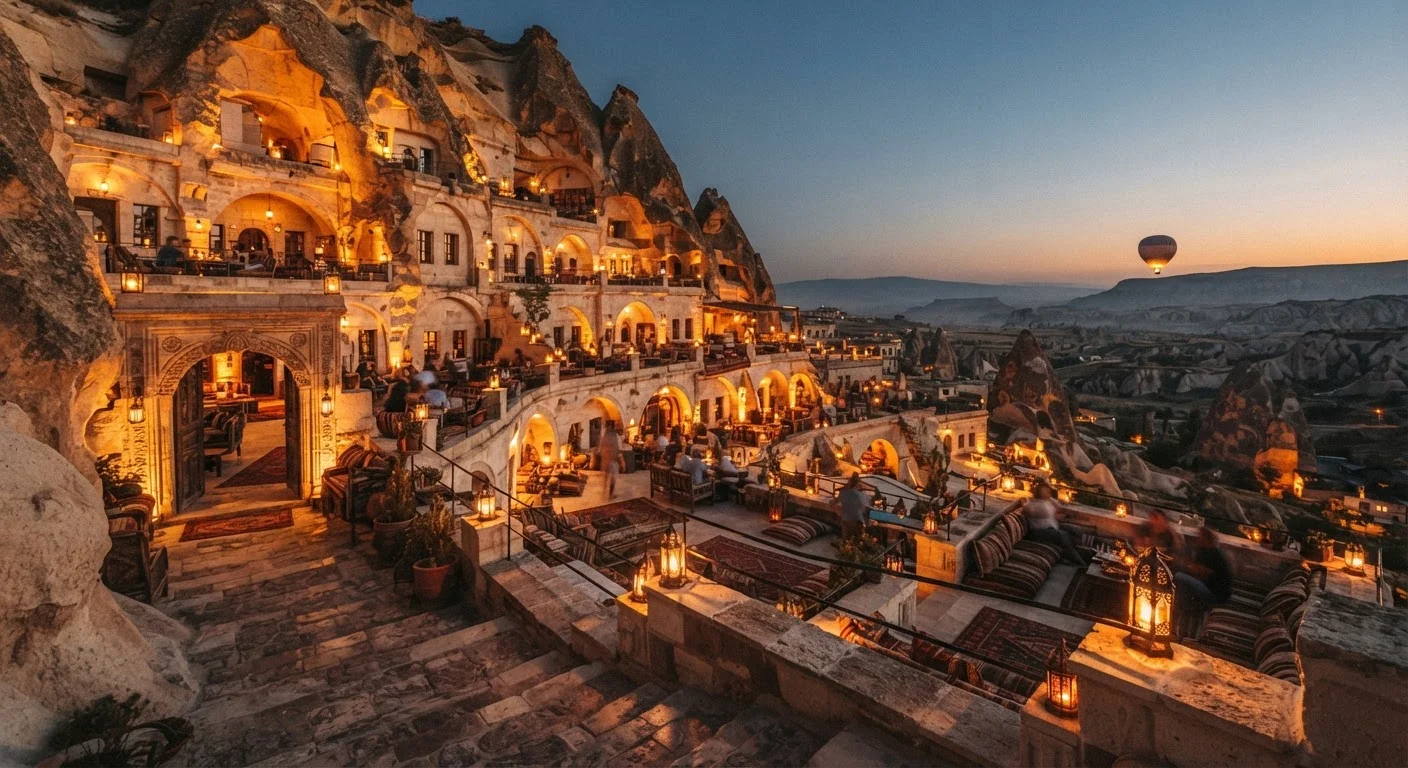
The defining challenge of desert lodge design is honesty: a structure that fights its environment rather than submitting to it rarely works. Successful properties in arid landscapes - the Namib, the Sahara edges, the Jordanian desert - tend to use local materials, minimal footprint construction, and orientation that exploits natural ventilation over mechanical air conditioning where possible.
What guests are purchasing is access to a specific quality of light, silence, and spatial scale that simply doesn't exist in urban or coastal settings. Dawn and dusk game drives in arid habitats, guided tracking of desert-adapted species, and the particular stillness of a desert night with no light pollution are the experiences against which a desert property should be measured. Comfort matters, but it exists in service of these encounters rather than as an end in itself.
Operationally, water scarcity and energy logistics are significant. Properties handling these constraints transparently - publishing their water usage practices, solar generation capacity, and waste management approaches - tend to signal broader operational seriousness. Environmental commitments in a fragile desert ecosystem aren't just ethical markers; they're indicators of how carefully a property has been conceived overall.
In desert stays, silence and spatial scale are the amenities - architecture should submit to the environment, not compete with it.
Jungle Camps and Tented Lodges: Immersion Over Insulation
The tented camp format - used across Central Africa, the Amazon basin, Southeast Asian rainforests, and India's tiger reserves - is deliberately porous. Canvas walls, open-sided dining structures, and platforms raised above ground-level fauna are design choices that prioritize sensory contact with the ecosystem over sealed, climate-controlled isolation.
This philosophy demands careful calibration from guests. Humidity, insects, unfamiliar sounds, and irregular wildlife encounters are not inconveniences to be managed - they're the texture of the experience. Properties that honestly communicate these conditions pre-arrival, and provide expert naturalist guides to contextualize them, are offering a far more genuine luxury than those papering over the reality with unnecessary infrastructure.
Guide quality is perhaps the single most important differentiator in this category. A camp with basic but well-maintained tents and an exceptional field team will consistently outperform a more elaborate property with mediocre naturalist staff. When evaluating options, ask specifically about guide qualifications, years in territory, and the ratio of guests to guides per outing - these details reveal more than room photography.
In jungle camps, guide expertise matters more than interior design - ask about naturalist qualifications before evaluating room photography.
Arctic and Subarctic Cabins: Engineering Darkness and Cold
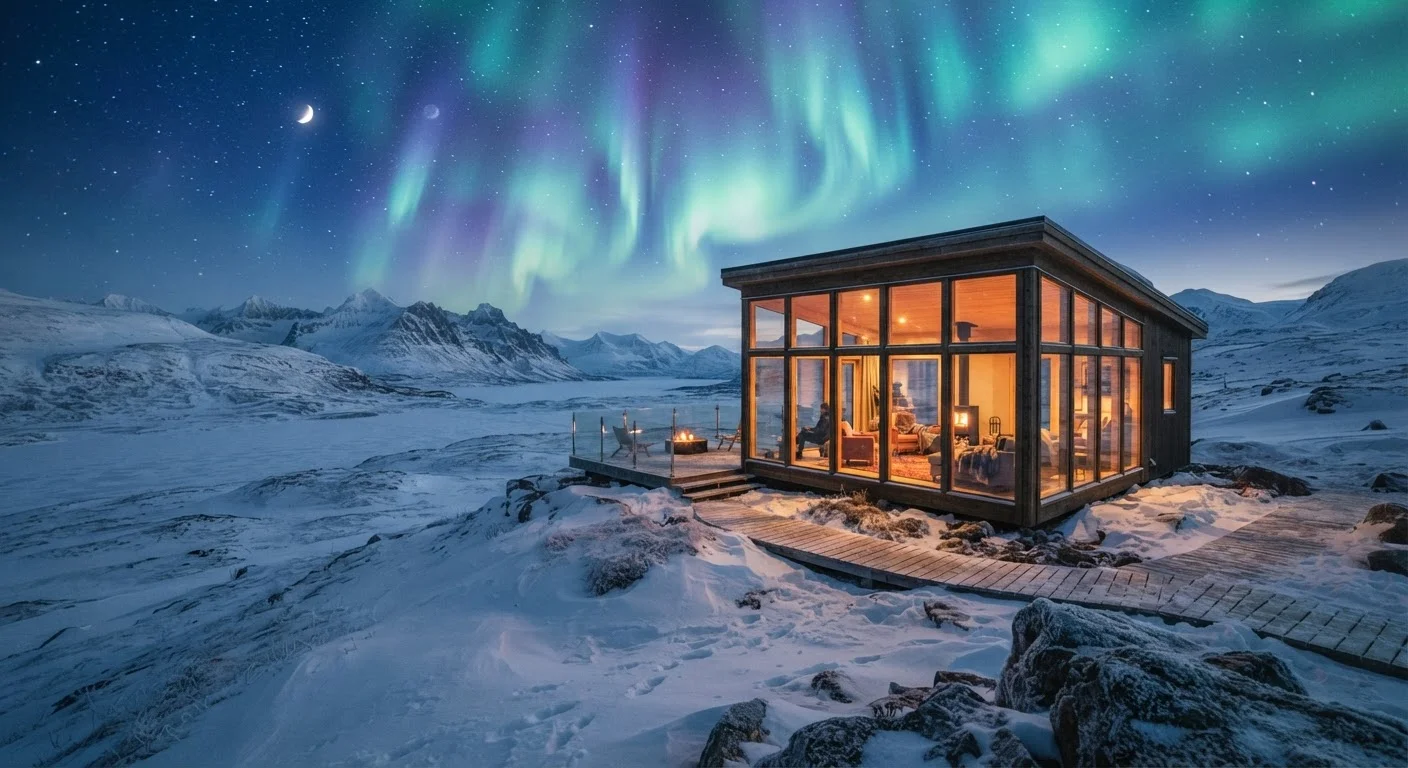
The Arctic cabin category spans a wide spectrum - from glass-roofed igloo suites in Finnish Lapland designed specifically for aurora viewing, to remote timber structures in Norway's Svalbard archipelago positioned for polar bear observation and ice-edge navigation. What they share is a dependency on extreme climate as the core experience rather than a barrier to it.
Thermal engineering matters enormously here. Properties that allow guests to be genuinely cold - through outdoor activities, guided snowshoeing, dog-sled excursions, or simply stepping out to observe the sky - and then return to spaces of genuine warmth and comfort are executing the format well. The contrast is the point. A property that keeps guests entirely insulated from the environment has misunderstood its own offer.
Aurora viewing, polar night, midnight sun, and sea ice conditions are all subject to weather, solar activity, and seasonal windows that no property can guarantee. Reputable Arctic properties are transparent about this variability and design multi-day itineraries that maximize statistical probability of key experiences rather than promising specific outcomes. For comparable wilderness terrain explored on foot rather than from a cabin, our comparison of Patagonia, Iceland, and Kyrgyzstan covers adjacent geography in depth.
Arctic properties succeed when the cold itself becomes the experience - warmth matters most as a contrast, not an escape from the outdoors.
Structural Scarcity: Why Remoteness Carries a Cost
Remote wilderness properties are routinely more expensive to operate per guest than equivalent urban or coastal hotels, and understanding why matters for evaluating whether a price point is reasonable. Supply chains for remote kitchens involve air freight or multi-day overland logistics. Staff accommodation, training, and retention in isolated locations carries real cost. Fuel for generators, water treatment infrastructure, and environmental compliance all layer onto a baseline that coastal resorts simply don't face.
This doesn't mean all high-priced remote properties deliver commensurate value - it means the cost structure is genuinely different, and guests should apply that lens when comparing categories. A tented camp charging considerably more than an all-inclusive beach resort may be offering something structurally incomparable rather than overpriced. Our analysis of all-inclusive versus room-only luxury is a useful reference for understanding how different hospitality models create different value equations.
Guest-to-land-area ratios in wilderness properties also tend to be dramatically different from conventional resorts - a camp hosting twelve guests may manage a private concession of several thousand acres. That exclusivity of access is a real, quantifiable component of what's being sold.
A remote camp's higher price often reflects genuine operational complexity - not inflation, but a fundamentally different cost structure.
Environmental and Community Integration as Quality Signals
In the wilderness accommodation category, a property's relationship with its surrounding ecosystem and local communities is not a peripheral concern - it's a primary indicator of operational quality and long-term viability. Properties embedded in private conservancies or community land partnerships tend to have stronger wildlife outcomes, more authentic cultural programming, and more stable staff retention than those operating on purely commercial concessions.
Practical questions worth asking before booking: What percentage of staff are from local communities? Does the property contribute to a wildlife conservancy or protected area fund? How is waste managed - particularly non-biodegradable materials - in a location without municipal infrastructure? What is the policy on single-use plastics? These aren't luxury credentials in the conventional sense, but they signal the level of seriousness with which a property has approached its context.
Properties that have genuinely integrated into their ecosystems tend to offer better wildlife experiences almost by definition - they've invested in the health of the habitat their guests have traveled to experience. This convergence of ethical commitment and experiential quality is one of the more reliable patterns in remote luxury travel.
A property's environmental and community commitments are quality signals - they predict better wildlife outcomes, not just ethical credentials.
Design Coherence: When Architecture Earns Its Location
The most striking wilderness properties share a quality of design coherence - a sense that the structure could only exist in that specific place. This goes beyond using local materials, though that's part of it. It encompasses sight-lines calibrated to the landscape, interior palettes drawn from the surrounding environment, and spatial layouts that create genuine intimacy with outdoor conditions without compromising guest comfort.
Compare this to wilderness-adjacent properties that import a resort aesthetic into a remote setting - marble bathrooms, generic luxury furniture, air conditioning systems running at capacity against a climate the architecture hasn't engaged with. These properties often feel contextually disconnected regardless of their amenity level. As explored in our field guide to converted and unusual stays, the most distinctive accommodations succeed precisely because their physical form is inseparable from their location.
Design coherence also has practical implications for comfort. A structure that works with its climate rather than against it - using passive ventilation, appropriate thermal mass, and orientation toward prevailing winds - is typically more comfortable and more interesting than one relying purely on mechanical systems. In remote settings where those systems can fail, it's also more resilient.
Design coherence - architecture that could only exist in its specific place - is the quiet differentiator of truly exceptional wilderness stays.
Choosing the Right Wilderness Stay for Your Travel Style
Remote wilderness properties share certain baseline realities regardless of their setting: they tend to be small by design, operationally complex to run, and genuinely seasonal in ways that coastal resorts typically are not. A desert lodge in Namibia may close during peak rainy months when roads become impassable; an Arctic cabin's prime window for aurora viewing spans only a few months of the year. Seasonality isn't a caveat - it's a structural feature to plan around.
Plan Around Seasonal Windows
Most remote wilderness properties have narrow optimal windows that don't align with conventional travel peaks. Research the specific wildlife, weather, or astronomical events that define a property's offer, then book around those dates rather than around school holidays or standard shoulder seasons. A week too early or too late can fundamentally change what's accessible.
Physical accessibility is also a genuine variable. Many of these properties require small aircraft transfers, multi-hour 4WD journeys, or boat crossings. Guests with mobility considerations, medical requirements, or significant altitude sensitivities should request detailed pre-arrival logistics from the property before booking. This is not the category where terms and conditions should be skimmed.
For travelers drawn to this style of stay but uncertain where to begin, our Boutique & Unique Stays hub and Adventure Travel guides offer a broader framework for matching property type to traveler temperament. Those weighing land-based wilderness stays against ship-based exploration may also find value in our overview of expedition cruising routes, which covers overlapping geography from a very different hospitality angle.
What unites the most memorable wilderness stays - desert, jungle, or Arctic - is the sense that the experience genuinely could not have been replicated elsewhere. That irreplaceability, more than any amenity, is the benchmark worth holding properties to.