
What Defines a Converted Stay?
A converted stay is any accommodation created by repurposing a structure that was originally built for a different function entirely - a grain mill, a cave dwelling, a lighthouse keeper's tower, or a forest canopy platform. The distinction matters because the original function shapes the physical character of every room: ceiling heights, materials, natural light, and acoustic qualities are all inherited rather than designed from scratch.
This is what separates converted properties from themed hotels, which imitate the aesthetic of another era or structure without actually inhabiting one. A genuine cave hotel exploits the thermal mass of real rock. A windmill suite rotates with real sails - or at least sits within a tower whose proportions were dictated by wind mechanics. That rootedness in original purpose is precisely what draws experienced travelers who have grown tired of interchangeable lobbies.
| Oldest converted stay category | Cave dwellings (some inhabited continuously for 2,000+ years) (Archaeological record, Cappadocia and Matera regions) |
| Typical windmill tower floors | 4-6 stacked levels connected by steep internal stairs (Standard Dutch and Danish millwright construction) |
| Treehouse structural requirement | Integration with living trees (not merely elevated on posts) (Industry distinction used by specialist booking platforms) |
| Cave room temperature advantage | Naturally stable 15-18°C year-round in volcanic tufa (Thermal mass properties of tufa rock, Cappadocia) |
| Monastery stay house rules | Often include enforced silence periods, set meal times, and curfews (Common to active religious community guesthouses) |
For a broader look at how structure and spatial flow create memorable stays, see how boutique hotels use space to tell a story.
Cave Hotels: Living Inside the Landscape
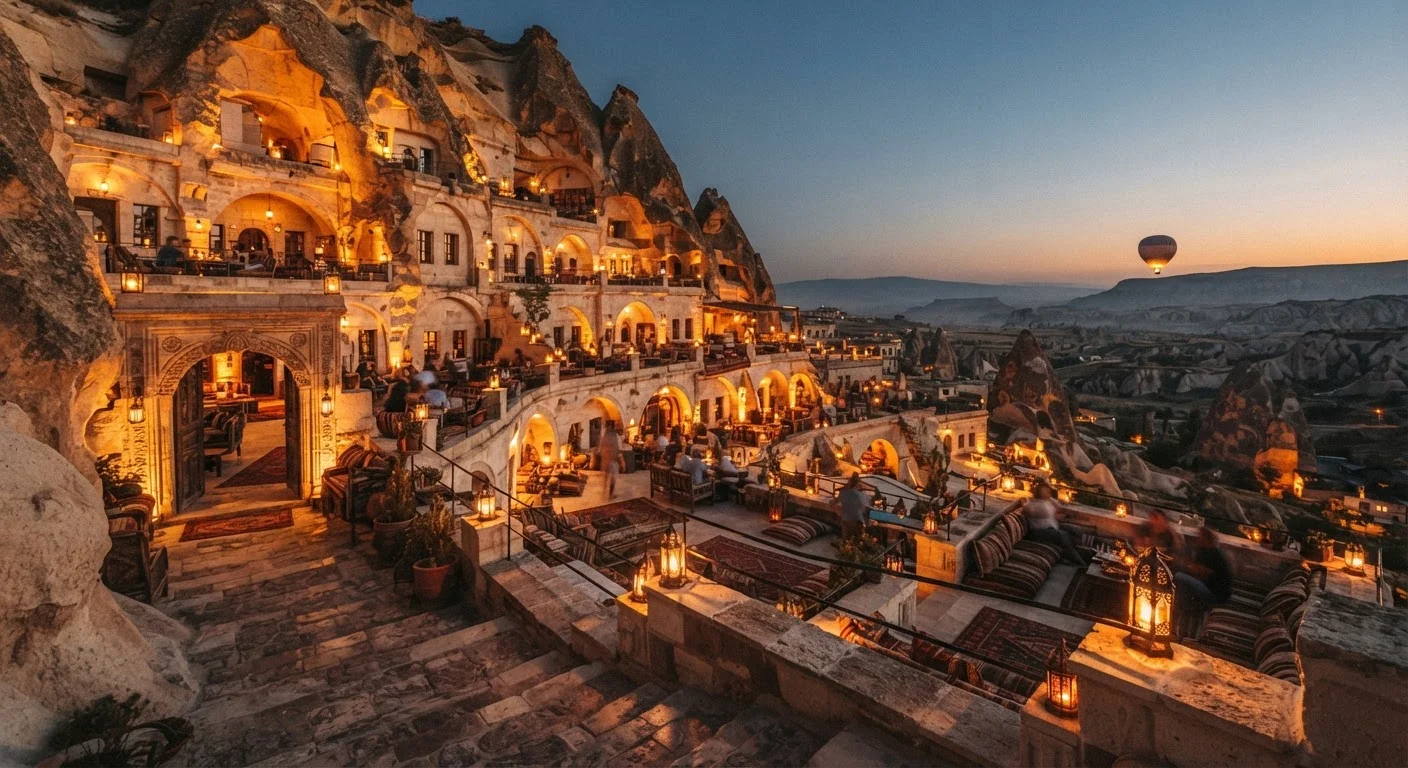
The most celebrated cave hotel region is Cappadocia, Turkey, where soft volcanic tufa rock - carved over millennia by both natural erosion and human habitation - has been reimagined as some of the world's most recognizable boutique rooms. The thermal properties of the rock keep interiors naturally cool in summer and insulated in winter, a passive climate control system no modern HVAC can fully replicate.
Cave stays also appear in Spain's Andalusia (the white-cave villages of Guadix), the Sassi di Matera in southern Italy, and the cliffside dwellings of Göreme in central Turkey. The practical trade-off is consistent: windows are few, natural light is precious, and spatial geometry follows the rock rather than a floor plan. Guests who prioritize sunlit morning rooms will find cave hotels a challenging fit. Those who value atmosphere, silence, and thermal comfort find them incomparable.
Adaptive reuse
The practice of repurposing an existing structure for a new function while retaining significant elements of its original fabric. In hospitality, this covers everything from windmill-to-hotel conversions to lighthouse keeper's cottages reimagined as guest rooms.
Tufa
A soft, porous volcanic rock formed from compressed ash, found extensively in Cappadocia, Turkey. Its workability made it the material of choice for ancient cave dwellers, and its thermal mass properties make it naturally suitable for cave hotel construction.
Thermal mass
The capacity of a material to absorb, store, and slowly release heat. High thermal mass materials like stone and rock buffer interior temperatures against exterior fluctuations, keeping spaces naturally cool in summer and warm in winter.
Structural integration
In treehouse construction, the direct incorporation of living trees as load-bearing elements. A structurally integrated treehouse moves gently with the tree, unlike an elevated cabin built independently on posts or pillars.
Sassi
Italian for 'stones,' referring specifically to the ancient cave-dwelling districts of Matera in Basilicata, southern Italy. The Sassi were inhabited continuously from prehistoric times and are now a UNESCO World Heritage Site, with many caves converted into boutique accommodation.
Treehouses, Windmills, and Other Structural Conversions
Treehouse accommodations range from basic elevated platforms to fully engineered suites suspended among old-growth canopies. The defining quality of a genuine treehouse stay - as opposed to a garden cabin on stilts - is structural integration with living trees. This creates natural movement and sound that guests either find deeply immersive or unexpectedly disorienting. Treehouse stays are geographically diverse: Pacific Northwest forests, Swedish pine woodland, Costa Rican cloud forest, and rural Wales all host notable examples.
Windmill conversions are concentrated in the Netherlands, Denmark, and parts of the UK, with occasional examples in Portugal and Spain. A working windmill's interior is stacked vertically across multiple narrow floors connected by steep ladders or spiral stairs - a layout that makes them genuinely impractical for guests with mobility limitations, but atmospheric for those willing to climb. The circular rooms and thick stone walls create an acoustic and visual experience impossible to replicate in a purpose-built property.
Other conversion categories worth noting include lighthouses (found along coastlines from Maine to Brittany), water towers (particularly in Belgium and the UK), grain silos, railway carriages, and monasteries - the last of which often operate under their original religious communities and may observe specific house rules around silence, meal schedules, or access hours.
Accessibility Considerations for Converted Stays
The structural characteristics that make converted properties compelling - narrow windmill staircases, low cave thresholds, elevated treehouse platforms - frequently create significant accessibility barriers. Before booking, always contact the property directly to ask specific questions about step counts, door widths, and path gradients. Marketing photography rarely conveys these realities accurately. This applies equally to guests traveling with young children, heavy luggage, or any mobility consideration.
For a curated look at distinctive regional formats beyond these categories, see distinctive stay formats around the world. And if raw wilderness immersion appeals more than architectural novelty, desert lodges, jungle camps, and Arctic cabins offers a parallel field guide.
How to Evaluate a Converted Property Before You Book
The romance of a converted stay can mask real comfort trade-offs that only become apparent on arrival. These questions cut through the marketing copy:
- What remains original versus restored? Authentic structural fabric (original stone, original beams, original sails) differs meaningfully from a full gut renovation that retains only the shell. Both can be valid, but they deliver different experiences.
- What are the access realities? Windmill staircases, cave thresholds, and treehouse rope bridges all present challenges for guests with reduced mobility, vertigo, or heavy luggage. Honest property listings will state this; always verify directly if it matters to your party.
- What is the noise and light profile? Cave rooms are often very dark and very quiet - qualities that can feel either restorative or claustrophobic depending on the guest. Treehouse rooms may be the opposite: ambient forest sound at all hours and early light through minimal glazing.
- What services are realistically deliverable? A lighthouse on a working headland has real constraints on food service, connectivity, and emergency access. Managing expectations before arrival is part of evaluating whether the trade-off suits your travel style.
For a broader framework on vetting unusual stays, the independent traveler's complete guide to boutique and unique stays covers the full due diligence process. If you're weighing a converted historic property against a purpose-built boutique, heritage properties vs. new-build boutiques addresses that trade-off directly.
2,000+
Years of continuous cave habitation in Cappadocia
The Cappadocia region of central Turkey has evidence of human cave dwelling dating back over two millennia, predating modern tourism by centuries.
~1,000
Surviving windmills in the Netherlands
The Netherlands retains approximately 1,000 historic windmills, a fraction of the roughly 10,000 that once operated across the country, according to Dutch heritage records.
4-6
Floors in a typical Dutch windmill conversion
Standard millwright construction stacks functional levels vertically, creating the challenging but distinctive multi-floor room layout that defines windmill stays.