

The Allure - and the Ambiguity - of Volunteer Travel
Few travel formats feel as morally coherent as volunteering abroad. You arrive not merely as a consumer of another culture but - in theory - as a contributor to it. The appeal is real: language immersion, community engagement, and the sense that your presence leaves something behind beyond a carbon footprint.
But the gap between intention and impact in volunteer travel is wide enough to warrant serious scrutiny. Critics - including development economists and community advocates - point to a pattern they call voluntourism: short-term programs that prioritize the emotional journey of the volunteer over the actual needs of the host community. Understanding both the genuine potential and the documented pitfalls is the only honest starting point.
For travelers already committed to cultural depth, this question connects directly to broader themes around meaningful cultural engagement - particularly the difference between presence and participation.
Enables direct, sustained engagement with local communities
Unlike tourism, structured volunteering places travelers inside community rhythms over days or weeks, creating context for genuine relationships and cross-cultural understanding that brief sightseeing rarely achieves.
Can fill genuine skills gaps in under-resourced settings
Medical professionals, engineers, educators, and other specialists can contribute expertise that local communities genuinely lack - particularly in remote or post-disaster contexts where trained personnel are scarce.
Motivates deeper pre-travel cultural research
Volunteers typically invest more time learning about a destination's history, language, and social context before arrival, arriving with greater cultural literacy than typical tourists.
Can support local economies through organizational spending
Well-run programs source accommodation, food, and materials locally, channeling volunteer fees into the host community's economy in ways that benefit more than just the tourism sector.
Builds long-term cross-cultural networks and advocacy
Volunteers who form genuine community ties often become informed advocates for international development issues upon returning home, extending the program's reach beyond the visit itself.
Where Short-Term Volunteering Falls Short
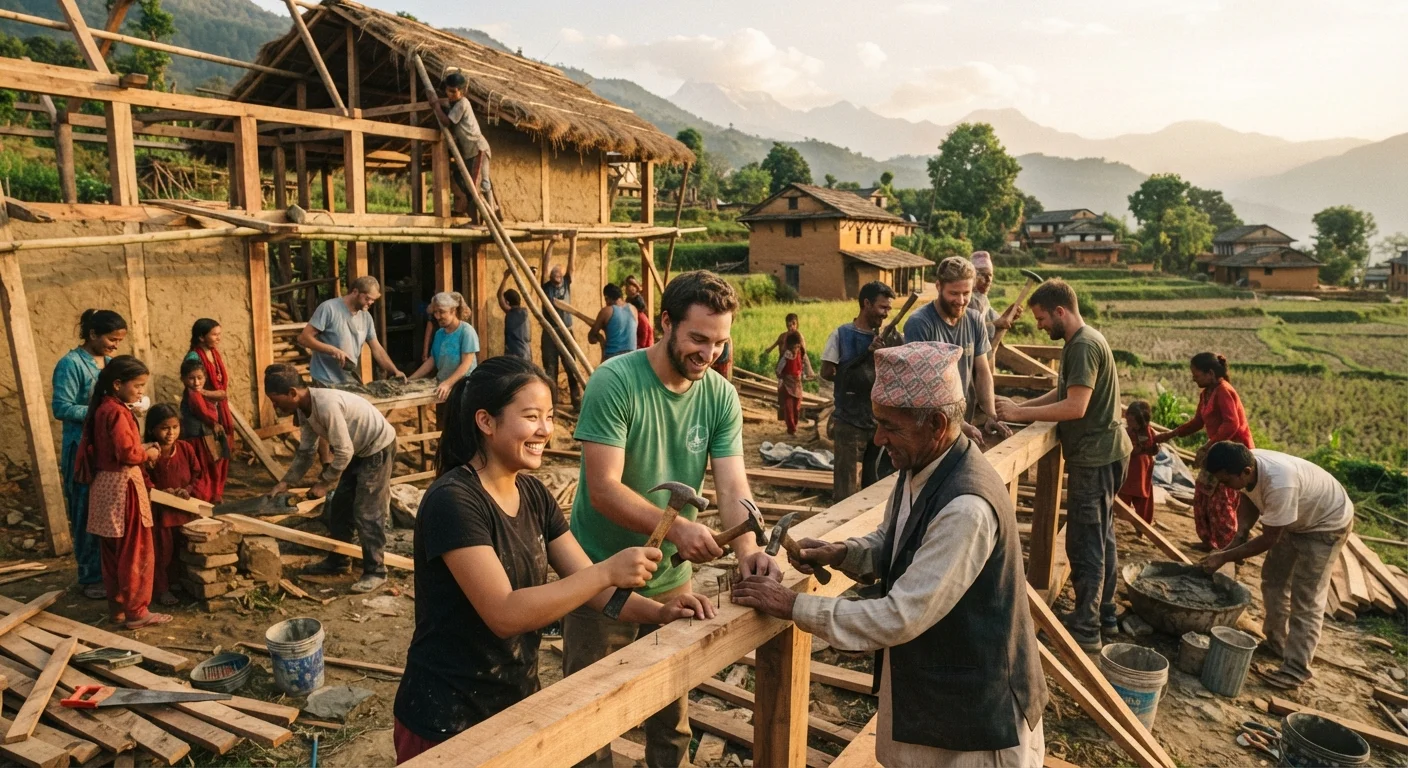
The criticisms of short-term volunteer programs are neither fringe nor easily dismissed. Development researchers have documented cases where unskilled volunteers construct buildings that local tradespeople later must repair, or where rotating foreign faces destabilize the trust-dependent work of community programs - particularly those involving children.
There is also an economic dimension that many volunteers don't consider: when foreign labor (provided at cost to the traveler) fills roles that local workers could fill for pay, the net effect on the local economy can be negative. This dynamic is especially pronounced in construction, childcare, and teaching roles.
Unskilled labor can displace local paid workers
When volunteers perform tasks - construction, landscaping, light care work - that local workers could fill for wages, the effect can suppress local employment rather than supplement it.
Short rotations disrupt trust-sensitive community programs
Programs working with vulnerable populations, particularly children, depend on consistent relationships. Frequent turnover of foreign volunteers can cause measurable emotional disruption and undermine program continuity.
Many programs prioritize volunteer experience over community need
Some organizations are structured primarily as tourism products, designing roles around what volunteers find rewarding rather than what communities have identified as priorities.
Financial transparency is inconsistent across organizations
A significant portion of volunteer program fees may fund organizational overhead and marketing rather than community projects - a fact that is not always disclosed clearly to participants.
Risk of reinforcing dependency or paternalistic dynamics
Programs that repeatedly import outside 'fixers' rather than building local capacity can inadvertently reinforce the message that communities cannot solve their own problems - a dynamic at odds with genuine development.
Travelers curious about how good intentions can produce harmful outcomes will find honest analysis in how cultural commodification happens - including within the volunteer travel sector itself.
How to Identify Programs That Actually Deliver
The presence of a website and a glowing testimonials page is not evidence of impact. Travelers serious about contributing should ask harder questions before committing.
- Who designed the program? Programs co-developed with local organizations and community leaders are structurally more likely to reflect actual need.
- What skills are required? Roles requiring no transferable expertise - building, painting, unskilled care work - are frequently the least beneficial and most disruptive.
- How does the organization measure impact? Credible programs track outcomes over time, not just volunteer satisfaction scores.
- What percentage of fees reach the community? Some organizations spend the majority of volunteer fees on marketing and logistics, with minimal community-level investment.
Questions to Ask Any Volunteer Organization
Before committing to a program, request documentation of community partnerships, evidence of multi-year impact tracking, and a clear breakdown of how participant fees are allocated. Reputable organizations welcome this scrutiny. Vague or defensive responses to direct questions about accountability are themselves informative. Global Volunteer Network and the Ethical Volunteering Guide (produced by Tourism Concern) offer independent frameworks for evaluation.
The contrast between slow, embedded engagement and rapid-rotation programs is worth examining in the context of slow travel versus itinerary-heavy approaches - the same trade-offs apply when volunteering.
For travelers heading to more remote settings, responsible travel in fragile communities offers grounded guidance on minimizing disruption while supporting local agency.
Reframing What 'Contribution' Means
Perhaps the most useful shift a prospective volunteer can make is to stop asking what can I offer? and start asking what does this community actually need, and am I the right person to provide it? These are uncomfortable questions, but they are the right ones.
In some cases, the most honest answer is that a cash donation to a locally-run NGO delivers more community value than two weeks of unskilled labor. In others - medical missions staffed by licensed clinicians, conservation programs requiring specific technical knowledge, literacy programs run by qualified educators - short-term foreign involvement genuinely fills a gap.
$2B+
Estimated annual global voluntourism market value
Research cited by development scholars estimates the voluntourism sector generates over two billion dollars annually, raising questions about whose interests the industry primarily serves.
1-2 weeks
Median duration of most short-term programs
Most commercial volunteer placements run one to two weeks - a timeframe development researchers consistently identify as insufficient for sustainable community-level impact.
Volunteer travel doesn't have to mean imposing a predetermined idea of help. Travelers who approach it with the same curiosity they'd bring to participating in local traditions - with humility, genuine curiosity, and a willingness to be led - tend to create better outcomes for everyone involved.
The question of authenticity runs through all of this. As misconceptions about authentic cultural experience explores, the most meaningful travel rarely looks like what was advertised.