
The Gap Between Intention and Impact
Most travelers who seek out fragile remote communities aren't motivated by extractive impulses. They want genuine connection, slower rhythms, and the kind of encounter that no resort corridor can manufacture. Good intentions, however, are not the same as good practice - and in communities that receive only a handful of outside visitors each year, the impact of a single poorly calibrated visitor can ripple in ways that take seasons to settle.
The villages dotting Nagaland's ridgelines, the semi-nomadic settlements of Qinghai's high plateau, or the riverside Khmu communities of northern Laos are not tourism products awaiting an audience. They are functioning societies with their own economies, social hierarchies, sacred calendars, and very specific ideas about what they want from outside contact - if anything at all. Understanding local impact before you arrive is the minimum entry point for travel that does more good than harm.
Practices That Actually Shift the Balance
Responsible travel in remote communities isn't an abstract ethic - it resolves into specific, repeatable decisions made before, during, and after the visit.
Engage only operators and guides with demonstrated community ties and transparent payment structures.
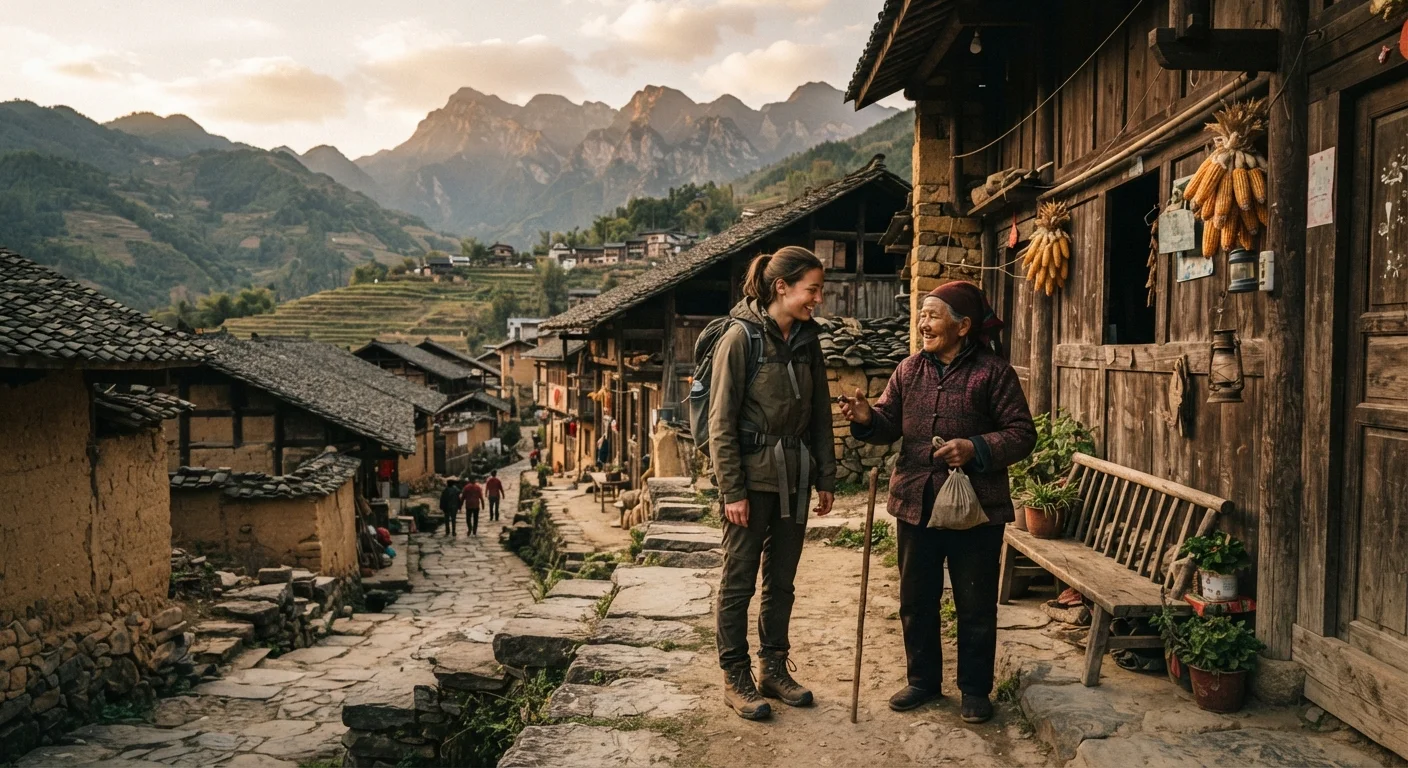
Operators without roots in a community have little incentive to manage visitor behavior or ensure revenue reaches local families. Locally embedded guides understand social protocols, speak relevant languages or dialects, and distribute income more directly.
Ask explicit permission before photographing people, dwellings, or ceremonial activity - and accept refusal without negotiation.
Photography in remote communities is rarely a neutral act. Images can circulate far beyond the traveler's control, and the cumulative effect of being photographed repeatedly can reduce people to subjects rather than individuals with agency.
Calibrate your group size to community capacity before booking.
Even two or three additional visitors can overwhelm a hamlet with no formal hosting infrastructure, straining shared water sources, disturbing livestock routines, or creating pressure to perform hospitality that a household cannot afford.
Spend as locally as possible - guesthouses, food, guides, and crafts - rather than arriving fully self-supplied.
Arriving with everything you need from a distant city signals self-containment but withholds the economic relationship that gives communities a reason to welcome future travelers. Local spending is both an ethical and a practical investment.
Learn basic greetings and behavioral norms for each specific community before arrival.
Generic cross-cultural advice rarely translates cleanly to specific communities. Knowing whether to remove footwear before entering a home, how to address elders, or which gestures carry unintended connotations demonstrates preparation and respect.
Before finalizing any itinerary, it's also worth considering the logistics dimension honestly. Permit requirements, seasonal closures, and infrastructure gaps shape where and how your presence lands. Our guide to where off-grid Asia travel plans go wrong covers the planning oversights that compound impact inadvertently.
Where the Money Goes Matters as Much as the Visit
Economic benefit is one of the most concrete ways travel either supports or undermines remote communities. The operative question isn't whether tourism generates revenue - it almost always does - but whether that revenue reaches the people whose land, culture, and daily life are being experienced.
~80%
Tourism revenue that can bypass local communities
UNCTAD research on tourism in developing countries has estimated that a large share of visitor spending in some destinations leaks back to foreign-owned companies and supply chains rather than remaining in the local economy.
3-5x
Income multiplier of community-based tourism
Studies from the UN World Tourism Organization suggest community-based tourism models generate significantly higher local income multipliers than conventional resort or package models in the same region.
Community-run homestay networks, where they exist, represent one of the most direct channels. In Kyrgyzstan's Tian Shan, yurt-stay cooperatives have developed over years to allow herding families to earn supplemental income on their own terms and schedules. The decision about whether to use a local fixer or guide carries similar weight. Going independently through remote Central Asia has real tradeoffs, and the economic argument for locally engaged guides is often the most compelling one of all.
Purchasing directly from artisans rather than intermediary stalls keeps more value within the community. Living craft traditions across Asia offer some of the most grounded opportunities for this kind of direct exchange - and a far more meaningful souvenir than anything mass-produced for the tourist trade.
Cultural Respect as a Practical Discipline
Ethical engagement with remote communities isn't achieved through a single gesture of goodwill. It's built through accumulated, careful decisions - many of them small and invisible to other travelers. Asking before photographing is a starting point, not a ceiling. Understanding the social structure of a community well enough to know whose permission actually matters - the village headman, the community council, the family elder - requires preparation that most itineraries don't make room for.
Ceremonies and rituals present particular complexity. Being invited to witness a festival or rite of passage is a genuine privilege, not a tourism product, even when it feels like one has been constructed for visitors. The distinction between a community choosing to share and a community performing for outsiders is worth interrogating honestly. For deeper grounding on this, ethical principles for engaging with indigenous communities provides a framework that goes beyond surface-level courtesy.
Environmental responsibility is inseparable from cultural respect in these contexts. Waste management, trail impact, and water use all carry heightened stakes when local infrastructure is minimal and outside visitors are infrequent. Leave No Trace principles applied rigorously protect not just ecosystems but the social willingness of communities to welcome future visitors at all.
Timing Your Visit Around Community Life
Harvest seasons, mourning periods, and local festivals can make a visit either deeply appropriate or genuinely disruptive - sometimes within days of each other. Contacting a locally based guide or community liaison at least four to six weeks before arrival gives you the information to time your trip with rather than against the community's natural rhythms. This also tends to produce far richer experiences than arriving unannounced.
This article is for general informational purposes. Conditions, community policies, permit requirements, and entry rules in remote destinations change frequently. Always verify current requirements with official government sources and in-country contacts before traveling.