

Why Good Intentions Aren't Enough
Most travelers who commodify the cultures they visit never intend to cause harm. They are curious, well-resourced, and genuinely excited by difference. That enthusiasm, however, is not a safeguard - and in some cases it is precisely what drives the problem. When a culture becomes something to collect, photograph, and check off, the people living within it become backdrop rather than protagonists.
Cultural commodification is the process by which cultural elements - ceremonies, art forms, foods, spiritual practices - are stripped of their social meaning and repackaged as products or experiences for outside consumption. It does not require bad actors. It requires only a system of incentives (tourism revenue, social media visibility, novelty-seeking) and travelers who haven't paused to interrogate their own role in that system.
Understanding where the patterns start is the first step toward traveling differently. See the complete guide to culturally immersive travel for a fuller framework on building meaningful itineraries from the ground up.
Commodification Harms Real Communities
When travelers reduce ceremonies, sacred sites, or daily life to content or commerce, the damage is not abstract. Communities may lose control over their own cultural narratives, face pressure to perform traditions that have lost meaning, or see sacred practices distorted to meet tourist expectations. These are material harms that accumulate over time and can be very difficult to reverse.
The Most Common Mistakes - and How to Correct Them
Commodification shows up in predictable patterns across destination types - from Southeast Asian temple towns to Indigenous communities in the American Southwest to village homestays in East Africa. The mistakes below represent the most pervasive, and correctable, of those patterns.
Treating ceremonies and rituals as tourist entertainment rather than living spiritual or cultural practices.
Why it happens: Travel content online often frames ceremonies - harvest festivals, religious rites, coming-of-age traditions - as bucket-list experiences, stripping them of context and presenting them as performance.
Buying mass-produced 'cultural' souvenirs that bear no connection to local artisans or traditions.
Why it happens: Gift shops near high-traffic sites are stocked with cheap replicas that look traditional but are manufactured elsewhere. Travelers in a hurry default to convenience.
Engaging in poverty tourism - visiting impoverished neighborhoods primarily as a form of 'authentic' sightseeing.
Why it happens: A desire to see 'real life' beyond resort bubbles is genuine and understandable, but without a community-led framework it can reduce people's hardship to a curiosity.
Projecting romantic or static ideas onto cultures - expecting them to match an imagined, unchanging version.
Why it happens: Travel marketing frequently presents destinations as timeless and 'unspoiled,' setting up expectations that real, evolving communities inevitably disappoint or complicate.
Volunteering with programs that prioritize the traveler's emotional experience over measurable community benefit.
Why it happens: Short-term volunteer travel is widely marketed as a way to 'give back,' but many programs are structured around what feels meaningful to the visitor rather than what communities actually need.
For travelers who are new to thinking about these dynamics, this first-timer's guide to meaningful cultural travel offers practical, ground-level advice on respectful engagement from the moment you arrive.
Photography Can Cross a Line Quickly
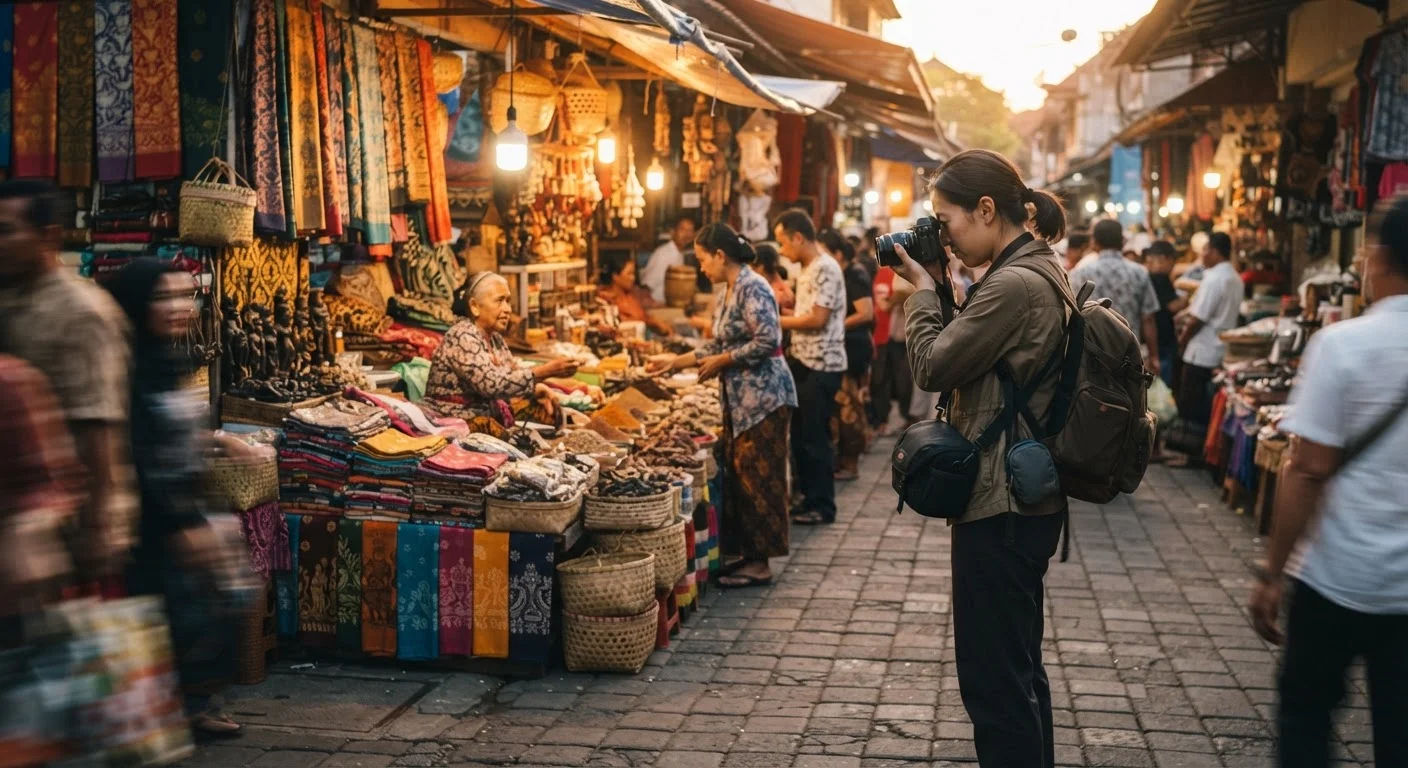
Pointing a camera at people, rituals, or sacred spaces without explicit consent - even in public settings - can be intrusive and disrespectful. In some communities and countries, photographing certain ceremonies or individuals without permission may also carry legal consequences. Always ask first, accept refusals gracefully, and recognize that 'no' is a complete answer.
Spending, Attention, and Accountability
Where travelers direct their money and their attention shapes what survives. When tourist dollars flow exclusively to international hotel chains and imported goods, local economies see limited benefit and local producers have less incentive - or ability - to sustain traditional crafts and practices. Redirecting even a portion of a travel budget toward local restaurants, family-run guesthouses, independent artisans, and community-organized experiences has a compounding effect over time.
1 in 3
Travelers who research local customs before departure
Multiple travel behavior surveys suggest a minority of leisure travelers conduct meaningful cultural research before arriving at a destination.
$1.7T
Global tourism industry annual revenue
The UNWTO estimates annual global tourism revenues in the trillions, underscoring how powerfully economic incentives shape what gets packaged and sold as 'culture.'
Accountability also means reflecting after the trip, not just during it. Did you follow the rules at sacred sites? Did you ask before photographing? Did you share images or stories in ways that respected the privacy and dignity of the people you met? Travelers who build these questions into their practice - whether on a deep cultural journey, a road trip through communities they've never visited, or even a port stop on a cruise itinerary - consistently report more rewarding experiences and fewer regrets.
Authentic cultural engagement is not a fixed destination. It is an ongoing practice of curiosity, humility, and willingness to be corrected - and it is available to every type of traveler willing to begin.