
Defining the Two Approaches
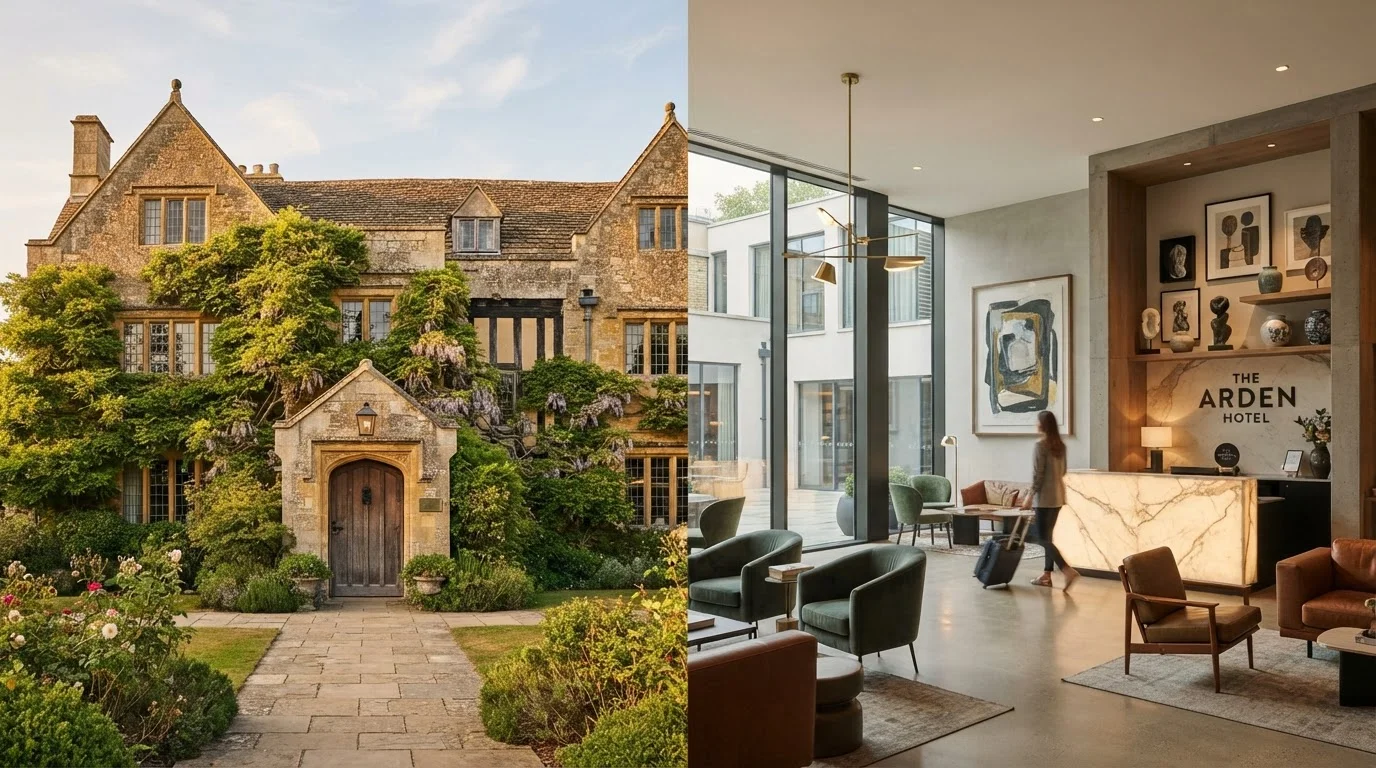
The distinction starts with the building itself. A heritage property is an existing structure — manor house, mill, convent, merchant townhouse — that has been converted and adapted for hospitality. Its architecture predates its use as a hotel, and that gap between original purpose and present function is a large part of the appeal. A new-build boutique, by contrast, is designed and constructed as a hotel from the ground up, with boutique sensibilities — small scale, locally inspired design, independent ownership — baked into the blueprint.
Both categories fall under the broader boutique umbrella. If you're new to the vocabulary, what actually defines a boutique property is worth understanding before booking either type. The meaningful difference lies not in size or price but in where the character comes from: inherited versus invented.
What Heritage Properties Do Best
The most compelling argument for a restored historic property is architectural irreproducibility. Flagstone floors worn smooth by centuries of foot traffic, exposed timber roof trusses, sash windows looking onto a courtyard that hasn't fundamentally changed in two hundred years — these are details no amount of budget or intentionality can manufacture in a new build. How boutique hotels use space to tell a story explores this dynamic in depth, but the short version is that heritage buildings carry a narrative that guests can physically inhabit.
Service culture at well-run heritage properties tends to be deeply localized. Owners and staff often have genuine roots in the building's history — or at minimum, in the region — which translates to recommendations and knowledge that go well beyond a curated welcome pack. The property itself becomes a credential for authenticity.
Ask About Specific Room Categories
In heritage properties, room character varies far more than the listing typically conveys. When booking, ask specifically about the room you'll be assigned — its floor, aspect, and proximity to communal areas. Many operators are happy to share photos or notes beyond the standard gallery, especially for direct bookings.
Heritage stays also tend to occupy genuinely distinctive locations: hilltop positions, historic town centers, or rural settings that newer construction couldn't access due to planning constraints. That location dividend is often underappreciated when comparing room rates.
The Trade-Offs of Converted Spaces
Converted buildings carry structural realities that no renovation fully resolves. Uneven floors, narrow staircases, load-bearing walls that limit room configuration, and original window glazing that provides minimal acoustic or thermal insulation are common constraints. Room sizes within the same property can vary dramatically — a feature some guests find charming, others find frustrating when they receive the smallest option.
Plumbing and electrical systems retrofitted into historic fabric can be serviceable but rarely match the performance of purpose-built infrastructure. Hot water pressure, heating distribution, and soundproofing between rooms are the areas where heritage conversions most frequently underdeliver relative to expectations set by photography. When a unique stay isn't worth the trade-offs offers a frank look at how to weigh these practical limitations before committing.
Accessibility in Heritage Buildings
Listed building status or preservation requirements in many countries restrict the structural modifications needed to install lifts, widen doorways, or create step-free access. Travelers with mobility considerations should confirm specifics directly with the property rather than relying on general listing descriptions. Requirements and restrictions vary significantly by country and property.
Accessibility is a persistent challenge. Listed building status or preservation requirements in many countries restrict the structural modifications needed to install lifts, widen doorways, or create step-free access. Travelers with mobility considerations should confirm specifics directly with the property rather than relying on general listing descriptions.
Where New-Build Boutiques Have the Edge
Purpose-built boutiques solve the infrastructure problem by design. Acoustic separation, climate control zoning, accessible bathrooms, and uniform room standards across all categories are achievable from the outset in a way that heritage conversion cannot guarantee. For guests who value sleep quality, consistent room temperature, or specific accessibility requirements, this structural advantage is significant.
The best new-build boutiques compensate for the absence of inherited character through rigorous design intentionality — commissioning local artists, sourcing materials specific to the region, or building around a cultural or culinary concept that gives the property a coherent identity. Whether that constitutes genuine authenticity is a question worth asking; the honest answer is that it depends almost entirely on the depth of the operator's commitment.
| Heritage Properties | New-Build Boutiques | |
|---|---|---|
| Architectural character | Irreplaceable, earned through age | Curated and intentionally designed |
| Room consistency | Variable — layout and size differ widely | Generally uniform across categories |
| Acoustic insulation | Often limited by original structure | Engineered from the outset |
| Accessibility | Frequently restricted by preservation rules | Fully achievable by design |
| Sense of local history | Embedded in the fabric of the building | Depends on operator's depth of commitment |
| Modern infrastructure | Retrofitted; quality varies | Purpose-built; reliable |
| Location distinctiveness | Often in historically significant spots | Location chosen rather than inherited |
Making the Decision That Fits Your Stay
The comparison ultimately resolves around what kind of richness you're seeking. If your measure is the texture of place — the accumulated weight of a building that has witnessed history — heritage properties offer something genuinely irreplaceable. If your measure is the precision of a well-executed concept delivered without compromise on comfort, a thoughtfully designed new-build boutique may outperform a heritage conversion that hasn't been maintained to the same standard.
Both formats reward the same underlying instinct: choosing independent, small-scale hospitality over standardized chain experience. For a grounded look at how that choice plays out in practice, boutique hotels versus international chains covers the wider context. And once you've booked either type, getting the most from a small-staff property will help you navigate the specific rhythms of independent hospitality.