
Why Your Carry-On Comfort Kit Matters More Than You Think
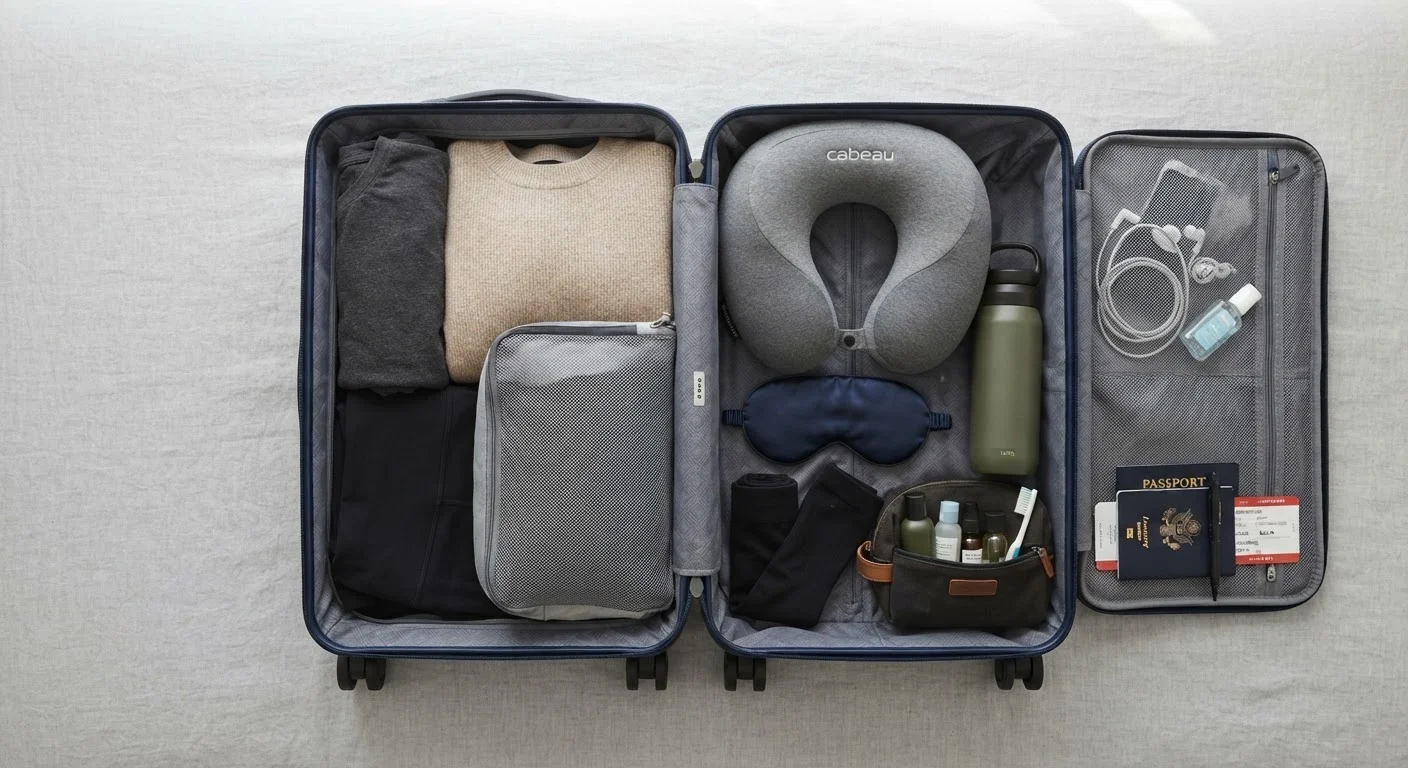
Checked luggage gets your clothes to the destination. Your carry-on gets you there in a usable state. For any flight over three hours, what you pack within arm's reach has a measurable effect on how you land - rested or wrecked, stiff or mobile, dehydrated or dialed in.
Frequent flyers know this instinctively, but even experienced travelers often carry a half-optimized bag: too many redundant items, missing the one thing that would have made a difference. This checklist is built around a straightforward standard - does this item meaningfully improve sleep quality, physical comfort, or wellness at altitude? If it doesn't clear that bar, it doesn't make the list.
For a deeper look at in-flight wellness from departure to landing, see the complete in-flight comfort reference. And before you even leave for the airport, the pre-departure checklist is worth running through to make sure nothing critical gets overlooked.
Sleep & Sensory Kit
Circulation & Physical Comfort
Hydration & Nutrition
Skin & Hygiene Essentials
Tech & Entertainment
How to Use This Checklist Without Overpacking
The groupings below reflect how comfort needs shift through a flight - before boarding, during cruise altitude, and on approach. Work through each group and mark items against your specific flight length and seat class. A two-hour domestic hop doesn't need the full kit; a transatlantic overnight does.
Don't Pack What You Can't Lose
Carry-on bags are occasionally gate-checked on full flights, particularly on regional aircraft. Keep your most essential items - medications, valuables, sleep kit - in a personal item that stays under the seat in front of you. Never place prescription medications or irreplaceable documents in a bag you might have to surrender at the gate.
One practical note: toiletries must comply with TSA's 3-1-1 rule - liquids in containers of 3.4 oz (100 ml) or less, all fitting in a single quart-sized clear bag. Plan your skincare and hygiene items around this constraint before you start packing.
Packing strategy differs meaningfully across travel modes. If you're curious how carry-on logic compares to car packing for road trips or cruise-specific packing rules, the differences are instructive. Air travel imposes strict weight and volume constraints that demand a more disciplined selection process.
Quart-sized clear zip-lock bag
Required by TSA for carrying liquids, gels, and aerosols through security checkpoints.
Packing cubes or pouches
Keep your comfort kit organized and accessible without digging through your entire bag mid-flight.
Noise-canceling headphones
Reduce engine noise and ambient cabin sound, significantly improving both rest and entertainment quality.
Portable battery bank
Ensures devices stay charged when seat power is unavailable or unreliable.
Reusable water bottle
Allows you to stay hydrated throughout the flight without depending on infrequent cabin service.
The most common long-haul flight mistakes often come down to skipping the items in this checklist - particularly hydration and movement - so treat the must-have designations seriously.
Medications Always Travel in Your Carry-On
Prescription medications should never be packed in checked luggage. Carry them in their original labeled containers in your personal item or carry-on, easily accessible to you at all times. If you take medications on a schedule, set in-flight reminders accounting for time zone changes. For specific guidance on traveling with medications, consult your healthcare provider before departure.