
Why Terminal Transfers Are More Complicated Than They Look
Most connecting passengers assume moving between terminals is a matter of following signs and walking. At smaller airports, that's true. At major hubs - think Atlanta's Hartsfield-Jackson, Dallas/Fort Worth, or Chicago O'Hare - a terminal change can involve a shuttle ride, a re-entry through security, and a 30-minute time investment that your itinerary never mentioned.
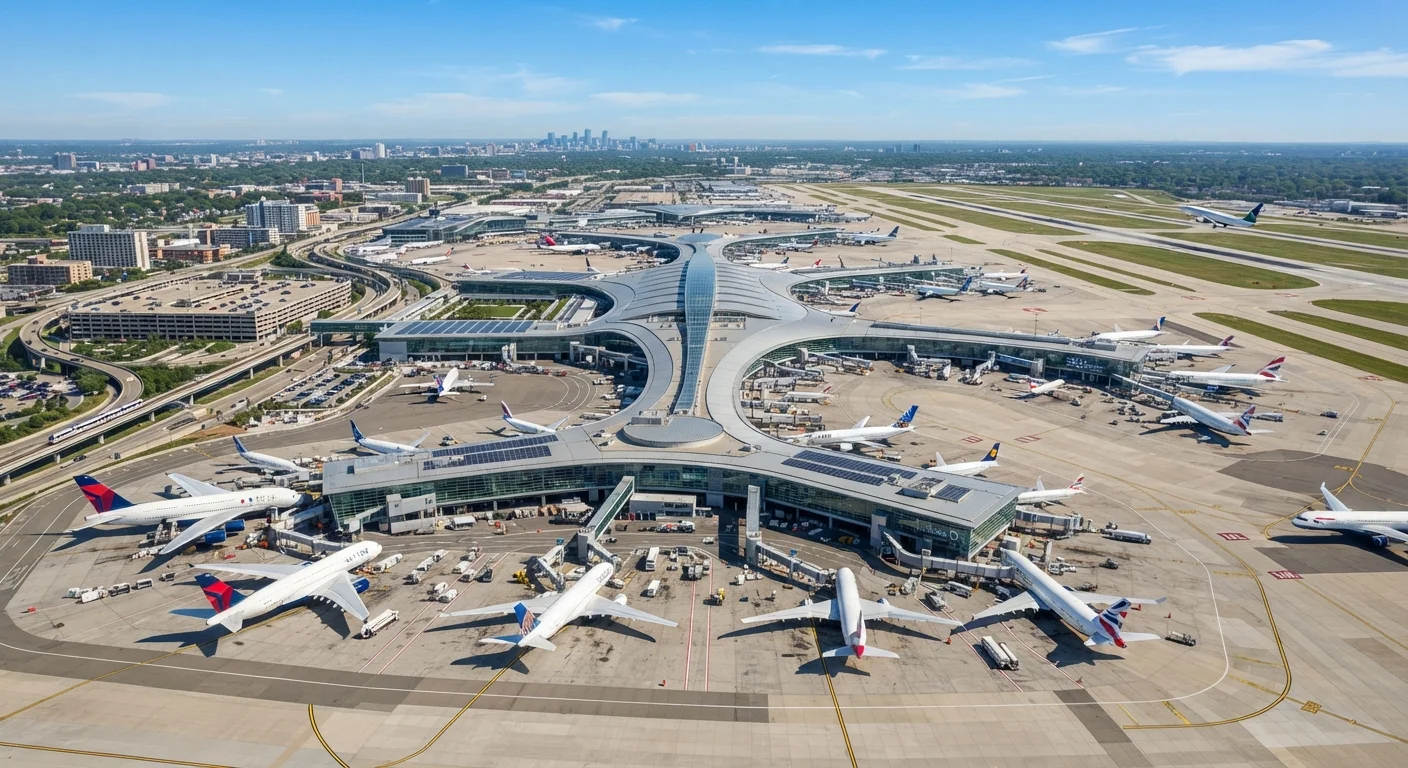
The core issue is that airports are often collections of separately secured, sometimes physically disconnected buildings. Your connecting gate may be in a different terminal operated by a different airline, and the path between them isn't always intuitive or fast.
Understanding how terminals, concourses, and gates fit together before you travel is one of the most reliable ways to avoid a missed connection.
| Minimum connection time (domestic, same terminal) | 30-45 minutes (General airline minimum connection time guidelines) |
| Minimum connection time (domestic, different terminals) | 60-90 minutes (Varies by airport size and shuttle availability) |
| Minimum connection time (international to domestic, US) | 90-120 minutes (CBP processing and re-check requirements) |
| US airports with airside inter-terminal transit | Atlanta, Denver, Dallas/Fort Worth, Las Vegas (among others) (Airport operator published maps) |
| TSA PreCheck impact on re-screening | Can reduce wait to under 10 minutes (TSA.gov program information) |
| Checked baggage on international-to-domestic transfers | Must be reclaimed and re-checked at US ports of entry (U.S. Customs and Border Protection policy) |
The Four Transfer Scenarios and What Each Requires
Not all inter-terminal moves are equal. Which scenario applies to you depends on your airport, your airline, and whether you're staying domestic or crossing an international threshold.
1. Same-Terminal, Different Concourse
Usually the simplest case. A concourse is a branch within a terminal. Movement between concourses is often airside (post-security), meaning no re-screening. Some airports use underground walkways or automated people movers connecting concourses without exiting security. Allow 10-20 minutes depending on distance.
2. Different Terminals, Airside Connection
Some airports - including London Heathrow and Singapore Changi - have inter-terminal transit systems that operate entirely post-security. Passengers move freely without re-clearing. This is the ideal scenario and can take as little as 10 minutes, but it only exists where terminals were architecturally designed for it.
3. Different Terminals, Landside Connection
The most disruptive scenario for US domestic travelers. You exit your arrival terminal into the public area, take a shuttle or train to the next terminal, and re-enter security from scratch. At busy airports during peak hours, this can consume 45-60 minutes. TSA PreCheck significantly reduces re-screening time if you hold that status.
4. International-to-Domestic Transfer
Arriving internationally and connecting to a domestic flight is the most process-heavy scenario. You must clear CBP immigration, collect checked baggage, re-check it with the domestic carrier, and clear security again. A stage-by-stage breakdown of international arrivals can help you anticipate each step. Budget a minimum of 90 minutes at uncongested airports; two hours or more is safer at large US hubs.
Terminal
A primary, often self-contained building at an airport where passengers check in, pass through security, and access gates. Large airports may have multiple terminals, each served by different airlines or alliances.
Concourse
A wing or branch within a terminal that houses a cluster of gates. Multiple concourses can share a single terminal and are usually connected airside (after security).
Airside
The secured portion of an airport accessible only after passing through a security checkpoint. Moving between gates or concourses airside does not require re-screening.
Landside
The public area of an airport before security, accessible to anyone. A landside terminal transfer requires exiting the secure zone and clearing security again at the next terminal.
Automated People Mover (APM)
A rail-based, driverless transit system connecting terminals or concourses within an airport. APMs run on fixed schedules and are generally more reliable than bus shuttles for tight connections.
Minimum Connection Time (MCT)
The shortest layover duration an airline or airport considers operationally viable for a connecting itinerary. MCTs vary by airport, terminal, and whether the trip is domestic or international.
Shuttle Systems, Trains, and the Time You'll Actually Spend
Airports use several transport modes to move passengers between terminals. Understanding which type your airport uses - and how frequently it runs - directly affects how much buffer time you need.
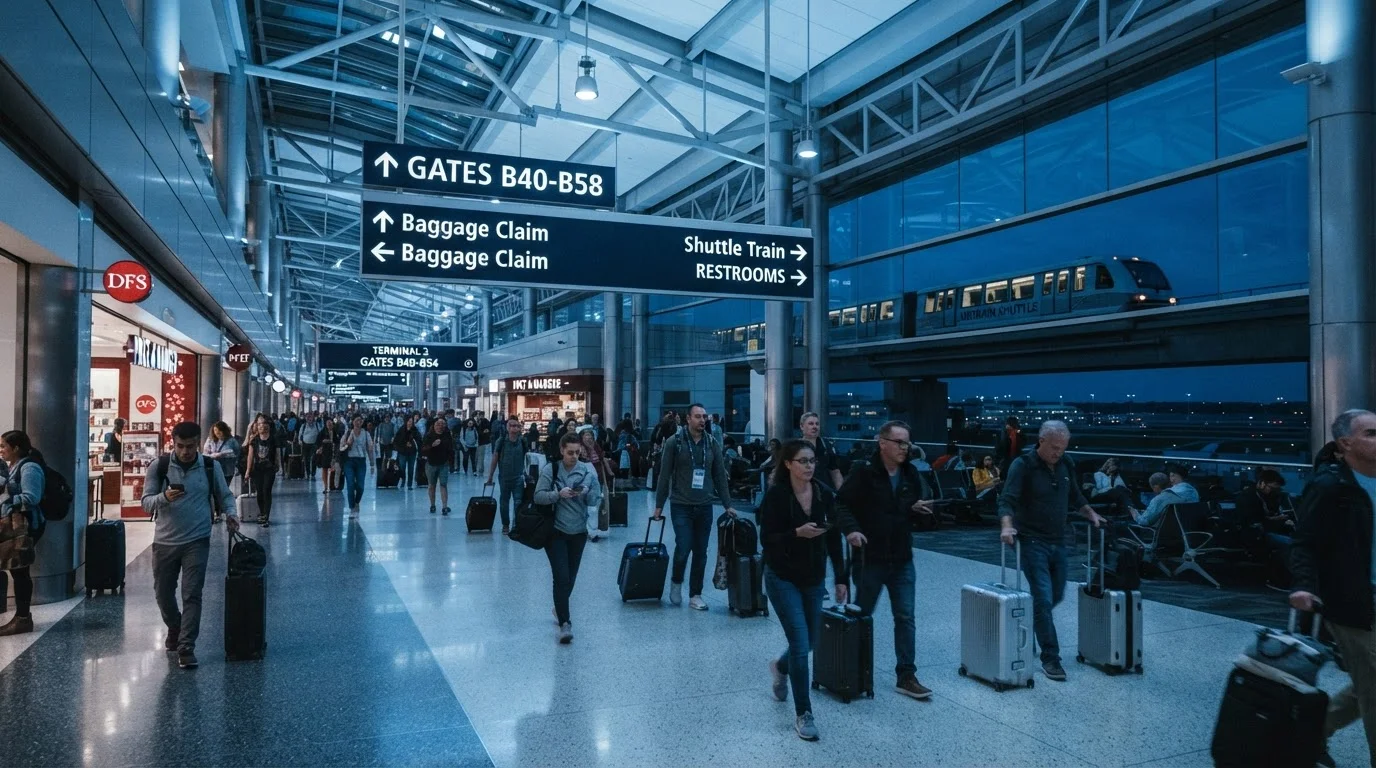
- Automated people movers (APMs): Rail-based, fully automated trains running on fixed loops. Common at Atlanta, Denver, and Seattle-Tacoma. Frequency is typically every 2-5 minutes, making them reliable even with short connections.
- Bus shuttles: Used when terminal buildings are too dispersed for fixed rail. More variable in timing - weather, traffic, and loading delays can add unpredictability. Factor in an extra 10-15 minutes of uncertainty.
- Walkways and connectors: Some airports connect terminals through enclosed pedestrian bridges or underground tunnels. These are the fastest option when available, though they can involve significant walking distance.
One detail many travelers miss: shuttle pickup locations are not always near the arrivals gate. At Dallas/Fort Worth, for instance, the Skylink train runs airside, but at airports requiring a landside transfer, the shuttle pickup may involve a full exit from baggage claim, crossing a roadway, and waiting at an outdoor curb.
Passengers traveling with reduced mobility should note that shuttle and APM accessibility varies meaningfully between airports. Arranging mobility assistance in advance is strongly recommended when a terminal change is involved.
If you're booking itineraries with intentional layovers, strategic stopover routing works best when you understand exactly what your connection requires on the ground.
Check the Airport Map Before You Fly
Every major airport publishes a terminal and concourse map on its official website. Reviewing it before departure - not at the gate - lets you identify your transfer method, shuttle pickup location, and realistic walking distances. If your itinerary shows a terminal change, cross-reference it with the airport's published minimum connection times, which are also available through airline booking systems. Always verify current conditions with your airline and the airport directly, as layouts and services can change.