
The Basic Hierarchy: Terminal → Concourse → Gate
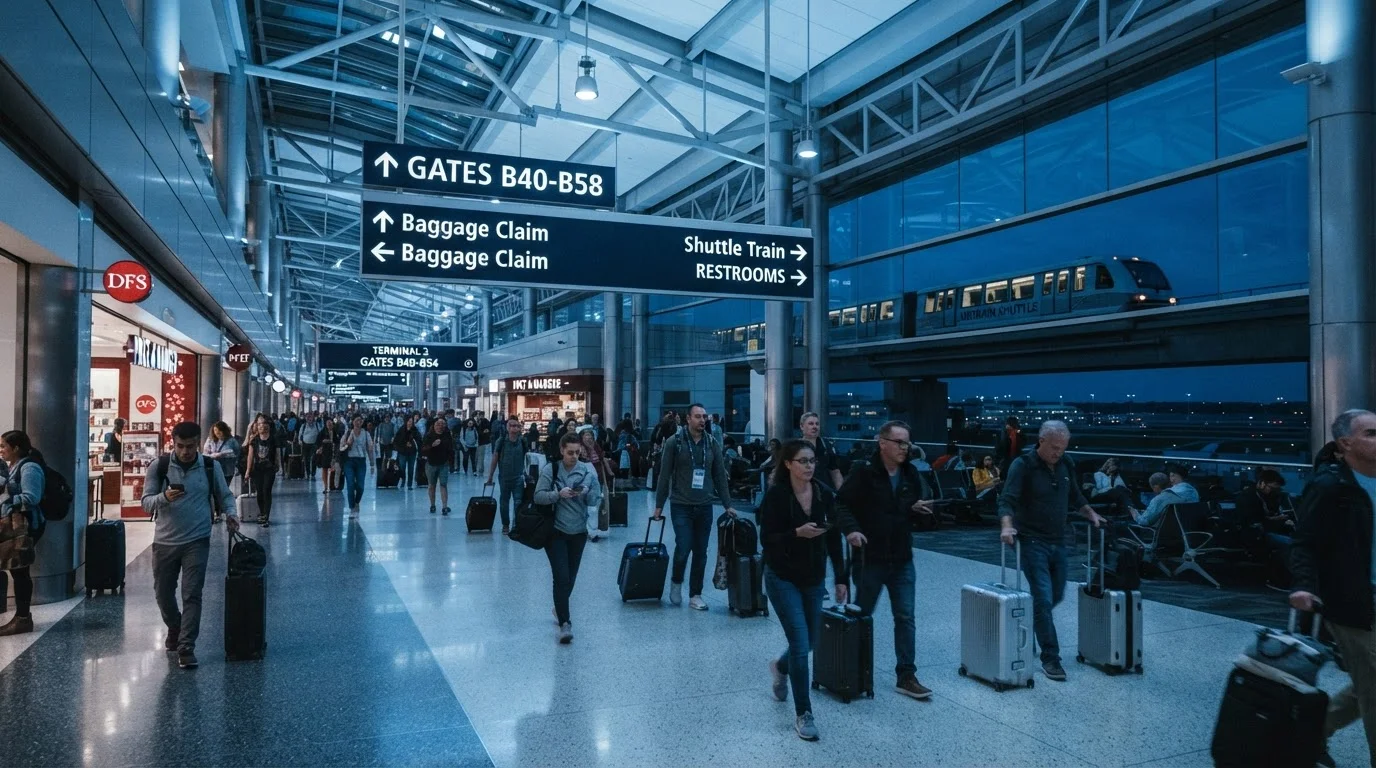
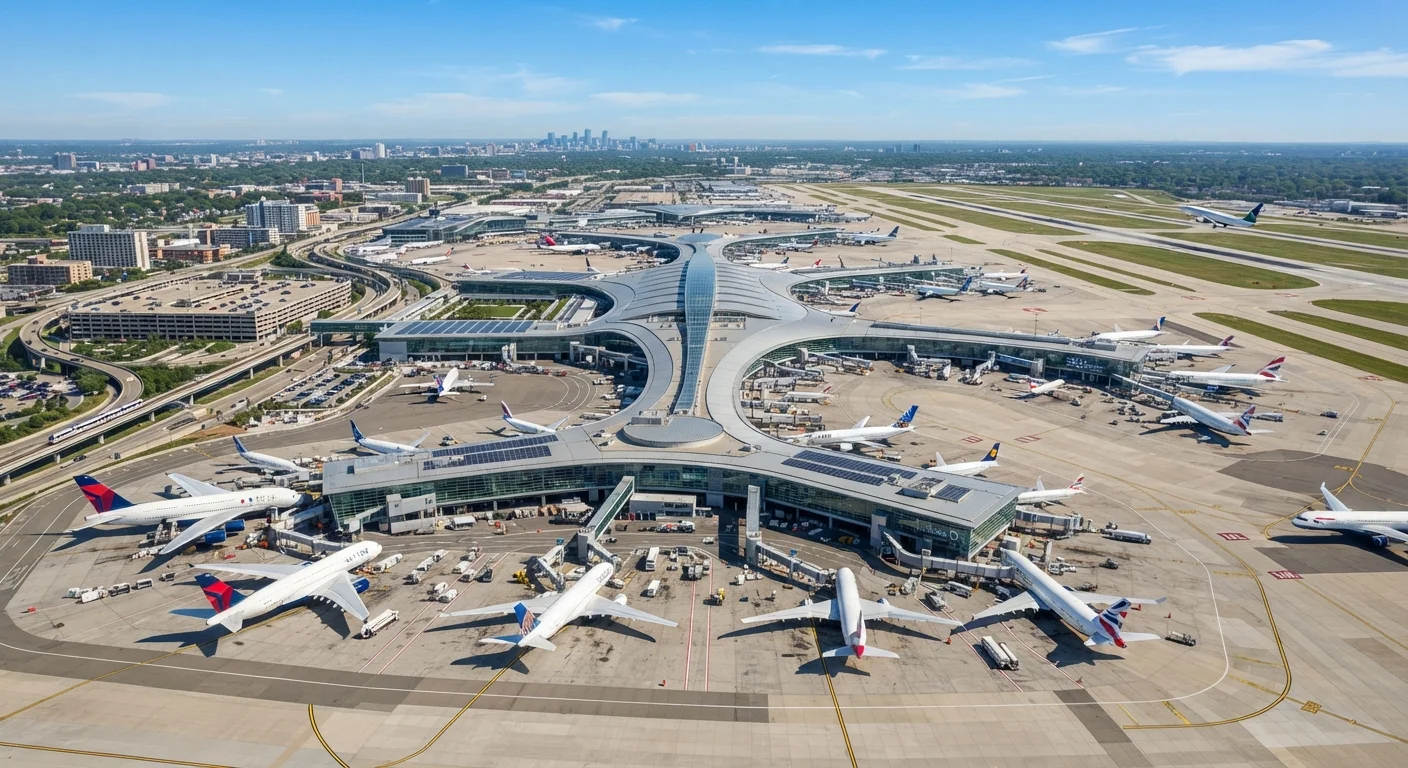
Think of an airport in three nested layers. The terminal is the outermost structure - the building you enter from the curb. It contains ticketing counters, baggage check, security checkpoints, and baggage claim. The concourse is a corridor or wing that extends from (or is attached to) the terminal on the airside - the post-security zone where only ticketed passengers can go. The gate is a specific door along the concourse, numbered so airline staff and passengers can find the right jetway or boarding area.
Not every airport uses all three layers. A small regional airport might have a single terminal with one open gate hall and no concourses at all. A major hub like Chicago O'Hare or Dallas/Fort Worth organizes dozens of gates across multiple separate terminals, each with its own concourses. The vocabulary can also shift: some airports call their concourses "piers," "satellites," or "wings." The concept remains the same regardless of the label.
For a ground-level walkthrough of moving through each stage, see our kerb-to-gate guide, which covers each step in sequence.
How Common Airport Layouts Are Structured
Airports are generally built around a handful of physical configurations, each with real implications for how you move through them.
75+
Gates at major U.S. hub concourses
Large hub concourses at airports like Atlanta Hartsfield-Jackson and Dallas/Fort Worth can exceed 75 individual gates within a single concourse structure.
~30 min
Typical inter-terminal shuttle frequency
At many multi-terminal U.S. airports, inter-terminal shuttle buses or trains run on cycles ranging from 10 to 30 minutes depending on time of day and airport.
6
Concourses at Hartsfield-Jackson Atlanta
Atlanta's airport, one of the world's busiest by passenger volume, operates six airside concourses connected to the main terminal via an underground automated train.
- Linear (pier) terminals - A single elongated building with gates lining both sides of a long corridor. Common at mid-size U.S. airports. Easy to navigate; the main challenge is walking distance from security to a far gate.
- Pier-and-terminal (finger) layouts - A central terminal with multiple concourse fingers extending outward. Hartsfield-Jackson Atlanta and Denver International use this model. The fingers are labeled alphabetically (Concourse A, B, C…), and your gate code tells you exactly which finger to target.
- Satellite concourses - Detached buildings reached by underground tunnels or airside shuttles. Denver's Concourse A, B, and C are connected to the main terminal via an automated underground train. Passengers remain in the sterile (post-security) zone throughout - no re-screening required.
- Multi-terminal campuses - Separate, largely independent terminal buildings served by their own curb, check-in, and security. New York JFK, Los Angeles LAX, and London Heathrow follow this model. Moving between terminals typically means going back through public areas and re-clearing security.
Knowing which type you're dealing with before you arrive changes how you plan your time. Inter-terminal transfers involve more complexity than most travelers expect - including shuttle timing, re-security queues, and airline-specific rules about which terminal handles which routes.
Reading Your Boarding Pass Gate Code
Your boarding pass gate code is a direct address inside the airport. A code like B22 tells you to head to Concourse B and find gate 22. At airports with terminal-level organization, a code like 2B-14 might indicate Terminal 2, Concourse B, gate 14. The format isn't standardized across airports, so it's worth checking the airport's own map (available on most airport websites and in their apps) to confirm what each element of the code means at your specific location.
Download the Airport Map Before You Fly
Most major U.S. airports publish interactive terminal maps on their official websites and within their apps. Reviewing the map for your departure and connection airports before travel day - even for five minutes - gives you a concrete mental model of where security checkpoints, concourse entrances, and shuttle stations are located. This preparation is especially valuable at airports you're visiting for the first time.
One practical rule: once you're through security and inside your concourse, follow the gate numbers directionally. Odd numbers often run on one side, even on the other - or numbers increase in one direction. Scan overhead signage immediately after entering a concourse to orient yourself before committing to a direction.
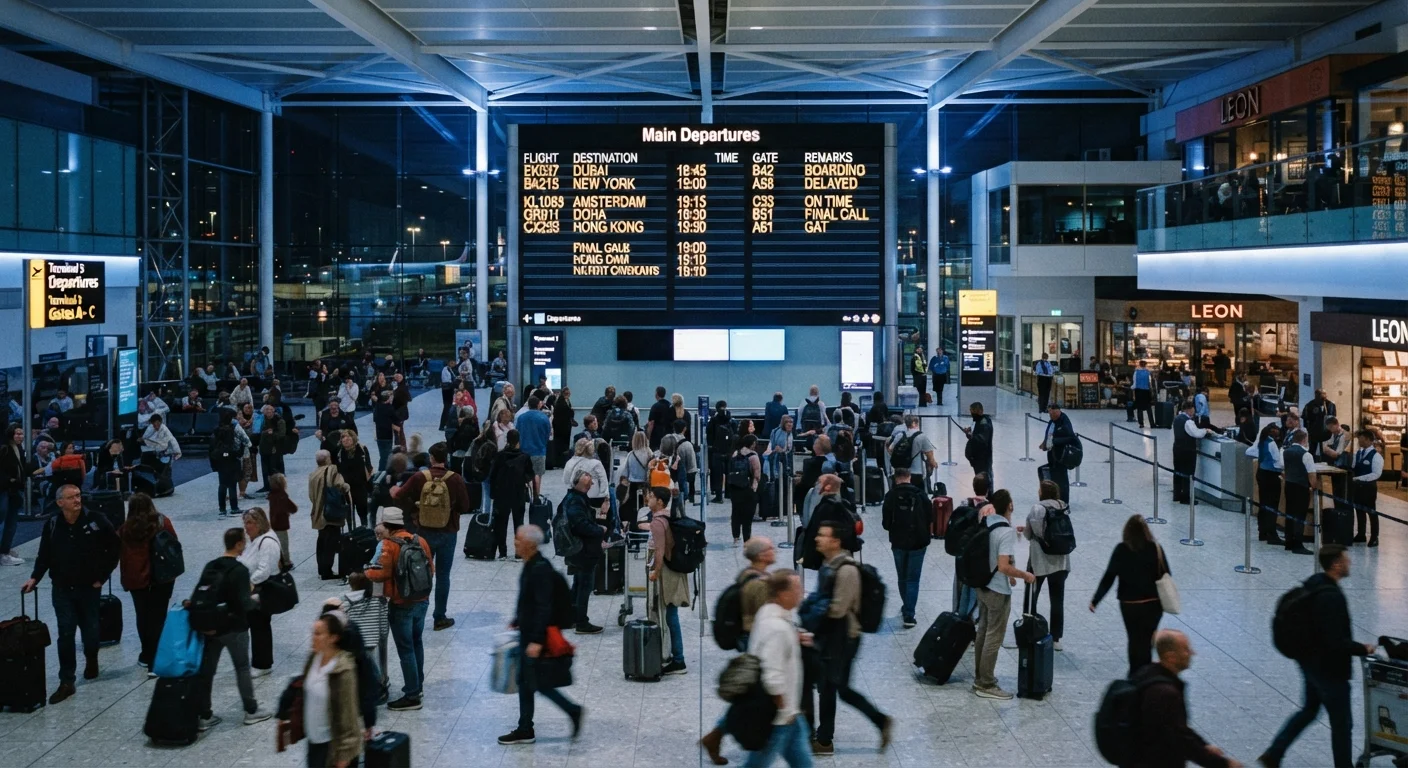
Gate codes on your boarding pass reflect the planned gate at the time of check-in. Because gate assignments change frequently, treat the code as a starting point, not a certainty. Always confirm your departure gate on the airport's flight information display screens (FIDS) after clearing security. Your airline's mobile app will typically push a notification for gate changes, making it a reliable secondary source.
If your itinerary includes a connecting flight, decode your full itinerary before you travel - it will tell you whether your connection is in the same terminal or requires a terminal change, which directly affects how much buffer time you need.
Connections, Sterile Corridors, and Re-Security
The single most consequential piece of airport geography for connecting passengers is whether a transfer stays within the secure airside zone or requires exiting it. Moving between gates in the same concourse, or between concourses connected by a sterile (post-security) tunnel or train, keeps you in the secure area - no additional TSA screening required. Moving between separate terminals almost always forces you back into the public zone and through a new security checkpoint.
Airlines publish minimum connection times (MCTs) for each airport, but these figures represent operational minimums, not comfortable reality. A 45-minute MCT at a multi-terminal airport requiring an inter-terminal shuttle and a security re-screen is extremely tight for most travelers. Build in additional buffer whenever your itinerary crosses terminal boundaries.
Passengers with reduced mobility or those unfamiliar with a large hub should review available assistance services well in advance. Structured support services are available at most major airports and can be arranged ahead of time through your airline.
For international arrivals specifically, the flow through immigration, customs, and baggage claim adds another layer - one that most passengers aren't fully briefed on before landing. Understanding where these steps fit within the terminal structure makes the process considerably less stressful.