
Before You Leave Home
The airport process actually begins at your kitchen table, not the terminal entrance. Completing a few tasks the night before your flight removes the most common sources of first-timer stress.
Check in online. Most US airlines open online check-in 24 hours before departure. Checking in early locks in your seat assignment and lets you download your boarding pass to your phone's wallet app. You'll still need to drop a checked bag at the counter, but you bypass the main check-in queue entirely.
Know your documents. For domestic flights, a government-issued photo ID is required - a driver's license marked REAL ID compliant or a US passport both work. For international travel, a valid passport is essential, and some destinations require a visa obtained in advance. Always verify entry requirements with official government sources well before you travel.
Boarding pass
The document - printed or digital - that authorizes you to board your specific flight. It shows your name, flight number, seat, gate, and boarding group.
REAL ID
A federally compliant form of state-issued ID marked with a star symbol. Required for domestic US air travel as a standalone ID at TSA checkpoints.
3-1-1 rule
The TSA rule governing liquids in carry-on bags: containers of 3.4 oz or less, placed in one quart-sized clear bag, one bag per passenger.
Concourse
A corridor or wing within an airport terminal that contains a group of gates. Large airports may have several concourses, sometimes requiring a shuttle to move between them.
Bag drop
A staffed counter where you hand over a pre-tagged checked bag after completing self-service or online check-in, skipping the full check-in queue.
TSA PreCheck
A US government trusted-traveler program that allows enrolled passengers to use expedited security lanes with fewer required item removals.
Pack your carry-on with security in mind. Place your liquids bag and laptop on top so you can pull them out quickly at the checkpoint. If you're unsure what's permitted, understanding how terminals are laid out will also help you mentally map the journey ahead.
Arriving at the Airport: Kerb to Check-In
When your vehicle pulls up to the terminal, you'll see signs dividing the kerb by airline. Follow your airline's signage to the correct entrance - in large airports like O'Hare or LAX, different terminals serve different carriers, so confirm your terminal before leaving home.
Checked bags: If you have luggage to check, proceed to your airline's counter or a self-service kiosk. Kiosks print bag tags; you then hand the tagged bag to an agent at the bag drop. Keep your baggage claim receipt - it's printed on your boarding pass or issued separately - until your bag arrives at your destination.
Carry-on only: If you're traveling light, you can head straight for security after entering the terminal. Airport maps are posted at major intersections and on airport apps - download the relevant one if the airport is large.
Download the Airport's App Before You Go
Many major US airports - including Atlanta Hartsfield-Jackson and Dallas/Fort Worth - offer free apps with real-time gate information, terminal maps, and restaurant locations. Download it on your home Wi-Fi so you have it ready before you land in an unfamiliar terminal.
Rideshare and taxi drop-offs use the Departures level (upper roadway) at most US airports. Arrivals is a separate level used for pickups. Confirm with your driver before you reach the airport to avoid being dropped at the wrong kerb.
Getting Through Security
The TSA checkpoint is where many first-timers slow down. Knowing the steps in advance keeps you - and the line - moving smoothly.
- Have your ID and boarding pass ready before you reach the document checker.
- Follow the 3-1-1 rule for carry-on liquids: containers must hold 3.4 oz (100 ml) or less, all must fit in one quart-sized clear zip-top bag, and each passenger is limited to one such bag.
- Prepare your bin. Remove your laptop and liquids bag from your carry-on. Take off shoes, belts, and jackets. Place everything - including your phone - in the provided bins.
- Walk through the scanner calmly and follow any officer instructions. If a secondary screening is needed, stay calm - it's a routine procedure.
- Collect your items promptly on the other side, step away from the belt, and repack before moving on.
Don't Wait Until the Gate to Check Your ID
TSA agents check your photo ID and boarding pass at the security checkpoint entrance - not at the gate. If your ID is expired or non-compliant, you may be denied entry to the secure area entirely. Check your ID's expiration date well before travel day.
If you have TSA PreCheck enrolled on your boarding pass, you'll use a dedicated lane where you generally keep shoes, belts, and laptops in your bag. PreCheck is not automatically applied - your Known Traveler Number must be on file with the airline when you book.
Finding Your Gate and Boarding
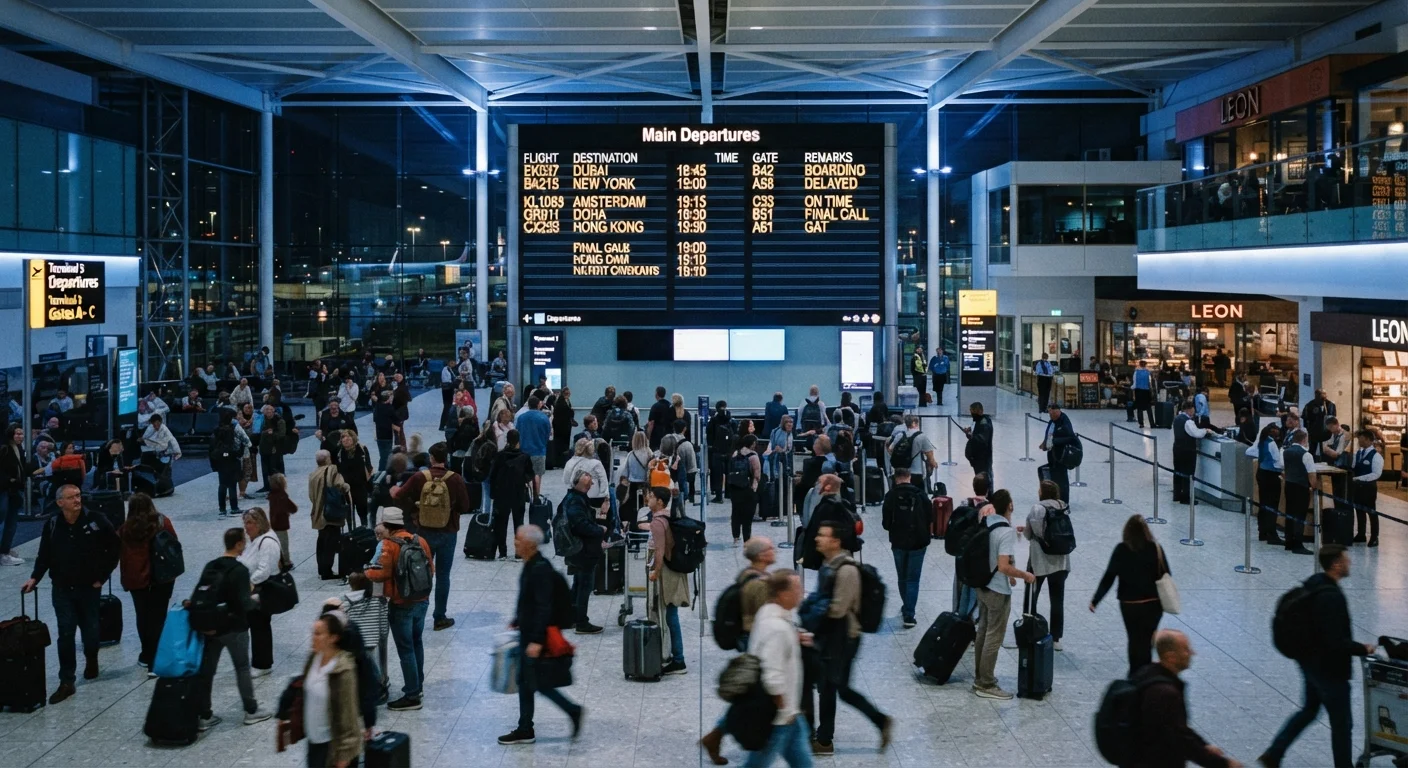
Once through security, you're in the secure concourse. Your gate is printed on your boarding pass, but always cross-check it against the overhead departure monitors - gate changes happen, particularly with weather or equipment swaps.
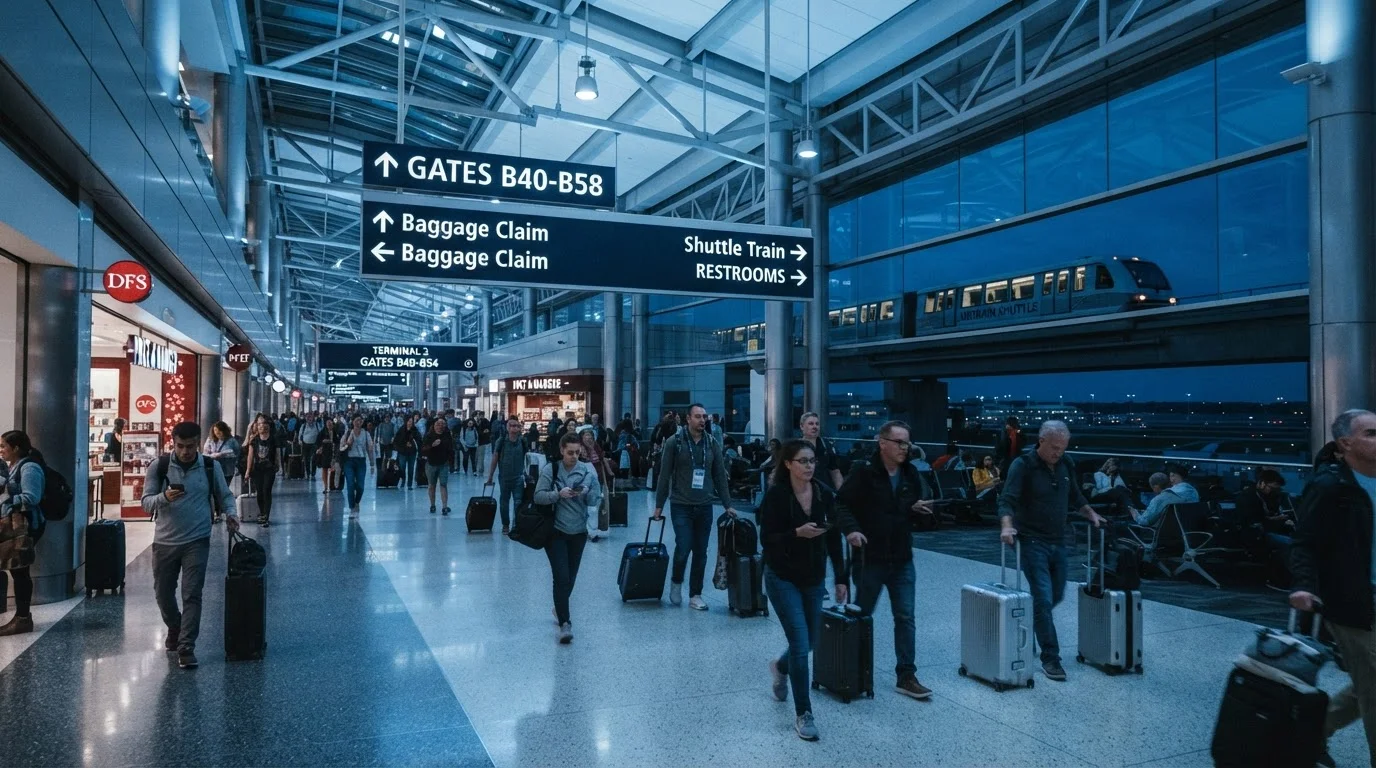
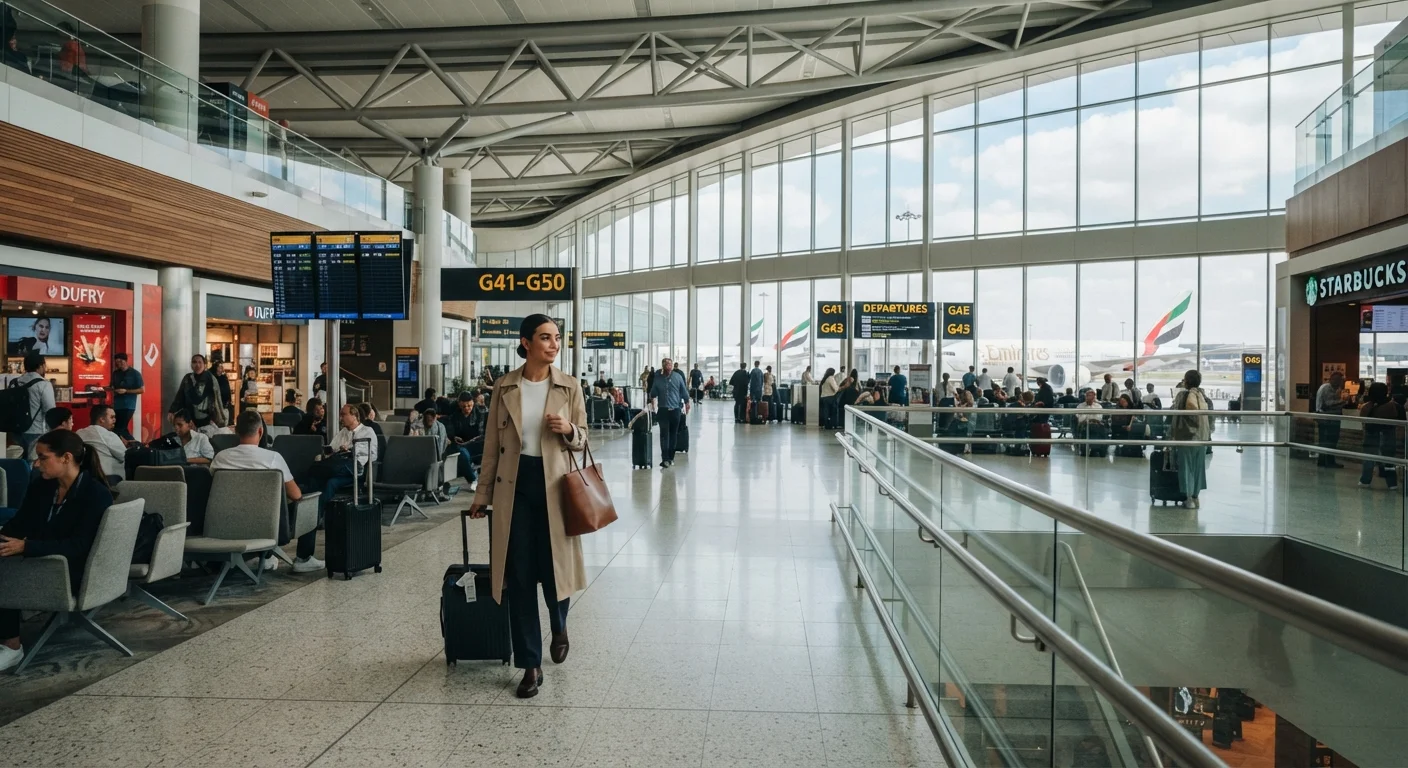
Large airports use a system of terminals and concourses. Learn how airports are structured to move between them confidently. Some connections require a shuttle or inter-terminal train - follow overhead signage and allow extra time.
At the gate: Arrive at least 30 minutes before departure. Listen for boarding announcements - airlines typically board by group number or zone, starting with passengers needing extra assistance, then elite frequent flyers, then general boarding in numerical order. Join the line only when your group is called; crowding the gate area before then doesn't speed up boarding.
Once onboard, locate the overhead bin above or near your seat, stow your bag with wheels facing in, and settle in. If you're heading abroad next, our guide to international arrivals and customs walks you through exactly what happens after you land.
This article provides general travel information for educational purposes. Airport procedures, TSA rules, and airline policies can change - always verify current requirements with the TSA, your airline, and relevant government agencies before you travel.