
Seating Strategy and Physical Positioning
Where you sit shapes nearly every aspect of your in-flight experience. Window seats offer a wall to lean against and control over the window shade - advantages for sleep. Aisle seats provide freedom to stand and stretch without disturbing neighbors. Bulkhead and exit-row seats offer extra legroom but may restrict underseat storage and recline in some configurations.
Regardless of seat type, posture matters significantly on long hauls. Keep both feet flat on the floor or on a footrest to reduce pressure on the lower back. A lumbar pillow or a rolled blanket placed at the small of the back can restore the spine's natural curve that standard seat padding often fails to support.
For deeper guidance on sleep in economy configurations, see Sleeping on a Plane: A Realistic Approach for Non-Lie-Flat Seats.
Hydration, Cabin Air, and Physical Health
Commercial aircraft cabins are typically pressurized to an equivalent altitude of 6,000-8,000 feet and maintain relative humidity as low as 10-20% - considerably drier than most indoor environments on the ground. This dry air accelerates moisture loss from skin, eyes, and the respiratory tract without necessarily triggering thirst.
Frequent flyers consistently report that proactive hydration - beginning before boarding rather than waiting until thirst appears - noticeably reduces fatigue and headaches on arrival. Water is the most practical choice; alcohol and caffeine are diuretics that compound fluid loss in an already dehydrating environment.
~10-20%
Typical cabin relative humidity
Cabin humidity on long-haul flights is substantially lower than most indoor environments, according to WHO aviation health guidance.
4+ hours
Flight duration linked to elevated DVT risk
The WHO WRIGHT Project identified flights exceeding four hours as the threshold where circulatory risk becomes a relevant concern for some travelers.
6,000-8,000 ft
Equivalent pressure altitude in cruise
FAA guidance indicates most commercial aircraft maintain this pressure range, which can subtly affect oxygen saturation and perceived fatigue.
Movement is equally important. Economy-class passengers on flights exceeding four hours are generally advised by aviation medicine practitioners to stand and walk the aisle periodically and to perform seated leg exercises - ankle rolls, heel raises, calf pumps - to encourage circulation. Compression socks are a practical, low-effort complement to these exercises. For a detailed packing breakdown, see Packing for Personal Comfort.
This article provides general health and wellness information for educational purposes only. It is not medical advice. Readers with specific health conditions, including circulatory concerns, should consult a qualified healthcare professional before traveling.
Sleep, Rest, and Mental Wellbeing
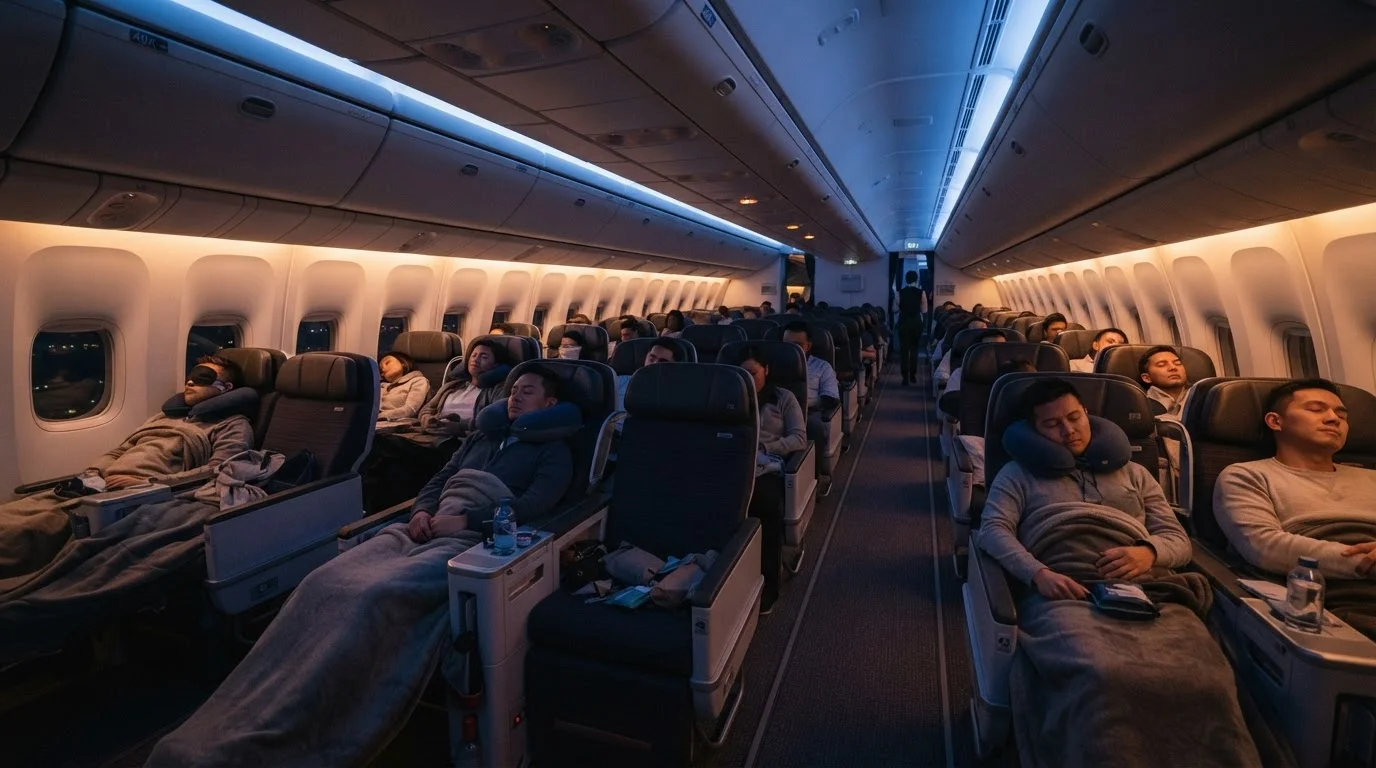
Meaningful sleep at altitude in a non-reclined seat requires deliberate setup. A U-shaped neck pillow that supports the head from falling forward, an eye mask that blocks variable cabin lighting, and earplugs or noise-canceling headphones to dampen engine noise and passenger sound are the foundational trio. Timing sleep to align with your destination's night cycle - rather than your departure city's - supports faster circadian adjustment on arrival.
Mental fatigue from confinement, noise, and disrupted routine is a real but underacknowledged aspect of long-haul travel. Structured activities - a downloaded podcast series, a focused reading project, or a short mindfulness session - give the brain purposeful engagement and help time pass without the restless frustration that amplifies discomfort. For evidence-informed approaches to managing anxiety and boredom in flight, see Mental Wellbeing on Long Flights.
Cabin altitude
The equivalent terrestrial altitude that matches the air pressure inside a pressurized aircraft cabin. Most commercial jets cruise at 35,000+ feet but maintain a cabin altitude of 6,000-8,000 feet for passenger comfort.
Deep Vein Thrombosis (DVT)
A blood clot that forms in a deep vein, typically in the legs. Prolonged immobility during long-haul flights is considered a contributing risk factor for some travelers. Always consult a physician about personal risk.
Circadian disruption
The misalignment between your body's internal clock and the local time at your destination. Extended or overnight flights crossing multiple time zones are a primary cause.
Compression socks
Close-fitting garments worn on the lower legs that apply graduated pressure to encourage venous blood flow and reduce swelling during periods of prolonged sitting.
Bulkhead seat
A seat positioned directly behind a physical divider or wall in the aircraft cabin, offering additional legroom in front but often restricting underseat storage.
Noise-canceling headphones
Headphones that use active noise control technology to reduce ambient sound - particularly low-frequency engine and airflow noise - making the cabin environment quieter and less fatiguing.
Before your next trip, Flight Planning covers smarter booking and timing decisions that set the foundation for a more comfortable journey.