
Why Long-Haul Flights Break Down Differently Than Short Ones
A two-hour domestic hop is forgiving. A twelve-hour transatlantic or transpacific flight is not. The same habits that cost you mild discomfort on a short flight - skipping water, wearing restrictive clothing, staying sedentary - compound over many hours into genuine physical toll. Most experienced travelers understand this in theory, but still underestimate how quickly avoidable errors accumulate.
The goal here isn't to make long-haul travel feel like a spa experience. It's to eliminate the self-inflicted friction that makes an already demanding journey harder than it needs to be. For deeper context on how the cabin environment affects your body, see our companion piece on how altitude changes taste and digestion.
Not drinking enough water throughout the flight.
Why it happens: Cabin humidity on most commercial aircraft sits well below 20% - far drier than most indoor environments - and passengers often don't feel thirsty until they're already significantly dehydrated.
Wearing tight, restrictive clothing for a long flight.
Why it happens: Many travelers dress for the airport aesthetic or for the destination rather than for the journey, arriving in stiff jeans, constrictive waistbands, or shoes that cause foot swelling to become painful.
Eating heavy meals and drinking alcohol to 'settle in' before sleeping.
Why it happens: The impulse to treat the flight as a celebration or to use food and alcohol as sedatives is understandable, but both strategies backfire. Alcohol disrupts sleep architecture even when it initially induces drowsiness, and a large meal stresses a digestive system already slowed by altitude.
Choosing the wrong seat for your sleep or comfort goals.
Why it happens: Travelers often select seats based on habit (aisle vs. window preference), proximity to the front, or what was available at booking - without thinking through how that seat performs on a twelve-plus-hour overnight flight.
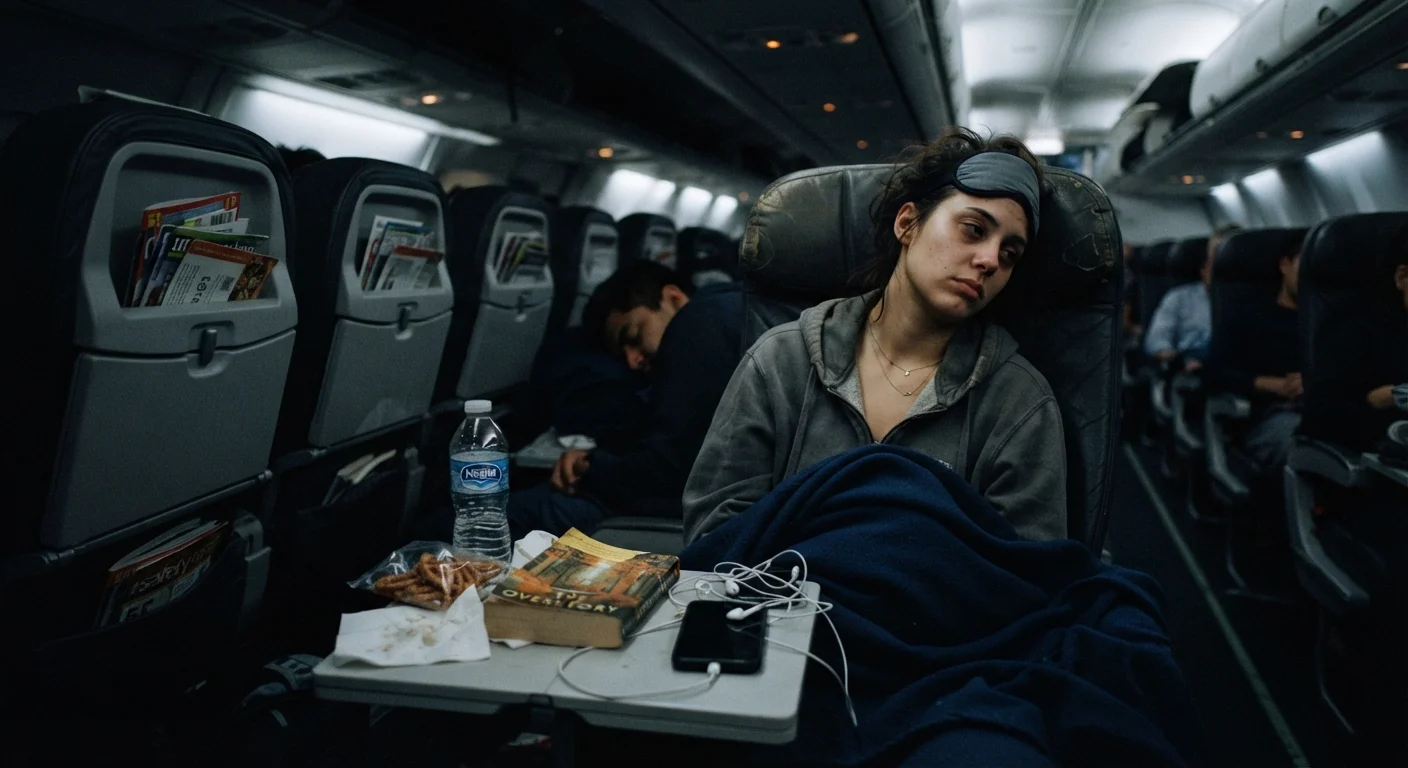
Staying completely sedentary for the majority of the flight.
Why it happens: Passengers get absorbed in entertainment, fall asleep, or simply don't want to disturb seatmates - leading to hours of continuous immobility that stiffens joints and slows circulation.
Arriving at the destination without any jet lag mitigation plan.
Why it happens: Many travelers focus entirely on surviving the flight and give no advance thought to circadian adjustment - then wonder why they feel disoriented for days after landing.
The Wellness Decisions That Determine How You Land
Surviving a long flight isn't just about enduring the hours - it's about the state you're in when the wheels touch down. Two travelers on the same aircraft can land feeling entirely differently based on the choices they made in the 48 hours before boarding and the behaviors they maintained in-flight.
< 20%
Typical cabin relative humidity
Most commercial aircraft maintain cabin humidity well below 20%, compared to the 30-60% typical of indoor environments - a primary driver of in-flight dehydration.
6+ hrs
Threshold for elevated DVT risk
Medical guidance generally identifies flights longer than six hours as the point at which prolonged immobility meaningfully raises the risk of lower-limb circulatory issues.
~30%
Reduction in taste sensitivity at altitude
Research suggests that cabin pressure and low humidity suppress taste perception - particularly for salt and sweet - affecting how food tastes and how much of it passengers tend to consume.
Circulation is a particular concern on flights exceeding six hours. While the risk of deep vein thrombosis (DVT) is often overstated in popular media, it is real and worth understanding - our detailed piece on circulation and clots on long-haul flights separates evidence from anxiety. Similarly, jet lag and general travel fatigue are often conflated - a distinction worth understanding before you land. See jet lag vs. travel fatigue for a breakdown of what's actually happening and how to address each.
Ear Pain During Ascent and Descent Is Often Preventable
Barotrauma - discomfort or pain caused by pressure changes during climb and descent - is one of the most common in-flight complaints and one of the least addressed in pre-flight preparation. Swallowing, yawning, or using the Valsalva maneuver (gently pinching your nose and exhaling softly) helps equalize middle ear pressure. Travelers with colds or sinus congestion are at higher risk. See our detailed guide on managing ear pressure and barotrauma for practical steps before your next long-haul flight.
Mental stamina also deserves attention. Hours of confinement create their own psychological demands. For evidence-informed strategies, our article on mental wellbeing on long flights is worth reading before departure. Finally, what you carry on the plane matters - a practical checklist of items that genuinely earn their place can be found in packing for personal comfort.