
What the Cabin Environment Does to Your Senses
The moment an aircraft reaches cruising altitude, the environment inside the cabin changes in ways that directly affect your body. Cabin pressure is maintained at roughly the equivalent of 6,000-8,000 feet above sea level - significantly lower pressure than most passengers experience on the ground. Humidity levels drop to between 10% and 20%, far drier than most indoor environments. Together, these two factors set the stage for a noticeably different sensory experience.
Your sense of taste depends heavily on smell. The olfactory receptors in your nasal passages require moisture to function properly, and the ultra-dry cabin air desiccates mucous membranes quickly. This mutes your ability to detect aromatic compounds - which is the primary reason food tastes flat at 35,000 feet, not simply that airline catering is poor.
Lower air pressure also changes how taste receptors on your tongue respond to stimuli. Peer-reviewed research, including work associated with the Fraunhofer Institute, has indicated that sweet and salty taste perception can diminish by roughly 30% at altitude. Umami - the savory, glutamate-driven fifth taste - is comparatively unaffected, which explains why tomato juice, rich in natural glutamates, becomes a more satisfying choice on a plane than it might seem on the ground.
Altitude Affects Everyone Differently
Individual responses to cabin pressure vary based on factors including baseline health, hydration status before boarding, and sensitivity to motion or pressure changes. Passengers with gastrointestinal conditions, food intolerances, or ear pressure issues may experience more pronounced effects. Always consult a healthcare provider if in-flight symptoms are severe or recurring. For ear-specific concerns, our guide on managing ear pressure and barotrauma covers the physiology and practical steps in detail.
Understanding these sensory changes is part of a broader picture of in-flight wellness. The complete in-flight comfort reference covers hydration, sleep, and health across the full journey.
How Altitude Slows Your Digestive System
Digestion is an oxygen-intensive process. At altitude, lower partial oxygen pressure means your body has slightly less available oxygen to devote to non-essential functions - and digestion, in physiological terms, is prioritized below circulation and respiration. Gut motility (the muscular contractions that move food through your digestive tract) slows measurably during flight.
This has two practical consequences. First, food sits in your stomach longer, increasing the likelihood of discomfort, nausea, or a heavy, sluggish feeling. Second, gas produced during digestion has nowhere to go quickly - and at altitude, gas in your digestive tract expands as cabin pressure drops, making bloating more pronounced than it would be at sea level.
Pair Hydration with Snack Choices
High-sodium airline snacks are especially counterproductive given that the extremely low cabin humidity already taxes your body's fluid balance. Choosing lower-sodium options and drinking water consistently throughout the flight addresses both hydration and digestive comfort at once. Keeping a refillable water bottle in your seat pocket makes it easier to drink regularly without relying on the meal service schedule.
High-sodium airline snacks are especially counterproductive given that the extremely low cabin humidity already taxes your body's fluid balance. Choosing lower-sodium options and drinking water consistently throughout the flight addresses both hydration and digestive comfort at once.
Smarter Food and Drink Choices Mid-Flight
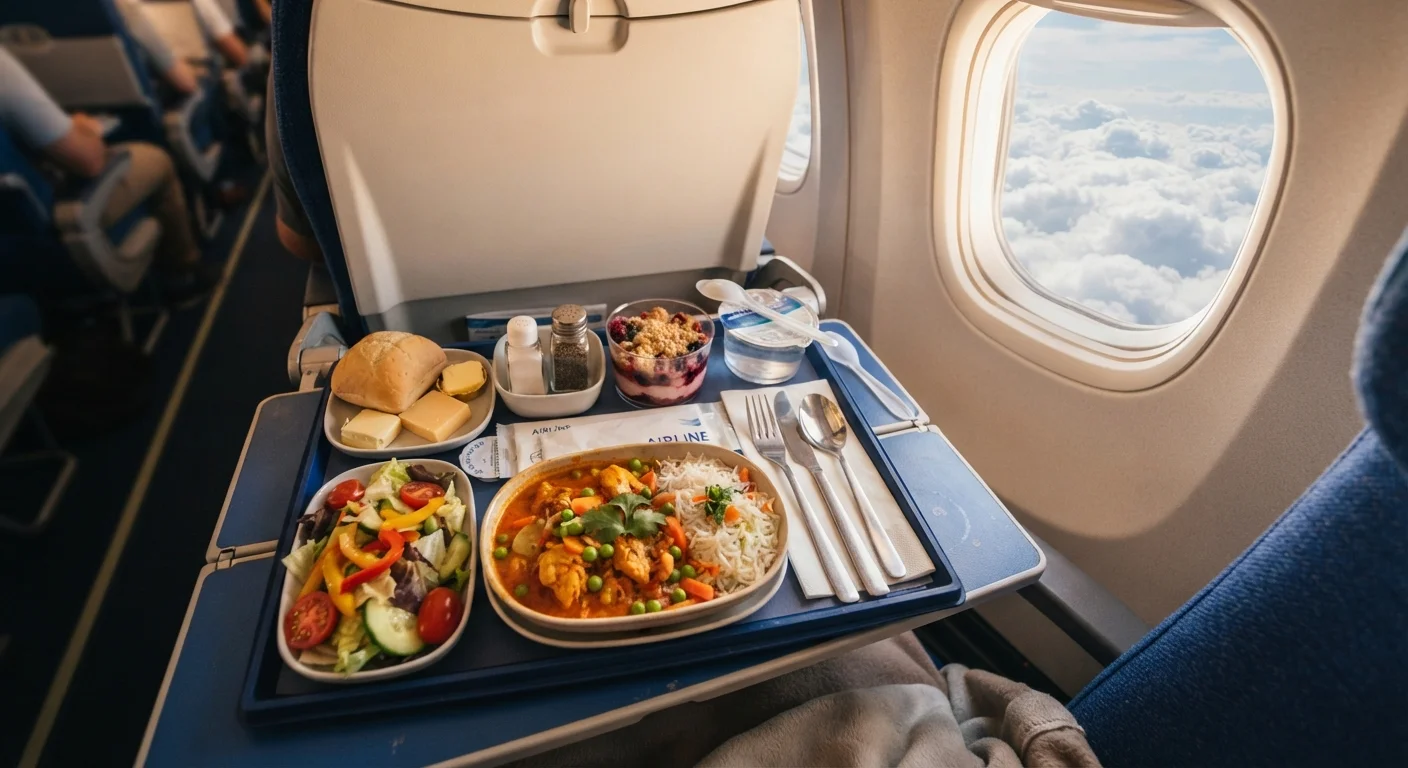
Knowing how your senses and digestion are compromised at altitude allows you to make more deliberate choices - whether you're eating an airline meal or selecting snacks you've brought aboard.
Foods That Work Well at Altitude
- Umami-rich options: Tomatoes, aged cheeses, olives, and broths retain flavor better than sweet or salty items.
- Light proteins: Chicken, fish, or eggs are easier to digest than red meat during slow-motility periods.
- Plain complex carbohydrates: Oats, crackers, and bread provide energy without taxing your gut.
Foods and Drinks to Limit
- Carbonated beverages: Gas expands at lower cabin pressure and amplifies bloating significantly.
- Cruciferous vegetables and legumes: Broccoli, cabbage, beans, and lentils produce more gas during digestion.
- Alcohol: Not metabolized faster at altitude, but dehydration effects stack with the dry cabin environment.
- Heavy, fatty meals: Slow to digest even at sea level; more problematic when gut motility is already reduced.
These principles apply equally to what you eat before boarding. Avoiding a large, gas-heavy meal in the terminal can meaningfully reduce discomfort once you're airborne. For a broader look at habits that compound flight misery, see common mistakes that make long-haul flights harder.
~30%
Drop in sweet and salty taste perception at altitude
Research associated with the Fraunhofer Institute for Building Physics found taste sensitivity can decline by approximately 30% in pressurized cabin conditions.
10-20%
Typical cabin relative humidity level
Aircraft cabins routinely maintain humidity far below average indoor levels, contributing to nasal dryness and reduced olfactory function.
6,000-8,000 ft
Equivalent pressure altitude inside a cruising cabin
Most commercial aircraft maintain this pressure equivalent, meaningfully lower than sea level and sufficient to affect oxygen availability and digestion.
Hydration as the Foundation of In-Flight Wellness
No single strategy does more to support both taste and digestion at altitude than consistent hydration. Water keeps nasal membranes moist, partially restoring olfactory function and improving flavor perception. It also supports gut motility by keeping digestive contents moving, reducing the buildup of gas and the sluggishness associated with slower transit times.
Aim for approximately 8 ounces of water for every hour of flight, though individual needs vary. Herbal teas are a reasonable alternative - warming, hydrating, and caffeine-free. Caffeinated drinks act as diuretics and compound the dehydrating effects of cabin air, so they're best consumed in moderation.
Light movement also helps: walking the aisle every 60-90 minutes encourages circulation and supports digestion. This connects directly to the broader recommendation to avoid staying completely sedentary on long flights, both for digestive comfort and general wellbeing. Travelers managing anxiety or the psychological weight of a long haul can find additional strategies in the guide on mental wellbeing on long flights.
“Umami is the taste that survives altitude. It's one reason airline caterers have long experimented with glutamate-rich ingredients - the science of why certain foods taste better at 35,000 feet is well-established within food science circles.”
— Charles Spence, Professor of Experimental Psychology, University of Oxford, and researcher on multisensory flavor perception
This article is for general informational purposes only and does not constitute medical or nutritional advice. Readers with specific digestive health conditions or dietary concerns should consult a qualified healthcare professional before making changes based on this content.