
Why Europe's Thermal Traditions Differ Region to Region
Europe sits atop a geologically diverse landscape that has shaped dramatically different thermal bathing cultures - each rooted in local geology, history, and social ritual. The mineral composition of the water, the architecture of the baths, and the etiquette inside them vary so widely that a visit to Budapest's public bathhouses feels almost nothing like soaking in Iceland's geothermal lagoons or undergoing a Kur (spa cure) in a German spa town. Understanding these distinctions helps travelers choose the right experience for the kind of restoration they're seeking.
Thermal bathing in Europe is rarely just about relaxation. It carries layers of social, medicinal, and civic meaning that have evolved over centuries. Visiting these spaces is one of the more accessible forms of culturally immersive travel available to US-based visitors - requiring nothing more than a towel, a willingness to slow down, and some regional context.
| Oldest Active Thermal Tradition in Europe | Roman thermae, documented from at least the 2nd century BCE |
| UNESCO-Listed European Spa Towns | The Great Spas of Europe (11 towns across 7 countries), inscribed 2021 (UNESCO World Heritage List) |
| Budapest Hot Springs | Approximately 120 natural hot springs beneath the city |
| Iceland's Geothermal Energy Source | Active volcanic systems; approximately 60% of Iceland's energy is geothermal (Orkustofnun (National Energy Authority of Iceland)) |
| Key Therapeutic Water Types | Sulfurous, bicarbonate, radon, saline, and silica-rich mineral springs |
| Primary Wellness Travel Motivation (Europe) | Stress reduction and relaxation cited most frequently by wellness tourists (Global Wellness Institute, various reports) |
Central Europe: Hungary and the Ottoman-Habsburg Bathhouse Legacy
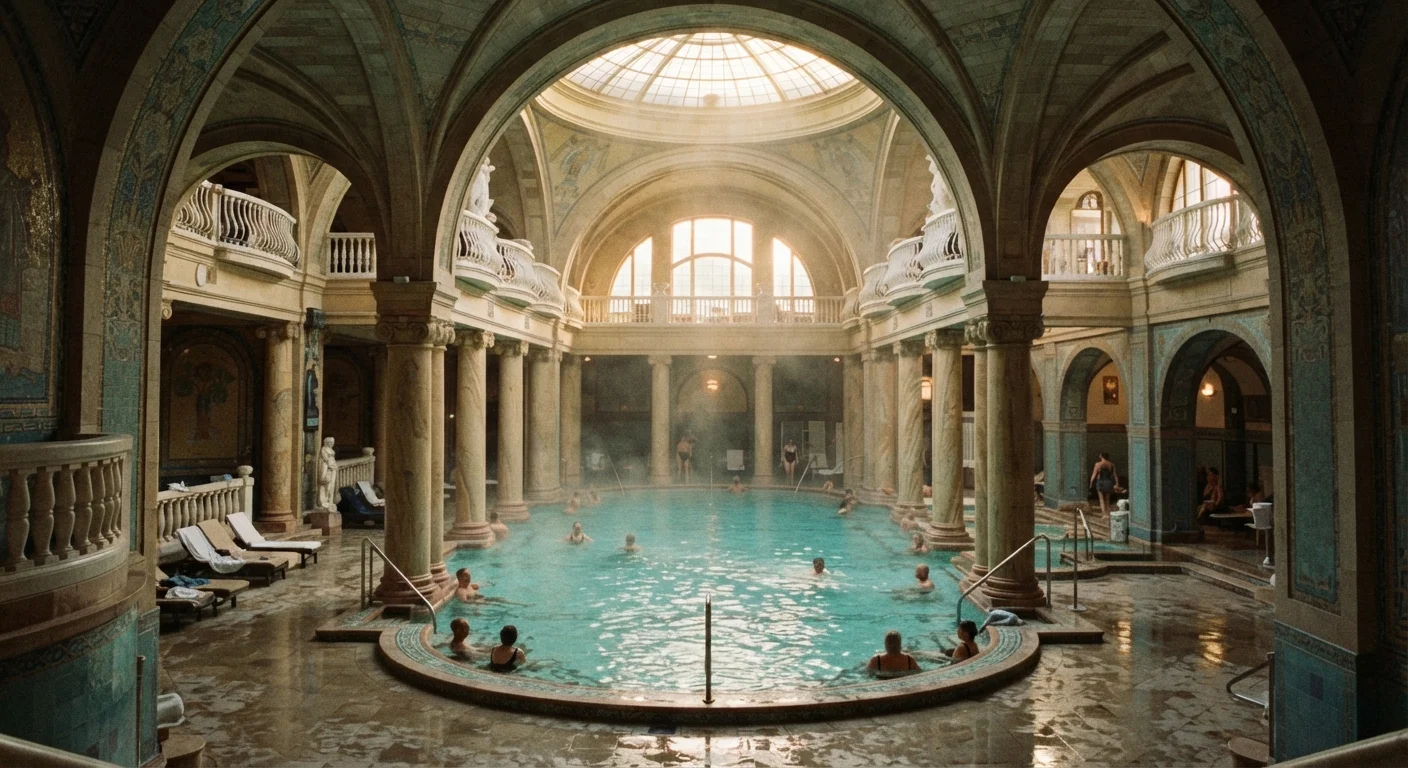
Hungary, and Budapest in particular, is home to one of Europe's most historically layered thermal bath cultures. The city sits above roughly 120 hot springs, and its bathhouse tradition blends Ottoman-era hammam influence with grand Habsburg-era architecture. Thermal bathing here is a civic act - locals use bathhouses for socializing, chess, and daily unwinding, not just weekend wellness tourism.
Key terms to understand in the Hungarian context include gyógyfürdő (medicinal thermal bath, typically licensed and regulated) and strandfürdő (outdoor thermal pool complex). Many Budapest baths date to the 16th-17th centuries under Ottoman rule, though most of the ornate structures visitors see today were built or expanded in the 19th and early 20th centuries. The Czech Republic and Slovakia also maintain significant spa traditions - the West Bohemian spa triangle of Karlovy Vary, Mariánské Lázně, and Františkovy Lázně was inscribed as a UNESCO World Heritage Site in 2021, recognized for its intact 19th-century spa town fabric.
Gyógyfürdő
A Hungarian term for a licensed medicinal thermal bath, typically regulated by health authorities and recognized for therapeutic properties. These facilities meet specific mineral content and temperature standards set by Hungarian law.
Terme / Thermae
The Italian and Latin words for thermal bathing facilities. Historically, Roman thermae were large public complexes central to civic life. Today, Italian terme range from municipal pools to medically supervised spa resorts.
Kur (Spa Cure)
A structured therapeutic stay common in German-speaking Europe, typically involving regulated bathing schedules, mineral water consumption, and rest. Historically prescribed by physicians, the Kur tradition underpins many Alpine spa towns.
Fangotherapy
A therapeutic treatment involving the application of mineral-rich volcanic or thermal mud to the body. Common in Italian and Icelandic spa traditions, it is believed to have anti-inflammatory and circulatory effects, though clinical evidence varies.
Hammam
A steam bath tradition originating in the Islamic world and introduced to parts of Europe, particularly the Balkans and Hungary, during Ottoman rule. The hammam emphasizes cleansing rituals and communal bathing in heated chambers.
Thalassotherapy
A form of water therapy using seawater, sea mud, and marine products rather than geothermal or mineral spring water. Most common in coastal regions of France, Portugal, and Spain, it is distinct from inland thermal bathing.
Northern and Alpine Europe: Iceland, Switzerland, and the Cure Tradition
Iceland's thermal culture is geothermal in the most literal sense - fed by active volcanic systems rather than underground mineral springs of the type found farther south. Bathing in Iceland tends to occur in naturally heated outdoor pools (called heitir pottar or hot pots), many of which are community facilities rather than luxury resorts. The social function is similar to Hungary's: these are neighborhood gathering spaces as much as wellness venues. Water temperatures and mineral content vary significantly by location, so travelers should research specific sites before visiting.
Switzerland and Austria anchor the Alpine cure tradition, rooted in the 19th-century European belief in water therapy, mountain air, and structured rest as restorative medicine. Austrian Kurbäder (cure baths) and Swiss thermal resorts - particularly in the canton of Valais and the Engadine valley - tend to emphasize quietude, regulated bathing schedules, and therapeutic treatments administered by trained staff. This is distinct from recreational soaking; some establishments have historically required physician referrals, though practices vary widely today.
For travelers drawn to Europe's quieter, overlooked corners, smaller Alpine spa towns often reward curiosity far more than the well-known resort names.
11
European spa towns on the UNESCO World Heritage List
The Great Spas of Europe designation covers towns in Austria, Belgium, Czech Republic, France, Germany, Italy, and the UK, inscribed in 2021.
~120
Natural hot springs beneath Budapest
Budapest's extensive geothermal resource base has supported continuous thermal bathing culture since at least the Roman period.
2,000+
Years of documented European thermal bathing
Roman thermae were a cornerstone of civic and social life across the empire, with ruins found from Bath (UK) to Baiae (Italy).
Southern and Western Europe: Italy, Portugal, and the Terme Tradition
Italy's thermal bathing heritage reaches back to Roman antiquity. The word terme derives directly from the Latin thermae, referring to the large public bathing complexes that were central to Roman civic life. Today, Italy's terme range from modest municipal facilities to elaborately developed spa resorts, concentrated heavily in Tuscany (including the Saturnia hot springs and the spa towns of Montecatini and Chianciano), Lazio, and the volcanic island of Ischia off Naples. Many Italian terme are attached to state-regulated thalassotherapy or fangotherapy (mud therapy) programs, positioning them closer to medical wellness than leisure.
Portugal's thermal culture, centered in the northern Minho and Trás-os-Montes regions, is similarly rooted in therapeutic tradition - Portuguese termas are often modest, local, and associated with specific ailments rather than luxury travel. This contrasts sharply with the international-facing spa industry. Travelers interested in authentic, low-profile experiences should note that many European thermal facilities cater primarily to domestic visitors - a point worth investigating before travel, particularly regarding language and booking requirements. For a broader look at common misconceptions that keep travelers away from such destinations, see hidden European destination myths.
Travelers comparing water-based wellness modalities may also want to explore how hot springs differ from thalassotherapy before choosing a destination.
This article is for general informational and educational purposes only. It is not medical advice. Travelers with health conditions should consult a qualified healthcare professional before participating in thermal or hydrotherapy treatments. Entry requirements, visa rules, and local health and safety conditions can change; verify current information with official government and destination sources before travel.