
Origins and Core Principles
Both hot springs and thalassotherapy draw on the intuition that water - specifically water enriched by its environment - can restore the body. But their source materials, mechanisms, and cultural lineages are quite different.
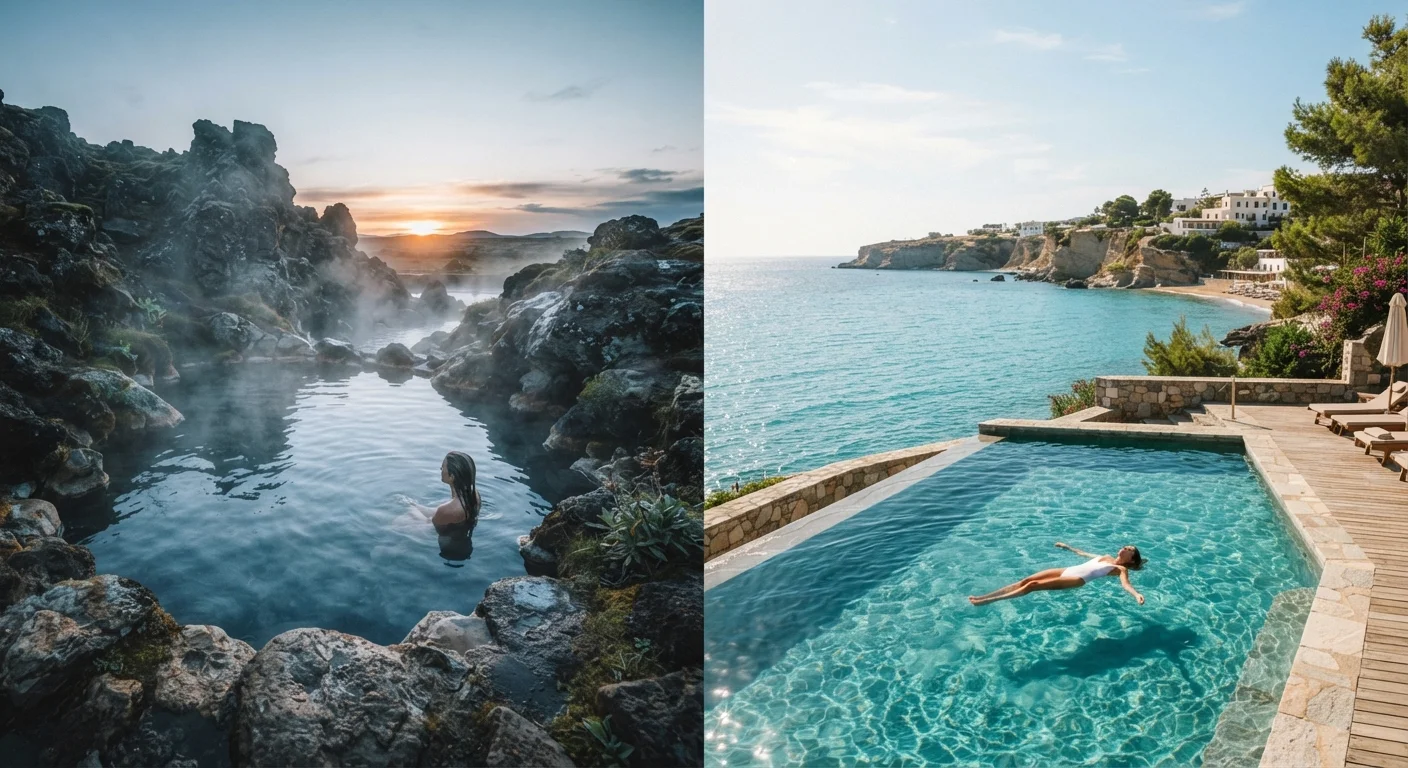
Hot springs are geothermal in origin. Groundwater heated by volcanic or tectonic activity rises to the surface, picking up dissolved minerals along the way. The resulting pools vary widely in temperature, pH, and mineral composition depending on local geology. Bathing cultures built around these springs span millennia and continents - from Japan's onsen tradition to Icelandic communal soaking to the Roman-era baths of Bath, England. The experience is fundamentally one of immersion in a geologically alive landscape.
Thalassotherapy - from the Greek thalassa (sea) - centers on the therapeutic use of seawater, marine mud, and seaweed. The term was formalized in 19th-century France, where coastal physicians began prescribing seawater exposure for circulatory and respiratory conditions. Modern thalasso centers use heated, filtered seawater drawn close to shore and apply it through pools, jets, wraps, and compresses. The practice is less about landscape and more about a coordinated therapeutic protocol. For a broader orientation to this kind of purposeful travel, see our guide to wellness travel.
How They Work: Water, Heat, and the Body
The proposed mechanisms behind each tradition are distinct, though both remain areas of ongoing scientific inquiry rather than fully settled medicine.
With hot springs, warmth is the primary agent. Heat dilates blood vessels, eases muscular tension, and encourages a parasympathetic (rest-and-digest) nervous system response. The mineral content - sulfur, bicarbonate, calcium, magnesium - varies by source and is thought by some researchers to contribute additional effects through skin absorption, though the extent of this is still debated in the literature. Temperature management matters: very hot springs require careful acclimatization, and soaking time is typically limited.
Thalassotherapy proponents argue that seawater's mineral profile - rich in magnesium, potassium, and trace elements - mirrors aspects of blood plasma composition, making it particularly compatible with the body. Heated seawater jets and immersion are thought to stimulate circulation and lymphatic drainage, while seaweed applications are associated with remineralizing and softening effects on skin. Again, robust clinical evidence for specific therapeutic outcomes is limited; travelers should approach these traditions as potentially supportive wellness practices, not medical treatments.
| Criterion | Hot Springs | Thalassotherapy |
|---|---|---|
| Water source | Geothermal groundwater | Filtered, heated seawater |
| Primary active elements | Heat, dissolved minerals | Marine minerals, seaweed, marine mud |
| Typical setting | Natural pools or thermal bath complexes | Purpose-built coastal treatment center |
| Experience structure | Self-directed immersion | Structured multi-treatment programs |
| Cultural tradition | Global (Japan, Iceland, Europe, Americas) | Primarily French and European coastal |
| Typical duration | Hours to overnight | Three to six day programs |
| Indoor vs. outdoor | Often outdoor or semi-outdoor | Primarily indoor facilities |
Setting and Experience: What to Expect on the Ground
The felt experience of each tradition differs considerably, and for many wellness travelers, environment is as important as any purported physiological benefit.
Hot springs range from completely wild and undeveloped - a rocky pool beside a geothermal vent - to elaborately engineered bathing complexes. Japan's ryokan-based onsen culture pairs soaking with kaiseki dining and tatami accommodation. Iceland's geothermal pools blend dramatic volcanic scenery with communal bathing. Europe's thermal spa towns, explored in depth in our regional guide to European thermal spa cultures, carry centuries of social and architectural history. The common thread is a sense of place defined by the earth beneath you.
Thalassotherapy centers, by contrast, tend toward the clinical and curated. Most are purpose-built facilities on Atlantic or Mediterranean coastlines - notably in Brittany, the Basque Country, and the Algarve - where fresh seawater is pumped daily into treatment pools and heated to around 33-34°C (91-93°F). Programs typically run three to six days and combine pool sessions with individual treatments. The ocean is present as source material and backdrop, but the experience itself is largely interior and managed.
A Note on Health Claims and Safety
Both hot springs and thalassotherapy are sometimes marketed with expansive wellness claims. The scientific evidence supporting specific therapeutic outcomes varies widely, and many claims remain under-researched. Certain conditions - cardiovascular issues, skin conditions, pregnancy - may be contraindicated for high-temperature soaking or intensive hydrotherapy. Always verify with a healthcare provider before participating, and follow any guidance provided by the facility on safe soaking times and temperatures.
If you are weighing these against other restorative travel formats, our article on forest bathing as a travel practice offers a useful counterpoint - one that trades water for woodland immersion.
Choosing the Right Experience for Your Wellness Goals
Neither tradition is inherently superior - they serve different travelers and different intentions. Choosing between them comes down to a few honest questions.
How important is natural setting to you? If the draw of wellness travel is connection to landscape - volcanic geology, remote wilderness, centuries-old bathing culture - hot springs have a depth of place that thalassotherapy centers rarely match. If you prefer a structured, professionally supervised program with measurable daily treatments, a thalasso center offers more consistency.
Are you seeking relief from specific physical concerns? Both traditions are sometimes sought by people managing musculoskeletal discomfort, skin conditions, or stress-related fatigue. It is essential to consult a qualified healthcare professional before pursuing either as part of a health management approach. Neither practice should replace medical advice or treatment.
What kind of travel do you want to build around it? Hot springs anchor easily into broader itineraries - a geothermal soak in the Azores fits naturally into island exploration. Thalassotherapy tends to work best as the primary focus of a short dedicated stay, particularly when opting into a multi-day program. For guidance on distinguishing program depth from polished aesthetics, our piece on wellness retreats versus spa resorts is worth reading before you book.
This article is intended for general informational and travel planning purposes only and does not constitute medical advice. Always consult a qualified healthcare professional before undertaking any wellness treatment, particularly if you have existing health conditions.