

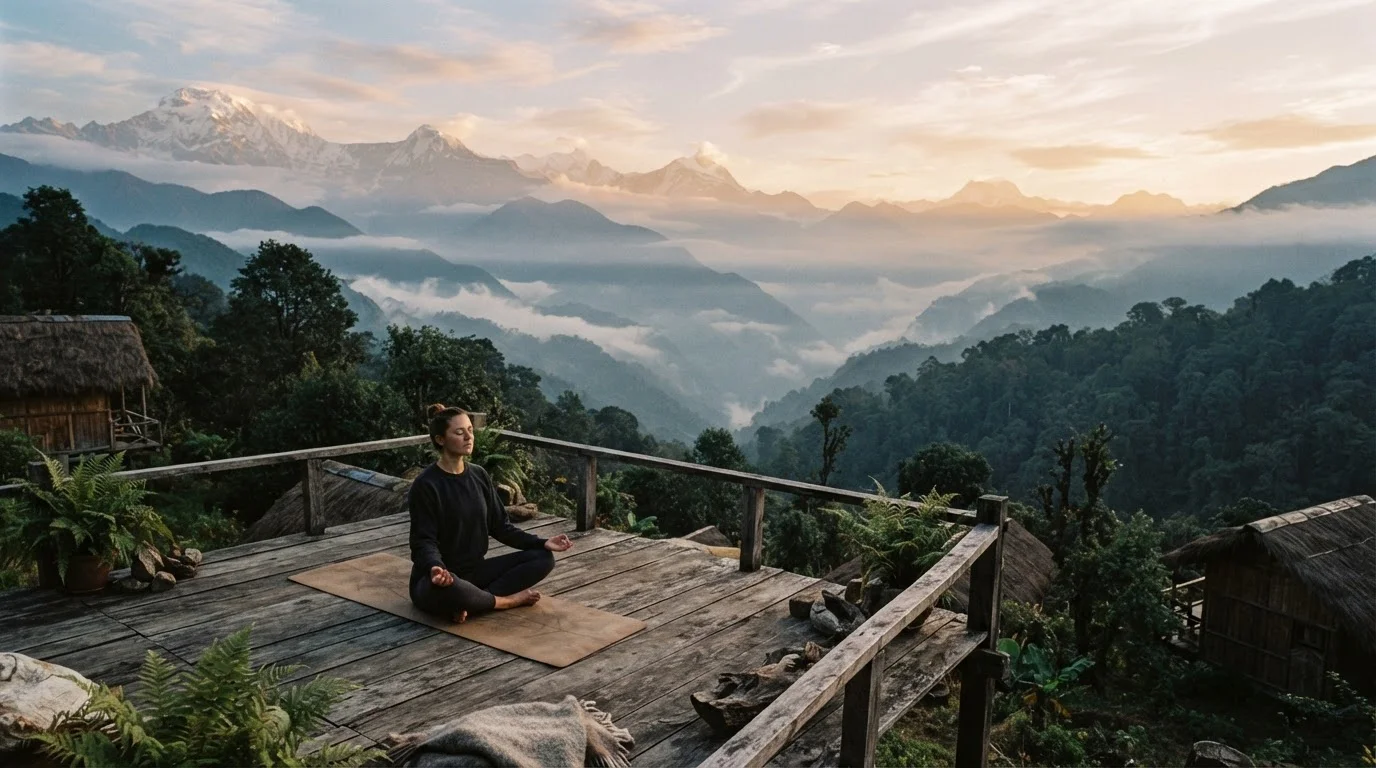
Why Intention Is the Defining Factor
The wellness travel label is now attached to everything from luxury beach resorts to silent forest retreats - which makes it easy to overlook what actually separates a wellness journey from a well-marketed holiday. The answer is intention. A trip qualifies as wellness travel when improving health - physical, mental, emotional, or spiritual - is the primary purpose of going, not an amenity encountered on arrival.
This distinction matters practically. A resort with a spa is not automatically a wellness destination. A yoga class squeezed between excursions is not a wellness journey. What defines the category is that the destination, pace, programming, and daily rhythm are all shaped around a deliberate health goal the traveler carries from home.
“Wellness tourism is not about escaping life - it's about returning to it better equipped. The most meaningful trips are those where travelers arrive with a question and leave with a practice.”
— Global Wellness Institute, International research and advocacy body for the wellness industry
The Spectrum of What Wellness Travel Actually Covers
Wellness travel is not a monolithic category. It spans a remarkably wide range of experiences, united only by that core intentionality:
- Medical and therapeutic travel - stays at licensed clinics or integrative medicine centers, often combining conventional and complementary approaches under qualified supervision.
- Ayurvedic and traditional medicine retreats - immersive programs rooted in established healing traditions, particularly common across South and Southeast Asia.
- Mental health and digital detox retreats - structured programs designed to reduce chronic stress, often incorporating mindfulness, reduced connectivity, and therapeutic support.
- Active and nature-based wellness - trail treks, cold-water immersion, forest bathing (known in Japanese practice as shinrin-yoku), and wilderness programs that use landscape as the primary therapeutic tool.
- Cultural and spiritual immersion - journeys structured around ceremony, community, or contemplative practice in ways that deepen meaning rather than simply sightsee.
These categories often overlap. A trekking expedition through high-altitude terrain in Bhutan, for example, may simultaneously engage physical endurance, spiritual landscape, and radical disconnection from daily routine.
$651B
Global wellness tourism market size
According to the Global Wellness Institute's research, wellness tourism represented a major and growing share of total global tourism expenditure prior to 2020, with significant recovery and growth projected through the mid-2020s.
2x
Spend rate vs. conventional tourists
The Global Wellness Institute has reported that wellness travelers tend to spend approximately twice as much per trip as conventional tourists, reflecting the structured, programming-heavy nature of these journeys.
7 in 10
Travelers citing stress reduction as a goal
Surveys of wellness travelers consistently identify stress reduction and mental recovery as primary motivations, outranking physical fitness goals and medical treatment.
What Genuine Wellness Travel Produces - and What It Doesn't
One of the clearest markers of legitimate wellness travel is durability of effect. A trip genuinely structured around wellbeing should produce something measurable - reduced baseline stress, improved sleep patterns, a recalibrated relationship with diet or movement - that persists after the journey ends. This is different from feeling briefly relaxed after a long weekend at a resort.
That benchmark also exposes the limitations of surface-level wellness packaging. Ambient candlelight, herbal teas, and aesthetically photographed treatment menus are hospitality touches, not health interventions. Distinguishing evidence-informed programming from polished presentation is one of the most important skills a wellness traveler can develop.
Ask the Right Questions Before You Book
When evaluating any wellness retreat or program, ask specifically about practitioner qualifications, the evidence base for the approaches used, and what a typical daily schedule looks like. Transparent programs will answer these questions readily. Vague answers about 'holistic transformation' without programmatic substance are a signal to look elsewhere.
It's also worth noting what wellness travel is not: it is not a substitute for medical care, and it does not guarantee specific health outcomes. Travelers managing chronic health conditions should always involve a qualified healthcare provider in their planning - particularly for programs involving intensive dietary changes, fasting protocols, or unfamiliar physical demands.
Integrating Wellness Goals Into the Journeys You Already Take
You don't need to choose between wellness travel and the kinds of travel you already love. For frequent travelers, the most sustainable approach is often integration - embedding wellness intentions into existing trip frameworks rather than treating them as a separate category requiring a dedicated trip.
A cruise itinerary built around immersive shore experiences in nature-rich destinations can anchor a meaningful active wellness component. A luxury resort stay chosen for its therapeutic programming rather than its pool bar calibrates the same holiday budget toward different returns. The upgrade is primarily in intention and design, not necessarily in cost.
The single most productive step any traveler can take is to arrive with a specific, honest goal - and to plan the journey with re-entry in mind, so the work done on the road doesn't dissolve the moment you land back home.