
Where the Practice Comes From
The term shinrin-yoku was coined by Japan's Forest Agency in 1982 as part of a national initiative connecting public health with the country's extensive forested land. Early Japanese research, led by environmental health scientists including those at Nippon Medical School, examined whether time among trees produced measurable changes in stress hormones and immune function. The results were intriguing enough to sustain decades of follow-on inquiry.
South Korea formalized a parallel tradition, establishing a national forest welfare system and certifying forest healing instructors. Today, forest therapy has been adopted by wellness travel operators across Europe and North America, adapted into retreat formats that range from single-afternoon sessions to week-long immersion programs.
Understanding this lineage matters for travelers. The practice carries specific cultural context - it is not simply rebranded nature walking. That heritage shapes how structured programs are designed and what guides are trained to facilitate.
What the Research Actually Suggests
~40%
Reduction in cortisol levels reported
Some Japanese studies have observed cortisol reductions of roughly this magnitude after forest walks compared to urban walks, though findings vary across research designs.
62
Designated forest therapy bases in Japan
Japan's Forest Therapy Society has certified dozens of official forest therapy trails and bases across the country as of available reporting.
20-30 min
Minimum duration showing measurable effect
Several researchers suggest even relatively brief exposure to forest environments may produce detectable physiological shifts, though longer sessions are more commonly studied.
A body of peer-reviewed literature, largely originating in Japan and South Korea, has examined shinrin-yoku's effects on salivary cortisol levels, blood pressure, heart rate variability, and natural killer cell activity - a marker associated with immune response. Findings have generally been in the direction of reduced physiological stress indicators after forest exposure compared to urban environments.
The operative word is suggests. Many studies use small sample sizes, lack control groups, or cannot fully isolate forest exposure from other variables like physical movement, quiet, or simply being away from work. Major health bodies have not yet endorsed forest bathing as a clinical intervention. For wellness travelers, this means approaching the practice as a genuinely restorative experience with credible scientific interest behind it - not as a proven medical treatment.
Forest Bathing Is Not Medical Treatment
While peer-reviewed research into shinrin-yoku is ongoing and encouraging, forest bathing has not been formally validated as a clinical therapy by major health regulatory bodies. Travelers pursuing forest bathing for health-related reasons should discuss their intentions with a qualified healthcare professional, particularly if managing a chronic condition. Treat the practice as restorative and enriching - not as a substitute for medical care.
How Forest Bathing Works as a Travel Practice
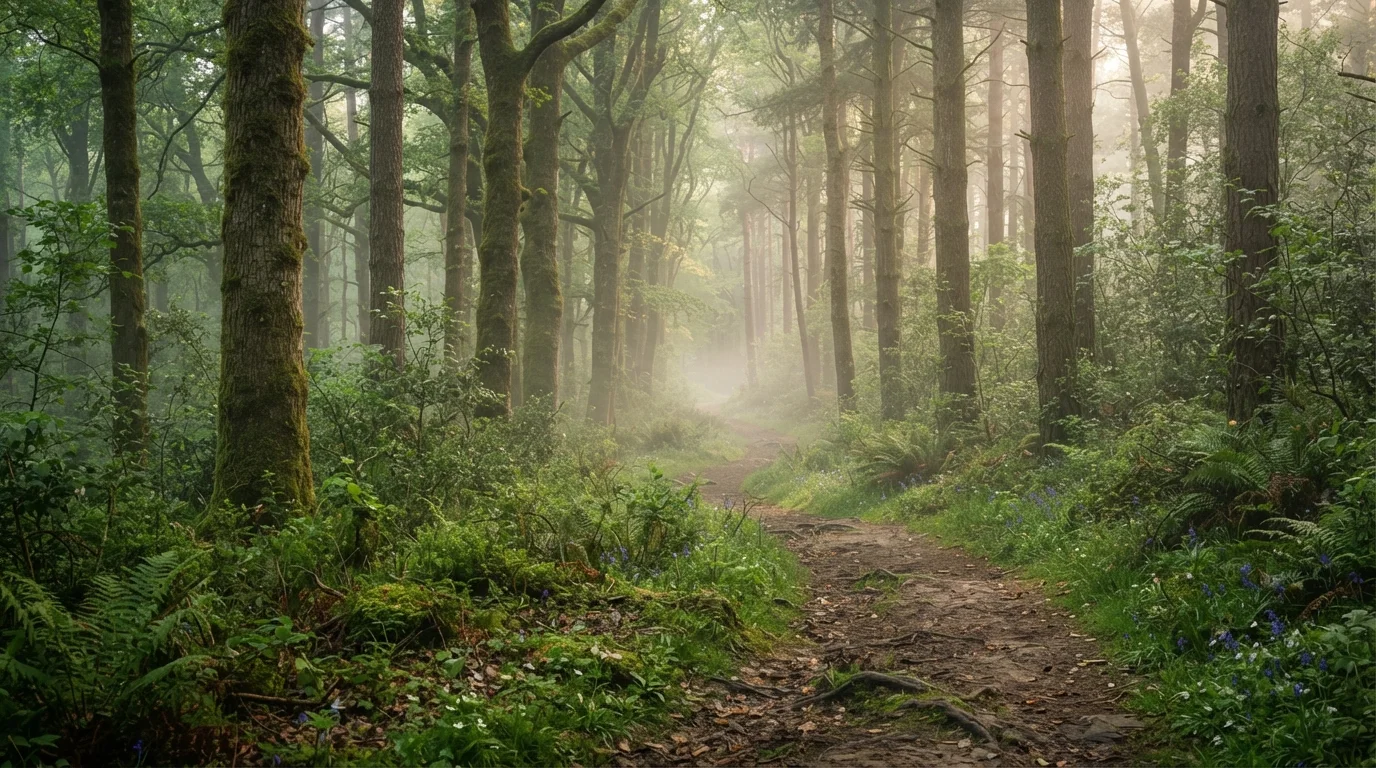
Translated into travel, shinrin-yoku becomes something distinct from standard ecotourism. The experience is deliberately unhurried. Certified guides - trained through bodies such as the Association of Nature and Forest Therapy - structure sessions around a series of sensory "invitations": pausing to notice what is within reach, listening without trying to identify sounds, or sitting beside a water source in extended silence.
Destinations with old-growth or dense mixed forest tend to be particularly suited to the practice. Japan's Yakushima Island, with its ancient cedar forests, draws practitioners specifically for this purpose. Scandinavia's tradition of friluftsliv (open-air life) creates a natural cultural overlap. For those exploring restorative landscapes more broadly, regions known for stillness and natural calm offer useful geographic context for planning a forest-focused itinerary.
Before You Book a Forest Bathing Program
Verify whether guides hold certification through a recognized body such as the Association of Nature and Forest Therapy or a national equivalent. Ask about terrain accessibility if mobility is a consideration. Check seasonal trail conditions - some of the most celebrated forest destinations are significantly less accessible or less impactful outside their primary season.
Integrating Forest Bathing into a Wellness Journey
Forest bathing sits comfortably within a broader wellness travel framework. It can anchor a multi-practice itinerary alongside thermal soaking, rest-focused retreats, or cultural immersion. Travelers who want to understand where it fits in the wider landscape of purposeful travel will find a fuller breakdown of what wellness travel actually encompasses useful grounding.
For travelers specifically drawn to sleep improvement and restoration, pairing a forest bathing program with accommodations designed around circadian rhythms and quiet aligns well - sleep tourism is an adjacent practice gaining similar momentum among health-conscious travelers.
What forest bathing offers that many other wellness modalities do not is radical simplicity. No equipment, no booking of specialist treatment rooms, no particular fitness baseline. Entry requires only a forested environment and a willingness to slow entirely down - a deceptively difficult ask in practice, and one that many travelers find more transformative than they anticipated.