
Why the Terminology Matters
The wellness travel industry has grown rapidly, and its vocabulary has grown chaotic alongside it. Properties routinely use terms like retreat, health resort, medical spa, and healing sanctuary interchangeably - often as a branding choice rather than an accurate description of services. For travelers making deliberate decisions about where to invest time, money, and physical wellbeing, that imprecision carries real consequences.
What wellness travel actually means is a question worth grounding before you start comparing properties. Understanding the structural differences between facility types is an essential first step toward choosing the experience that genuinely matches your needs.
| Wellness Retreat | Health Resort | Medical Spa | Healing Sanctuary | |
|---|---|---|---|---|
| Clinical oversight | None or minimal | Physician-supervised | Licensed medical staff | Rarely clinical |
| Primary focus | Lifestyle & restoration | Integrative health programs | Diagnostics & therapies | Spiritual or traditional healing |
| Typical practitioners | Wellness coaches, instructors | Physicians, nutritionists | Doctors, nurses, specialists | Healers, monks, shamans |
| Evidence base | Variable | Moderate to strong | Strong for clinical elements | Ranges widely |
| Suitable for chronic conditions | Generally not | Often yes, with caveats | Case by case | Not a substitute for care |
| Program structure | Flexible, immersive | Structured, assessed | Protocol-driven | Tradition-based |
Wellness Retreats: Lifestyle, Not Clinical
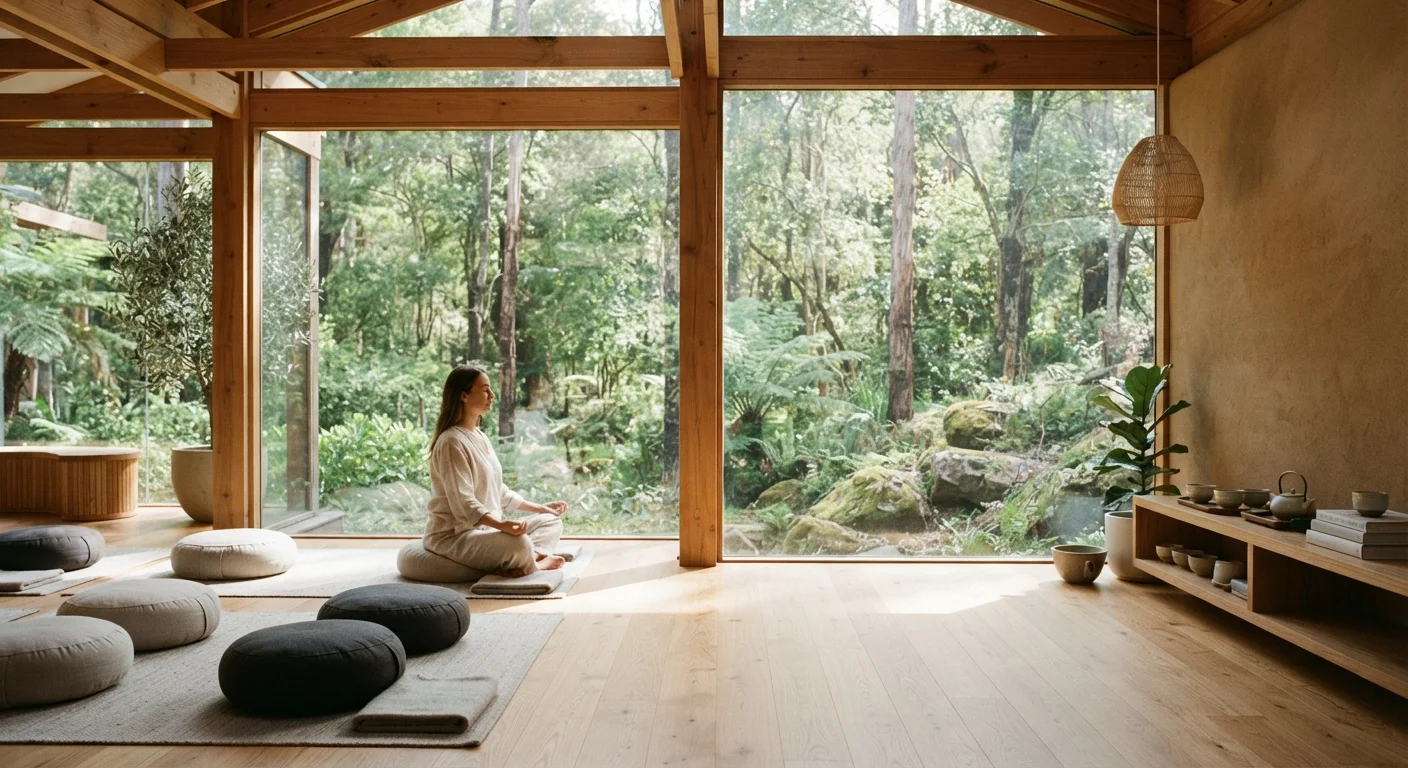
A wellness retreat is generally defined by its focus on restorative lifestyle practices - yoga, meditation, mindful nutrition, digital detox, sleep optimization, and breathwork - delivered in an immersive, often residential setting. The emphasis is experiential and behavioral. Staff are typically wellness practitioners (yoga teachers, nutritionists, breathwork facilitators), not licensed clinicians.
Retreats range from weekend programs at countryside properties to month-long immersions in Bali or Costa Rica. What distinguishes them is the absence of diagnostic or clinical medical services, and a philosophy centered on personal agency and self-awareness rather than treatment. What wellness retreats rarely tell you upfront - including program intensity and emotional processing demands - is worth examining before booking.
Ask Before You Book
Before committing to any wellness property, request a detailed program itinerary and practitioner credential list. Ask specifically whether any medical or therapeutic services are included and who delivers them. Properties confident in their offering will provide this information readily - and transparency at this stage is itself a meaningful quality signal.
Health Resorts: When Clinical Oversight Enters the Picture
Health resorts occupy a meaningful middle ground. They typically combine the hospitality and lifestyle programming of a retreat with medically supervised components - blood panels, nutritional assessments, physician consultations, and in some cases integrative medicine protocols. The presence of licensed healthcare professionals is the defining distinction.
Well-regarded health resorts - particularly those in Germany, Austria, Switzerland, and parts of Southeast Asia - may offer structured programs for metabolic health, stress-related conditions, or post-illness recovery. This doesn't mean they function as hospitals; they don't. But the clinical layer means their programs can be more precisely calibrated to individual health status. Travelers considering this format would benefit from understanding what separates genuine rest from aesthetic packaging.
Travelers with diagnosed conditions should consult a qualified healthcare professional before enrolling in any health resort program.
Medical Spas and Healing Sanctuaries: The Outer Ends of the Spectrum
A medical spa (or medi-spa) is the most clinically anchored format in wellness travel. Operating under licensed medical supervision, these facilities may offer diagnostics, IV therapies, hormone assessments, aesthetic procedures, or integrative oncology support. The regulatory frameworks governing them vary significantly by country - a critical reason to verify credentials independently before any procedure. This is not a substitute for your primary healthcare provider.
At the other end sits the healing sanctuary - a term often applied to facilities rooted in traditional, spiritual, or indigenous healing practices. Ayurvedic ashrams, Tibetan medicine centers, and plant-medicine retreat centers in Central and South America sometimes use this framing. The practices vary enormously in evidence base, ranging from well-documented traditional systems to approaches that are primarily spiritual or ceremonial in nature. Common myths about wellness travel - including the assumption that all traditional healing is either proven or unproven - are worth examining with nuance.
$814B
Global wellness tourism market value
The Global Wellness Institute estimated global wellness tourism at approximately $814 billion prior to the pandemic, with the sector recovering and expanding significantly since.
~40%
Wellness travelers citing stress as primary motivation
Industry surveys consistently indicate that stress reduction and mental restoration are the leading drivers of wellness travel decisions among adults.
For travelers interested in water-based therapies, which appear in both health resort and sanctuary contexts, how hot springs compare to thalassotherapy offers useful grounding on two widely offered modalities.
Choosing Based on Intent, Not Label
The most reliable way to evaluate any wellness property is to look past the category label and examine three things: the qualifications of the practitioners on site, the structure and evidence basis of the programs offered, and the clarity of what is - and isn't - included. A property calling itself a retreat may offer more substantive programming than one calling itself a health resort, depending entirely on the operator.
Your own goals matter equally. Travelers seeking digital rest and mindfulness practice have different requirements than those managing metabolic concerns or recovering from burnout-related illness. Consider also the social format: solo versus group retreat structures each carry distinct advantages depending on your current state and personality.
Terminology in this industry will likely remain inconsistent. What will remain consistent is the value of asking the right questions before you arrive.