

Why Guest Etiquette Matters More Than You Think
When you accept an invitation into someone's home - whether in Kyoto, Marrakech, Oaxaca, or Tbilisi - you step into one of the most intimate spaces that culture has to offer. How you behave in that space communicates far more than words. It signals whether you see your hosts as a backdrop to your experience or as people deserving of real regard.
Guest etiquette isn't about performing politeness or memorizing a checklist of dos and don'ts. It's a set of underlying principles - about reciprocity, attentiveness, and humility - that translate across most cultural contexts even when the specific customs differ dramatically. Understanding those principles helps you adapt with grace rather than anxiety.
If you're planning immersive stays - whether in a family home or a traditional guesthouse - this comparison of homestays and guesthouses can help you choose the setting that suits your intentions. For the broader framework of culturally engaged travel, see The Complete Guide to Culturally Immersive Travel.
| Shoe removal cultures | Japan, South Korea, Turkey, many Middle Eastern & Nordic countries |
| Gift-giving expected | Common in China, Japan, Russia, India, and most of Latin America |
| Multiple-offer hospitality | Standard practice in Iran, Ethiopia, parts of India and the Arab world |
| Punctuality expectations vary | Strict in Germany, Japan, Switzerland; flexible in many Latin American, African, and Middle Eastern cultures |
| Seat of honor concept | Present in Japan (kamiza), China, Korea, and many Middle Eastern traditions |
| Safe universal gift | Artisan food or sweets from your home region |
Core Principles That Cross Cultural Lines
While traditions differ, several foundational behaviors appear across vastly different hospitality cultures worldwide.
Arrive with awareness, not assumptions
In many Middle Eastern and South Asian households, arriving precisely on time can feel abrupt. In Germany or Japan, arriving late signals disrespect. The first rule of cross-cultural guest etiquette is to research norms before you arrive - not to memorize every rule, but to demonstrate that you've made an effort.
Threshold rituals matter
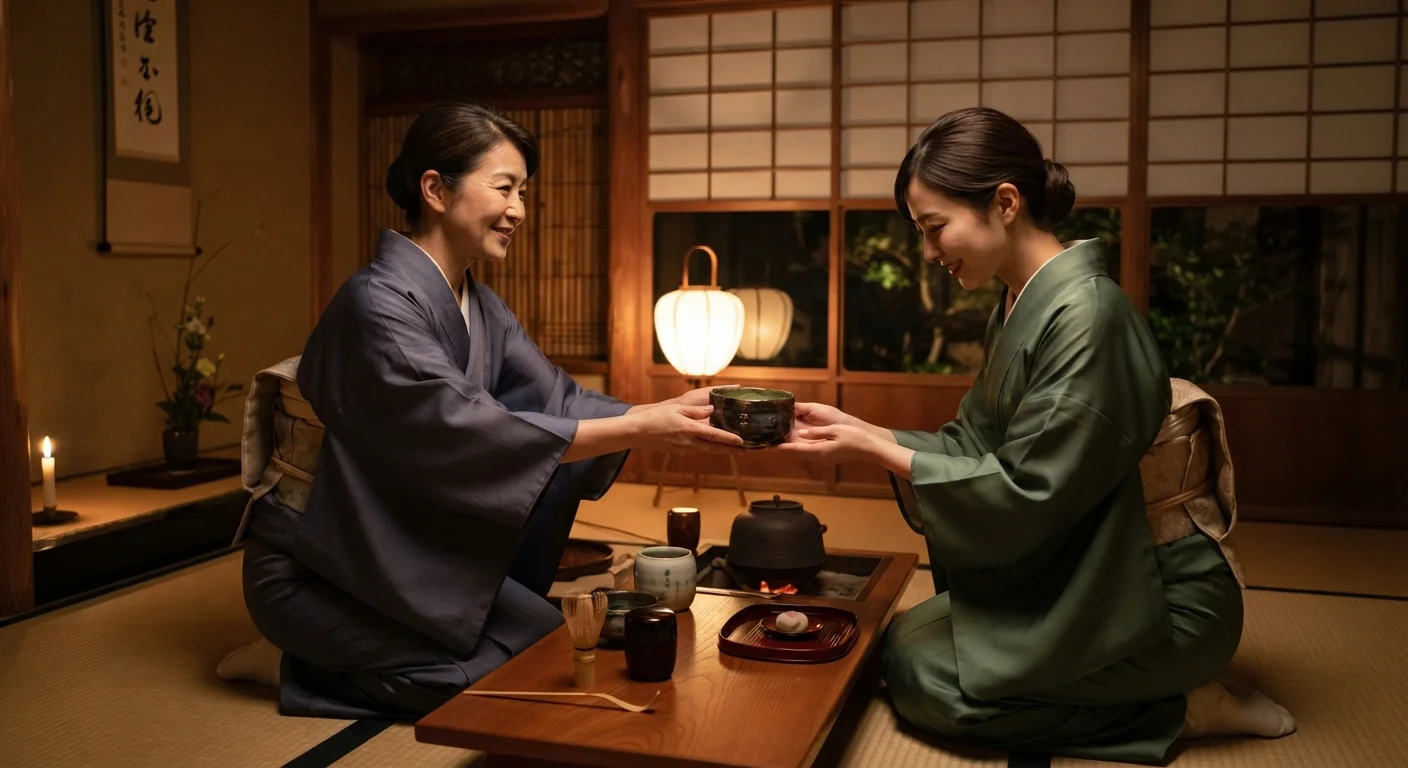
Removing shoes before entering a home is expected across much of East Asia, parts of the Middle East, Scandinavia, and many Indigenous communities. Waiting to be shown where to sit - rather than choosing your own spot - is a mark of deference in homes from Morocco to South Korea. In Japan, this extends to the formal positioning within a room (kamiza and shimoza, the seat of honor and the seat nearest the exit).
Gifts carry meaning - and risk
Bringing a small gift when visiting is standard in many cultures, but the wrong gift can backfire. In China, clocks are associated with death; in many Arab countries, alcohol is inappropriate. White flowers signal mourning in Japan and parts of Eastern Europe. Research what's appropriate, and when in doubt, food - especially something from your home region - is often a safe and meaningful choice.
Refusal is often the first offer
Across many cultures - from Iran to India to Ethiopia - hospitality involves offering food or drink repeatedly, with a polite decline expected before the guest finally accepts. Accepting immediately can sometimes seem presumptuous. Watch your host's cues and err toward graciousness.
Meiwaku
A Japanese concept meaning 'nuisance' or 'burden.' Avoiding meiwaku - not inconveniencing others - is a foundational social principle in Japanese culture, especially in guest-host dynamics.
Kamiza / Shimoza
In Japanese rooms, kamiza is the seat of honor (furthest from the entrance), while shimoza is the least prestigious position (nearest the door). Guests are typically guided to the appropriate seat.
Hospitality reciprocity
The implicit social contract in many cultures that a guest who receives generous hospitality owes a return gesture - gratitude, a gift, or an invitation - at some future point.
Threshold ritual
A culturally specific behavior performed at the point of entering a home - such as removing shoes, accepting a drink, or waiting for permission to proceed - that signals respect and acknowledgment of the host's domain.
Regional Contexts Worth Knowing
Cultural guest etiquette is deeply local. These regional patterns offer a starting point, not a complete portrait.
East Asia
In Japan, the concept of meiwaku - avoiding being a burden - shapes nearly every social interaction. At a ryokan, an intimate inn with specific rituals around bathing, meals, and room arrangement, the attentive guest follows the lead of their host rather than asserting preferences. For those interested in how that hospitality philosophy differs from Western approaches, this exploration of ryokan vs. boutique hotel culture is worth reading.
North Africa and the Middle East
Tea culture is central to hospitality in Morocco, Turkey, and throughout the Arab world. Being offered tea - often multiple times - is a gesture of welcome and trust. Declining too quickly signals discomfort with your host. Complimenting the home modestly, rather than effusively, is usually more appropriate than overpraising specific objects (which can put the host in an awkward position).
Latin America and Southern Europe
Mealtimes are social rituals, not logistical events. Arriving to a meal and eating quickly to leave would cause quiet offense. Linger, converse, and express genuine appreciation for the food. Asking for recipes is often a sincere compliment to a host's cooking.
Indigenous communities
Guest etiquette in Indigenous contexts carries additional ethical dimensions - particularly around photography, ceremony participation, and the reciprocal obligations of visitors. Ethical principles for engaging with Indigenous communities are a necessary read before any such visit.
When in Doubt, Observe First
No amount of advance research replaces attentive observation in the moment. If you're unsure whether to sit, eat, remove your shoes, or accept an offer, watch what other guests do - or simply ask your host directly. A sincere question is almost always received better than a confident misstep. Hosts in most cultures respond warmly to a traveler who is genuinely trying to get it right.