

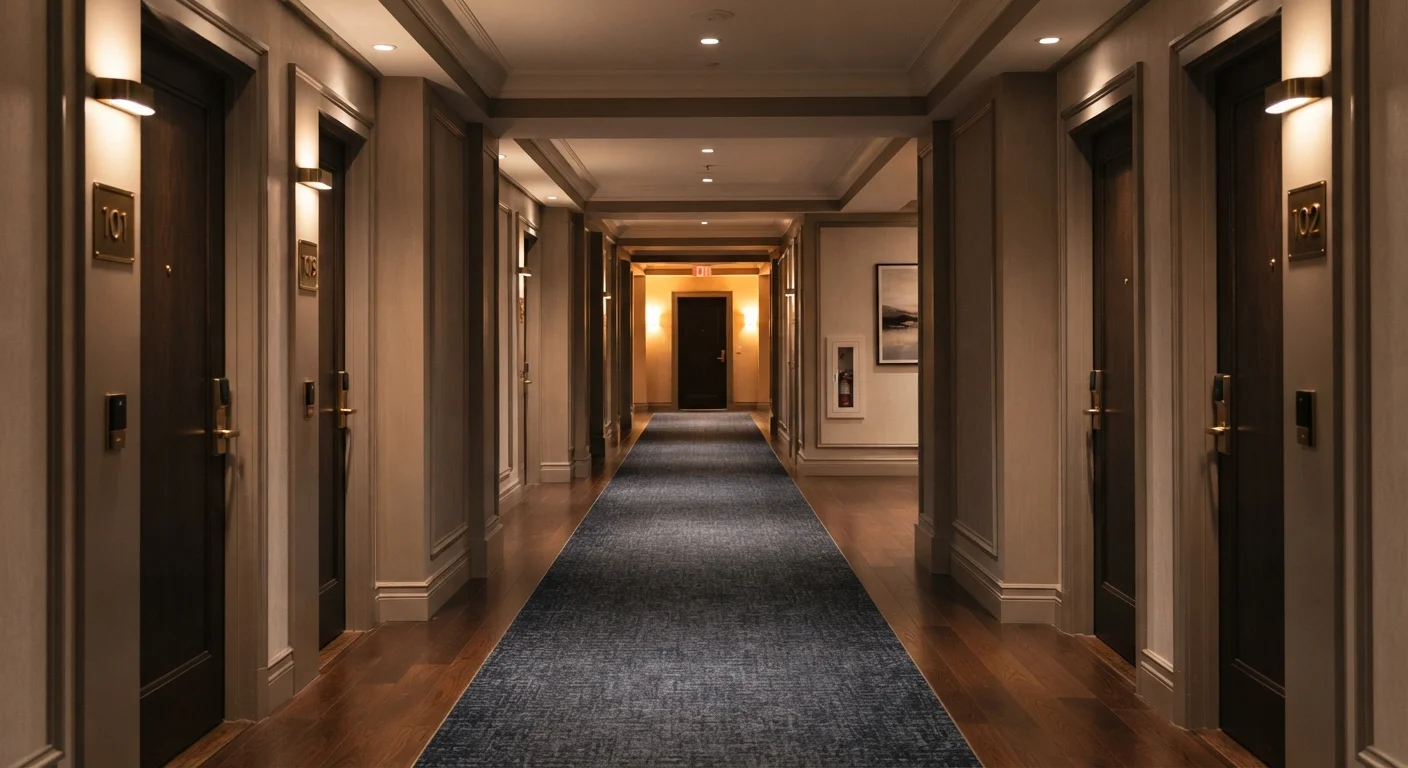
Why Room Position Is a Hidden Variable
Most travelers focus on room category - size, bed type, view tier - when booking a hotel. But once you're inside the property, a second layer of variables takes over: which floor you're on, how close you are to the elevator bank, whether your window faces a service alley or a garden, and how sound travels through the building's structure. These factors are rarely disclosed in listings, yet they routinely determine whether a stay feels restful or exhausting.
Understanding the mechanics of hotel room placement gives you the vocabulary to make a specific, well-reasoned request - and to evaluate what you're actually getting. See why room assignments aren't fixed at booking to understand when that request carries the most weight.
Floor Level: Noise, Air, and Practical Trade-offs
Higher floors generally deliver quieter rooms - street noise, vehicle traffic, and pedestrian activity attenuate significantly as altitude increases. Properties near airports are a notable exception, where flight paths can make upper floors louder than lower ones depending on approach angles. Mechanical noise is another consideration: HVAC equipment and rooftop machinery are sometimes audible on the top floor or two.
Mid-range floors - roughly the middle third of a building - often represent the practical sweet spot: insulated from street-level noise, away from rooftop mechanical systems, and accessible without long elevator waits during peak hours. Lower floors suit travelers with mobility considerations or a genuine preference for quick stairwell access in an emergency.
Airport Hotels and Noise: A Specific Exception
At hotels located near major airports, the standard advice to request a higher floor can backfire. Depending on the flight approach pattern, upper-floor rooms on the runway-facing side may receive substantially more aircraft noise than rooms on lower floors or the opposite wing. When staying near a busy airport, ask specifically which wing and which direction faces away from the flight path.
Views, of course, scale with height in most urban and coastal properties. But a high-floor room with an obstructed view - facing an adjacent building's blank wall - may deliver worse ambient light than a thoughtfully positioned mid-floor room with an open courtyard aspect. Always ask about the specific view direction, not just the floor number.
Proximity to Elevators, Ice Machines, and Common Areas
Elevator lobbies are among the most reliably noisy zones in any hotel. Doors chime, luggage carts clatter, and foot traffic peaks during checkout windows. Rooms immediately adjacent to elevator banks absorb this consistently - a meaningful issue in full-service hotels where that corridor sees activity from early morning through late night.
Ice and vending machines, laundry rooms, and service corridors present similar concerns. These spaces tend to cluster at the ends of corridors or near stairwells, so the trade-off is often between elevator noise (mid-corridor rooms) and mechanical or vending noise (end rooms). Asking for a room away from both, toward the quieter interior of a wing, is a reasonable and specific request.
Pool decks, ballrooms, and hotel bars generate their own acoustic footprint, typically concentrated on the floors directly above or in adjacent wings. Understanding how hotels structure their room tiers can help you predict which wing houses which category - and whether your booking puts you near an event space.
~60%
Of hotel complaints related to noise
Noise is consistently cited as a leading source of guest dissatisfaction in hospitality industry guest satisfaction research.
3-5 floors
Altitude gain needed for meaningful street noise reduction
Acoustic engineers generally note significant attenuation of street-level noise at around the third to fifth floor, though this varies by building construction and location.
Making a Useful Room Request
Generic requests - "quiet room," "high floor" - are processed thousands of times a week by front desk teams. Specific, reasoned requests are more actionable. Stating that you're a light sleeper and would prefer a room away from the elevator bank on a mid-to-upper floor, facing the interior courtyard rather than the street, gives an agent something to work with. It also signals that you understand the property's geography, which tends to be taken more seriously.
Requests submitted at booking or through a pre-arrival message - rather than at check-in when inventory is largely locked - carry more weight. Suite upgrades and room improvements follow a similar logic: timing and specificity matter more than simply asking for something better.
For travelers accustomed to managing cabin placement on ships, the same spatial reasoning applies. The trade-offs parallel those covered in cabin category decisions on cruise ships - location within the structure shapes the experience as much as the category itself. When a room doesn't match expectations, understanding how listings can mislead is the first step toward a better outcome next time.