
The Four Core Cabin Categories
Every major cruise ship organizes staterooms into four foundational tiers: inside (or interior), oceanview, balcony, and suite. These aren't arbitrary labels - they reflect meaningful differences in square footage, natural light, outdoor access, and included amenities. Understanding what each actually delivers helps you spend where it counts and save where it doesn't.
For a broader comparison of how cabin tiers intersect with the cruise line tier you choose, see our guide on cruise line tiers explained. A suite on a contemporary mass-market ship and a suite on a luxury line are not the same experience.
Inside Cabins
Inside cabins have no window or porthole. They are the smallest and most affordable category on virtually every ship. The absence of natural light is the defining trade-off. Experienced cruisers who spend most waking hours on deck or in port often find inside cabins a rational choice - the room functions primarily as a sleeping quarters. Modern inside cabins on newer megaships typically range from 150 to 185 square feet.
Oceanview Cabins
Oceanview staterooms add a fixed porthole or picture window - natural light without outdoor access. They occupy a middle ground that suits travelers who want to wake to daylight and glimpse the sea without the cost of a balcony. Window placement varies; some are positioned high on the hull offering unobstructed views, while others on lower decks may face lifeboats or structural elements. Always verify the specific deck plan before booking.
Balcony and Suite Categories: Where the Upgrade Calculus Changes
Balcony Cabins
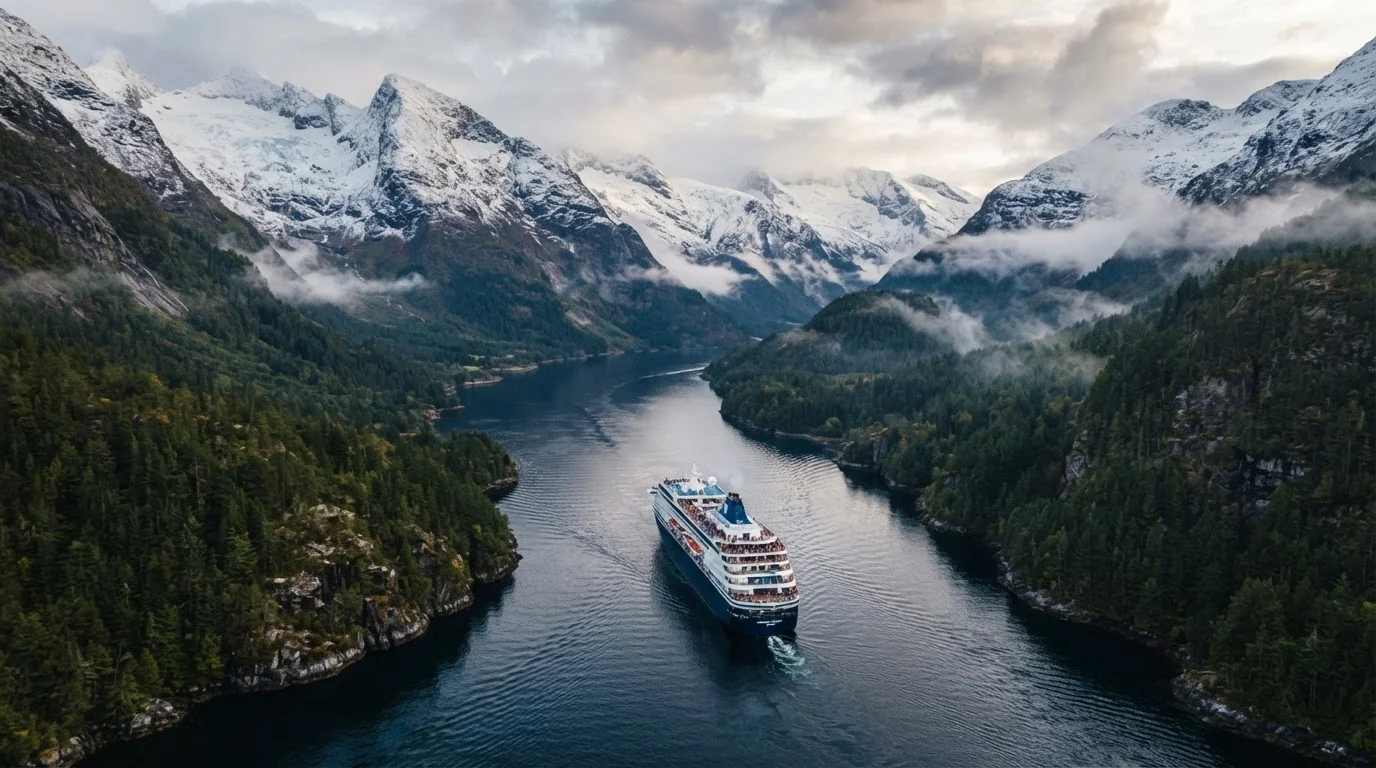
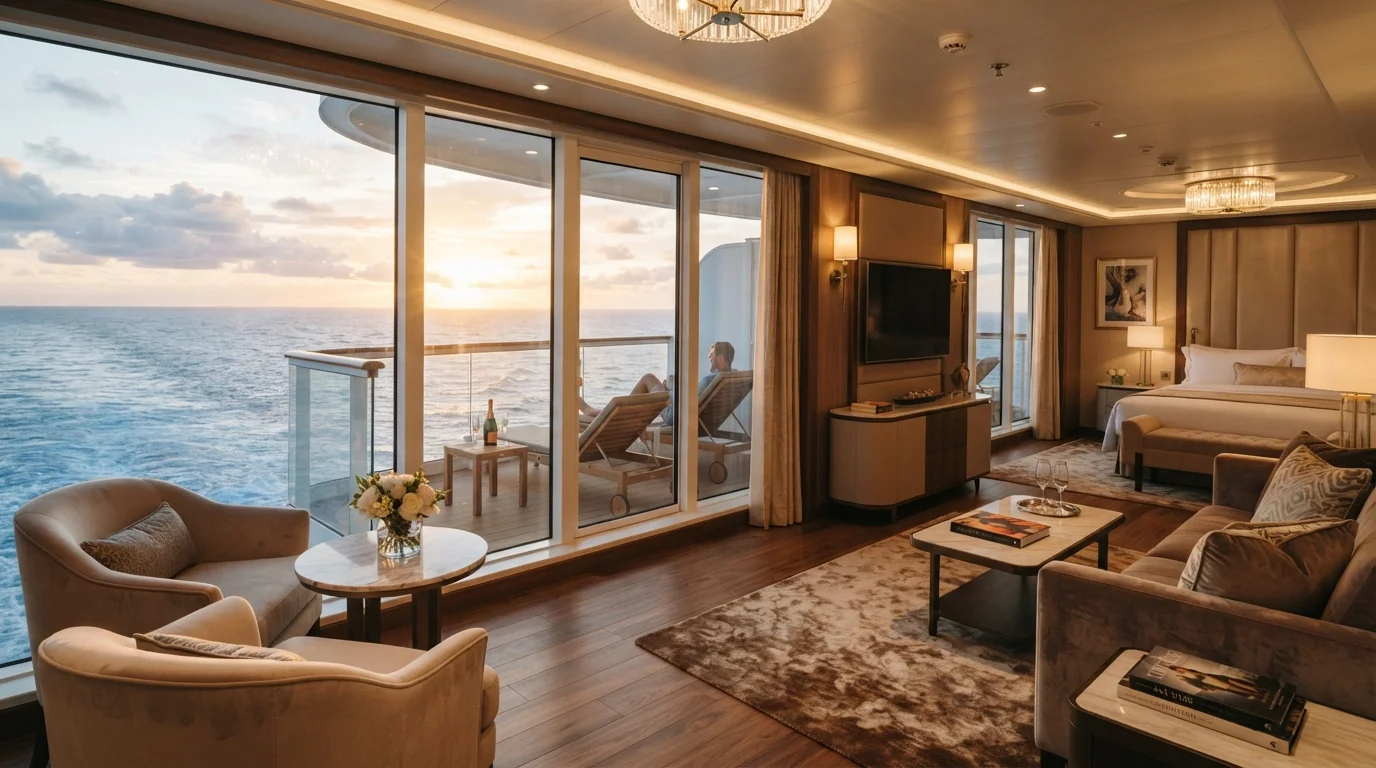
Balcony staterooms - sometimes called veranda cabins - add a private outdoor space, typically 40 to 60 square feet of additional area. The balcony tier is the most significant functional leap in the lineup: private fresh air, unobstructed sea views from your own space, and the ability to watch port arrivals without competing for deck space. On itineraries with scenic cruising - Alaska's Inside Passage, Norway's fjords, or the Douro River Valley - a balcony justifiably changes the experience.
Not all balconies are equal. Partially obstructed balconies exist on ships where lifeboat placement limits sightlines. Aft-facing balconies tend to be deeper and offer wake views; forward-facing balconies can be exposed to wind. Midship balconies on higher decks typically offer the most balanced experience.
Inside Cabin
A stateroom with no window or porthole, offering the smallest footprint and lowest price point. Natural light is absent; artificial lighting and onboard amenities are the same as higher categories.
Oceanview Cabin
A stateroom featuring a fixed porthole or picture window. It provides natural light and sea views but no outdoor balcony access.
Veranda / Balcony Cabin
A stateroom with a private outdoor space separated from the interior by a sliding glass door. Provides direct fresh air and unobstructed views without sharing deck space with other passengers.
Mini-Suite / Junior Suite
An entry-level suite category that typically adds a sitting area or sofa bed to balcony cabin dimensions. May not include all suite-class service benefits depending on the cruise line.
Ship-Within-a-Ship
A product model used by select cruise lines where top-tier suite guests access a private restaurant, sun deck, and dedicated crew entirely separate from the general passenger population.
Obstructed View
A cabin designation indicating that the window or balcony sightline is partially blocked - typically by lifeboats, support structures, or hull curvature. Usually priced below standard oceanview or balcony rates.
Suite Categories
The suite tier encompasses the widest internal range of any category. Entry-level suites (sometimes called mini-suites or junior suites) add sitting areas and marginally more square footage - often 300 to 350 sq ft - but may not include the full suite-class benefits. Full suites and above unlock a separate tier of service: dedicated concierge or butler service, priority embarkation and debarkation, exclusive lounge access, and - on luxury and ultra-luxury lines - inclusions such as specialty dining, beverages, and pre-paid gratuities.
On ships such as those in MSC's Yacht Club or Norwegian's The Haven, top-tier suite passengers effectively cruise within a ship-within-a-ship concept: a private restaurant, sundeck, and dedicated crew. This model represents a fundamentally different product, not merely a larger room. See how cruise ships are structured deck by deck to understand how these exclusive zones are physically positioned aboard modern vessels.
~500+ sq ft
Typical full suite interior size
Full suites on major premium and luxury ships commonly exceed 500 square feet, with flagship penthouses reaching over 1,500 sq ft.
2-4x
Price premium: inside to suite
Suite fares on mainstream lines frequently run two to four times the cost of an inside cabin on the same sailing, with luxury-line suites carrying a larger multiplier.
150 sq ft
Minimum inside cabin size
Some older or budget-segment ships offer inside cabins as small as 150 square feet, underscoring the importance of reviewing deck plans before booking.
Making the Right Match: Practical Decision Framework
Cabin selection is most effective when mapped against your actual itinerary behavior rather than aspirational preferences. Consider three factors: time in cabin, itinerary scenery, and travel party dynamics.
- Time in cabin: If you routinely stay up late in the casino or at shows and wake only for breakfast, an inside cabin serves you well. If you value morning coffee with a view or afternoon downtime in your own space, a balcony justifies the step up.
- Itinerary scenery: Port-intensive Caribbean itineraries with seven stops in seven days leave little time for balcony use. Scenic cruising routes - Antarctica, the Norwegian coast, the Amazon - make outdoor access from your cabin genuinely valuable throughout the sailing.
- Travel party: Families or groups who need living space beyond a single room benefit from connecting cabins or suite layouts with pull-out sofas. Solo travelers may find inside cabins on solo-friendly lines (those with no single supplement or reduced supplement) the most rational financial choice.
One useful analog: hotel room tiers follow a similar logic of diminishing returns. Our companion piece on what hotel room categories actually mean explores how "deluxe" and "premium" labels are applied inconsistently - a pattern cruise lines replicate with their own tier naming conventions.
Finally, consider location on the ship alongside cabin category. Deck, fore-to-aft position, and proximity to elevators and high-traffic areas all affect comfort, particularly for travelers with motion sensitivity. A midship balcony on Deck 8 often outperforms an aft suite on Deck 12 for those prone to motion discomfort. For more on how physical placement shapes experience, the hotel parallel is instructive: see how room location affects your stay.