
How a Modern Cruise Ship Is Organized
A large ocean cruise ship - think a vessel carrying 3,000 to 7,000 passengers - is typically organized across 12 to 20 decks, each serving a distinct role. Rather than thinking of it as a hotel with a hull, it helps to think in three broad zones: below the waterline (engineering and operations), lower passenger decks (staterooms, core amenities, and service corridors), and upper public decks (pools, entertainment venues, and open-air spaces).
Understanding this layout before you board shapes decisions about which cabin deck to book, where to find quiet, and how to navigate efficiently. For a deeper look at how cabin type and deck position interact, see our guide to cabin categories.
| Typical deck count | 12-20 decks (Varies by ship class and cruise line) |
| Passenger capacity range | 500-7,600 passengers (Small expedition ships to mega-ships) |
| Crew-to-passenger ratio | Roughly 1:2 to 1:3 (Higher ratios common on luxury lines) |
| Freshwater production | On-board desalination plants standard (Modern ships produce most of their own fresh water) |
| Ship length (large class) | Up to 1,188 ft (362 m) (As measured for the largest vessels in current service) |
Deck by Deck: What Each Zone Offers
Below the Waterline: Engineering and Crew Spaces
Passengers rarely see the bottom of the ship, but it is where the vessel's propulsion systems, stabilizers, fuel tanks, and freshwater production plants live. Modern cruise ships use azipod drives or conventional shaft-and-propeller systems. The crew quarters and most service infrastructure - laundries, provision stores, medical center - are also concentrated in the lower decks, keeping operational disruption away from guest areas.
Mid-Ship Passenger Decks: Staterooms and Core Services
The bulk of staterooms occupy the middle decks, typically from Deck 3 or 4 through Deck 10 or 11. Inside cabins sit toward the center and lower portions of the ship; oceanview and balcony staterooms occupy the perimeter. Suite-class accommodations are often positioned on the highest stateroom decks or at the ship's forward and aft sections, frequently accompanied by dedicated concierge lounges and private sun terraces.
Also on these decks: the main dining room (usually spanning two or three decks), specialty restaurants, the casino, theatre, and atrium lobby - the social spine of the ship. Navigating the daily schedule on a large ship becomes far easier once you know where each venue sits relative to your cabin.
Upper Public Decks: The Lido and Beyond
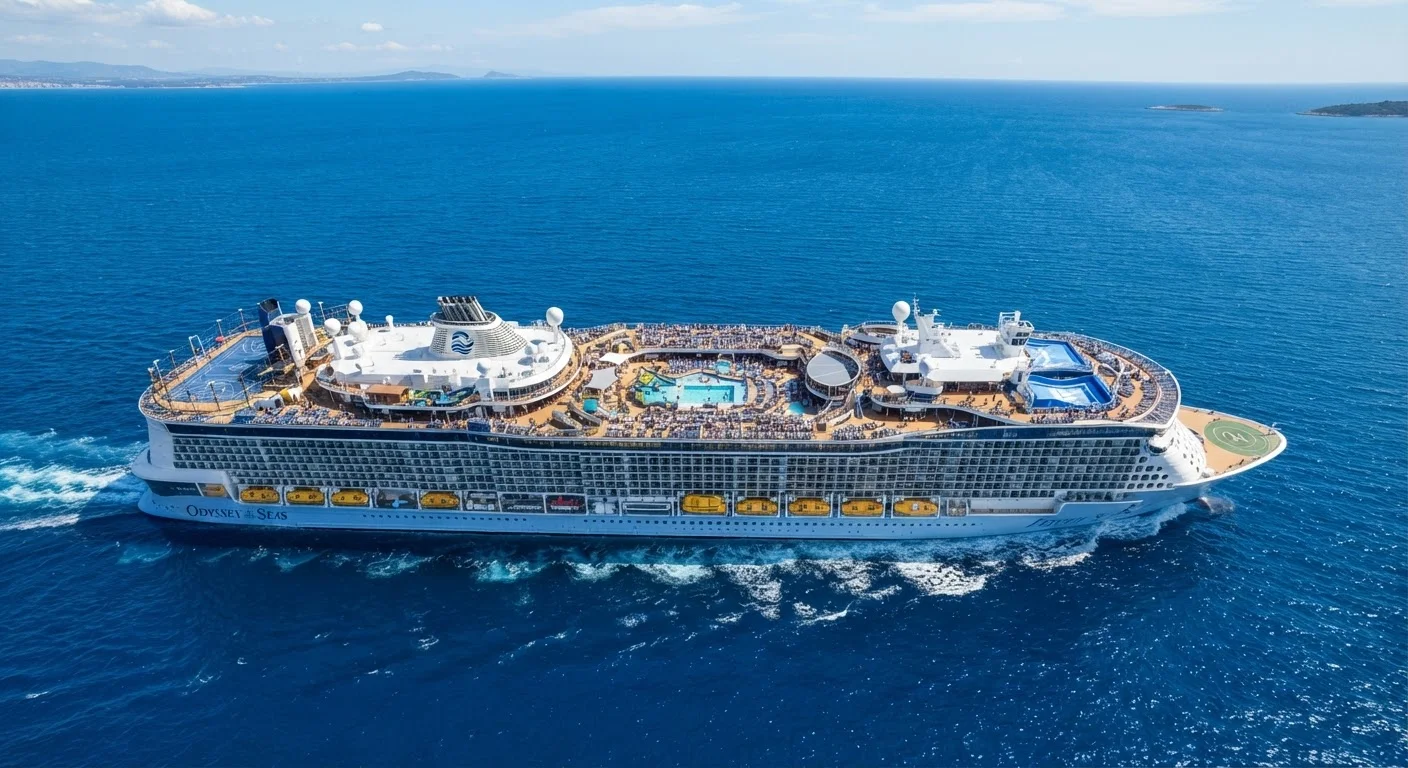
The upper decks - often branded the Lido Deck, Pool Deck, or similar - house the main pools, hot tubs, buffet restaurants, and casual bars. On the largest ships, these spaces extend across multiple decks and may include waterslides, sports courts, go-kart tracks, or observation platforms. The highest accessible deck is typically an open promenade or sun deck, ideal for sea-watching on longer crossings. Transatlantic sea days make these upper-deck amenities central to the experience.
Lido Deck
The primary outdoor deck hosting pools, hot tubs, and casual dining. The term originated with early ocean liners and remains standard cruise industry shorthand.
Tender
A small vessel used to ferry passengers between a ship anchored offshore and the port. Ships that cannot dock at shallow or small ports rely on tenders.
Azipod
A type of electric propulsion pod mounted externally under the hull that rotates 360 degrees, providing both thrust and steering without a traditional rudder.
Atrium
The central vertical lobby of a cruise ship, typically spanning multiple decks. It serves as the social and navigational hub, often housing guest services, bars, and entertainment stages.
Promenade Deck
A deck - usually enclosed or semi-enclosed - that wraps around the full perimeter of the ship, designed for walking laps or enjoying ocean views.
Specialized Spaces Worth Knowing About
Beyond the standard layout, several onboard zones are easy to overlook but matter to the discerning cruiser:
- Spa and Thermal Suite: Typically on an upper mid-ship deck, often with a surcharge for full access. Thermal suites include heated loungers, steam rooms, and hydrotherapy pools.
- Kids' Club and Teen Zone: Usually tucked on an upper or aft deck, purpose-built to keep programming separate from adult areas.
- Medical Center: Located on a lower deck, accessible 24 hours. Capabilities vary significantly by ship size and age - worth checking before a longer voyage.
- Tender Embarkation Decks: On ships that anchor offshore rather than dock, a lower deck serves as the tender (small boat) boarding area. Knowing its location saves time in port.
Understanding the full geography of a ship is one of the key factors experienced cruisers evaluate before booking. A ship's deck plan - available on most cruise line websites - is worth reviewing before you sail.
Deck Plans Are Publicly Available
Most major cruise lines publish detailed deck plans on their websites, showing the location of every cabin, restaurant, pool, and service area. Reviewing the deck plan before you book can help you avoid cabins near noisy venues or high-traffic corridors. It is also useful for understanding walking distances between your stateroom and frequently visited areas on larger ships.