
What a Transatlantic Crossing Actually Looks Like
Most transatlantic cruises run between New York or Fort Lauderdale on the US East Coast and Southampton, Lisbon, or Barcelona in Europe - or the reverse. The crossing covers roughly 3,000 to 3,800 nautical miles of open ocean depending on the route, and typically spans 12 to 16 nights total. Of those, anywhere from five to eight will be pure sea days: no port, no tender, just the North Atlantic stretching in every direction.
That's not a flaw in the itinerary - it is the itinerary. Unlike a Caribbean cruise where the ship is essentially a floating hotel between beach destinations, the transatlantic positions the voyage itself as the primary experience. Understanding that distinction before booking is the single most important piece of trip planning here.
Many crossings operate as repositioning sailings, meaning lines are moving a ship from its winter Caribbean season to a European summer season (or back in autumn). This operational context shapes the experience: itineraries tend to run lean on entertainment programming compared to purpose-built routes, though major lines have invested significantly in sea-day programming in recent years. For a detailed look at how to use those days intentionally, see sea day strategies for experienced cruisers.
Why Ship Size Changes Everything on a Crossing
Ship scale carries consequences on any cruise, but those consequences become magnified when five consecutive days at sea are involved. A 2,500-passenger megaship crossing the Atlantic offers multiple pools, a dozen dining venues, a full spa, a theater running nightly productions, and enough deck space to find solitude even at capacity. A smaller ship - even a premium or luxury one - demands that passengers are genuinely comfortable with limited programming options and a more intimate social environment.
~3,400
Nautical miles in a typical North Atlantic crossing
A New York to Southampton routing covers approximately 3,400 nautical miles, typically at cruising speeds of 20-24 knots across six to eight days at sea.
5-8
Consecutive sea days on most transatlantic itineraries
Most standard transatlantic cruise itineraries include between five and eight uninterrupted sea days, depending on embarkation and disembarkation ports.
This isn't an argument for large ships over small ones - it's a reminder that the calculus shifts. How passenger capacity shapes the onboard experience covers the full trade-off in depth, and those variables apply with particular force to a transatlantic. If you're drawn to boutique vessels, small-ship cruising under 500 passengers is worth reading alongside this article - some intimate ships do run crossings, but the experience is radically different from a large-ship itinerary.
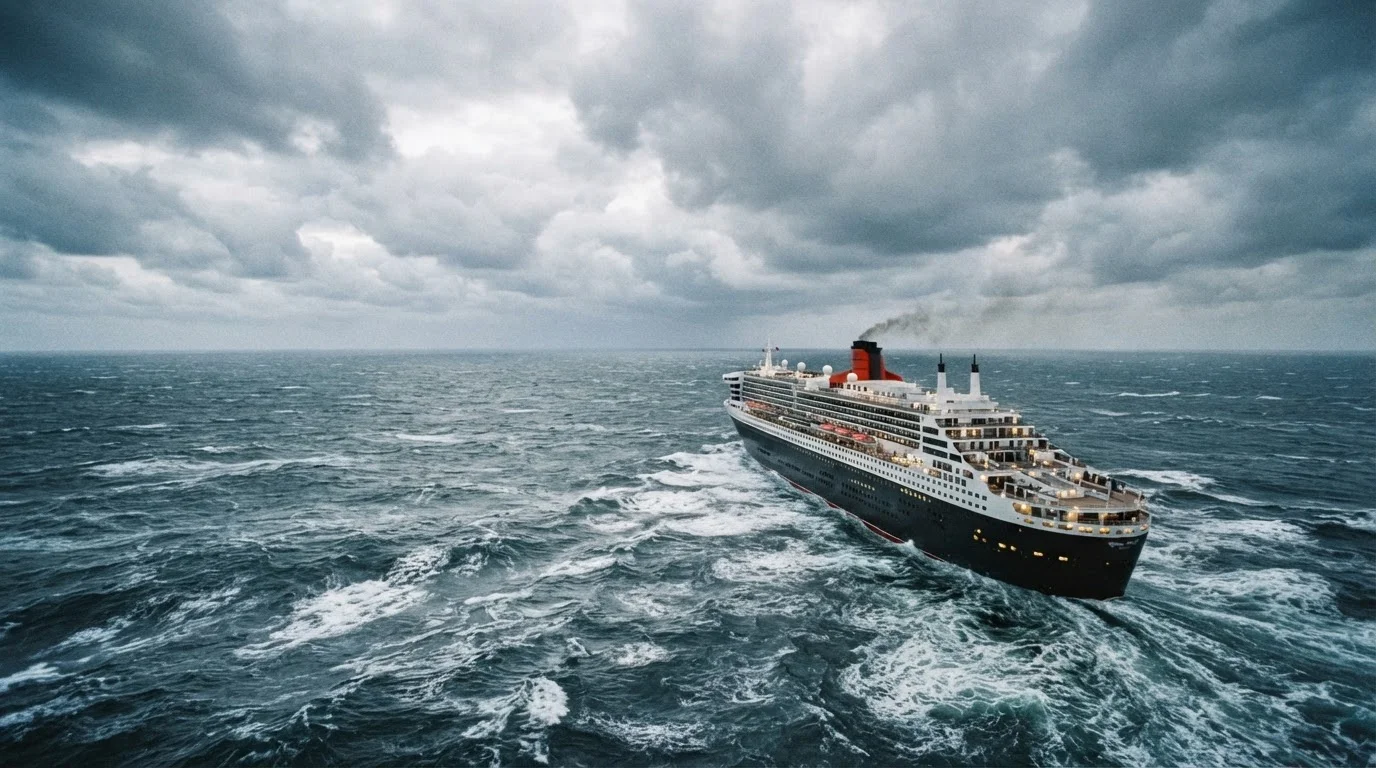
Stability is also a practical consideration. Larger, heavier hulls handle North Atlantic swells more comfortably than smaller vessels. The North Atlantic is not the Caribbean - weather patterns are variable, and seas can run significant even in spring and autumn repositioning seasons.
The Honest Pros and Cons
Transatlantic cruising has a devoted following for good reason, but it also carries genuine trade-offs that deserve a clear-eyed assessment before you commit to 14 nights at sea.
Immersive, unhurried pace unlike any other cruise format
With days of open ocean ahead, the pressure to rush off the ship at every port disappears entirely. Many cruisers describe the crossing as genuinely restorative - a rare form of enforced deceleration.
Repositioning fares often represent strong value per night
Because lines are moving ships for operational reasons rather than selling a marquee itinerary, per-night fares on transatlantic crossings are frequently lower than equivalent Caribbean sailings on the same vessel class.
Rich onboard programming on larger ships
Major cruise lines often enhance sea-day programming on transatlantics with guest lecturers, enrichment series, culinary demonstrations, and themed events that don't appear on shorter itineraries.
Practical intercontinental positioning for extended travel
Arriving by ship into a European port city avoids jet lag and provides a ready-built transition for travelers planning an extended stay on the other side. The ship effectively does the transition work.
Dramatic open-ocean scenery and wildlife encounters
The North Atlantic migration corridor means sightings of seabirds, whales, and dolphins are plausible - particularly in spring and autumn crossings. This is genuinely different visual terrain from the Caribbean.
Five to eight consecutive sea days require genuine comfort with solitude
Travelers who derive energy from port exploration, beach time, or the daily novelty of new destinations may find the extended sea-day stretches tedious. This is the most common source of regret among first-time transatlantic passengers.
North Atlantic weather is variable and can be rough
Unlike the reliably calm Caribbean, the North Atlantic in spring and autumn can produce sustained swells and overcast conditions. A romanticized image of sunny deck chairs may not match the reality for several days of the crossing.
Connectivity is limited and often expensive
Satellite internet across the open Atlantic is slower and more costly than what most travelers are accustomed to. Those with work obligations or heavy streaming habits will find the bandwidth constraints frustrating.
Limited itinerary flexibility once at sea
Unlike a port-heavy itinerary where a bad day in one destination can be offset by the next, the transatlantic offers no such correction. If the experience isn't clicking by day three, there are still five or more days remaining.
Ship-size trade-offs are amplified
A smaller or older ship with limited amenities can feel constraining over a week-plus at sea. Choosing the wrong vessel for a crossing has more consequence than choosing the wrong ship for a seven-night Caribbean run.
For travelers who have done Caribbean or Mediterranean routes repeatedly and want something that feels genuinely different in pace and scope, the transatlantic delivers that contrast. It also serves as a practical bridge segment for those planning extended European travel - arriving by sea into Southampton or Lisbon carries its own unhurried logic that flying simply cannot replicate.
Connectivity, Motion, and the North Atlantic Reality
Visa and Entry Requirements Vary by Direction
Transatlantic crossings involve two different countries or regions for embarkation and disembarkation, each with their own entry requirements. US citizens crossing westbound into a European port will need to verify current entry requirements for that country, including any electronic travel authorization schemes. Eastbound arrivals back into the US are subject to CBP procedures. Always verify current requirements directly with the relevant government authorities and your cruise line before travel - conditions can change independently of your booking.
Internet connectivity on open-ocean crossings has improved substantially as satellite-based systems have expanded, but it remains variable in quality and typically slower and more expensive than shoreside equivalents. The North Atlantic sits outside the range of coastal cell towers for most of the crossing, making satellite the only option. Travelers who need reliable video calls or large file transfers for work should plan accordingly and confirm current connectivity options with their cruise line before sailing.
Motion sickness is a realistic concern. The North Atlantic between roughly 40°N and 55°N can deliver multi-day swells in spring and autumn - the primary repositioning windows. Ships crossing in these months may experience rough seas for one or more days. Passengers prone to motion sensitivity should consult a healthcare professional about prevention options before the voyage; understanding a ship's layout helps here too, since midship cabins on lower decks experience the least movement. For a sense of how a transatlantic fits within far longer voyages, what a world cruise looks like port by port puts the crossing in useful context.