

Defining 'Small Ship': Where the Threshold Actually Sits
The cruise industry uses passenger capacity as its primary sizing metric, and while no single universal definition exists, vessels carrying fewer than 500 passengers are broadly recognized as small ships. Within that category, further distinctions apply: boutique luxury ships typically carry 100-300 guests, expedition vessels often carry 50-200, and upper-premium small ships may reach the 400-500 range while still maintaining a markedly different atmosphere from mass-market ships carrying 3,000 or more.
Understanding capacity matters because it shapes nearly everything else - port access, service ratios, social dynamics, and itinerary design. As the relationship between ship size and onboard experience shows, passenger count is one of the most reliable predictors of what a cruise will actually feel like day to day.
Passenger capacity
The total number of guests a ship is designed to carry at double occupancy. It is the primary metric used to categorize ship size in the cruise industry.
Draft
The depth of a ship's hull below the waterline. A shallower draft allows a vessel to navigate harbors and anchorages that deeper-keeled ships cannot safely enter.
Tender
A smaller boat - often a Zodiac inflatable or a traditional launch - used to ferry passengers between the ship and shore when the vessel cannot dock directly.
Crew-to-passenger ratio
The number of crew members relative to the number of guests onboard. A higher ratio generally means more attentive service; small luxury ships often achieve ratios close to one crew member per guest.
Ice-class hull
A hull construction rating that certifies a vessel can safely navigate through sea ice of a specified thickness, enabling access to polar regions.
Open seating dining
A dining arrangement where guests may sit at any available table at any time within meal hours, rather than being assigned a fixed table and sitting time - common on small ships.
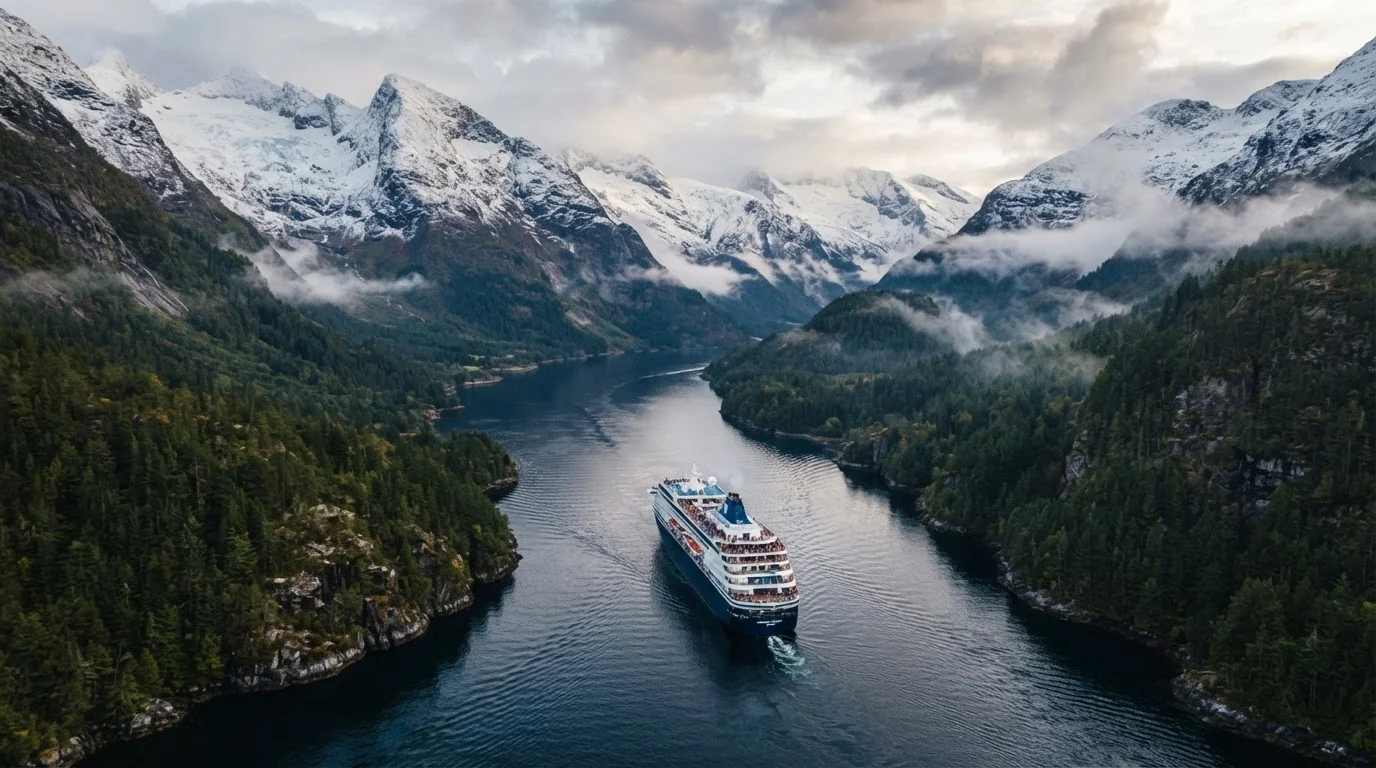
It is also worth noting that hull design, not just capacity, determines where a ship can go. Small ships built for expedition routes often carry ice-class ratings or shallow drafts that allow them to access anchorages simply unavailable to larger vessels.
Port Access and Itinerary Depth
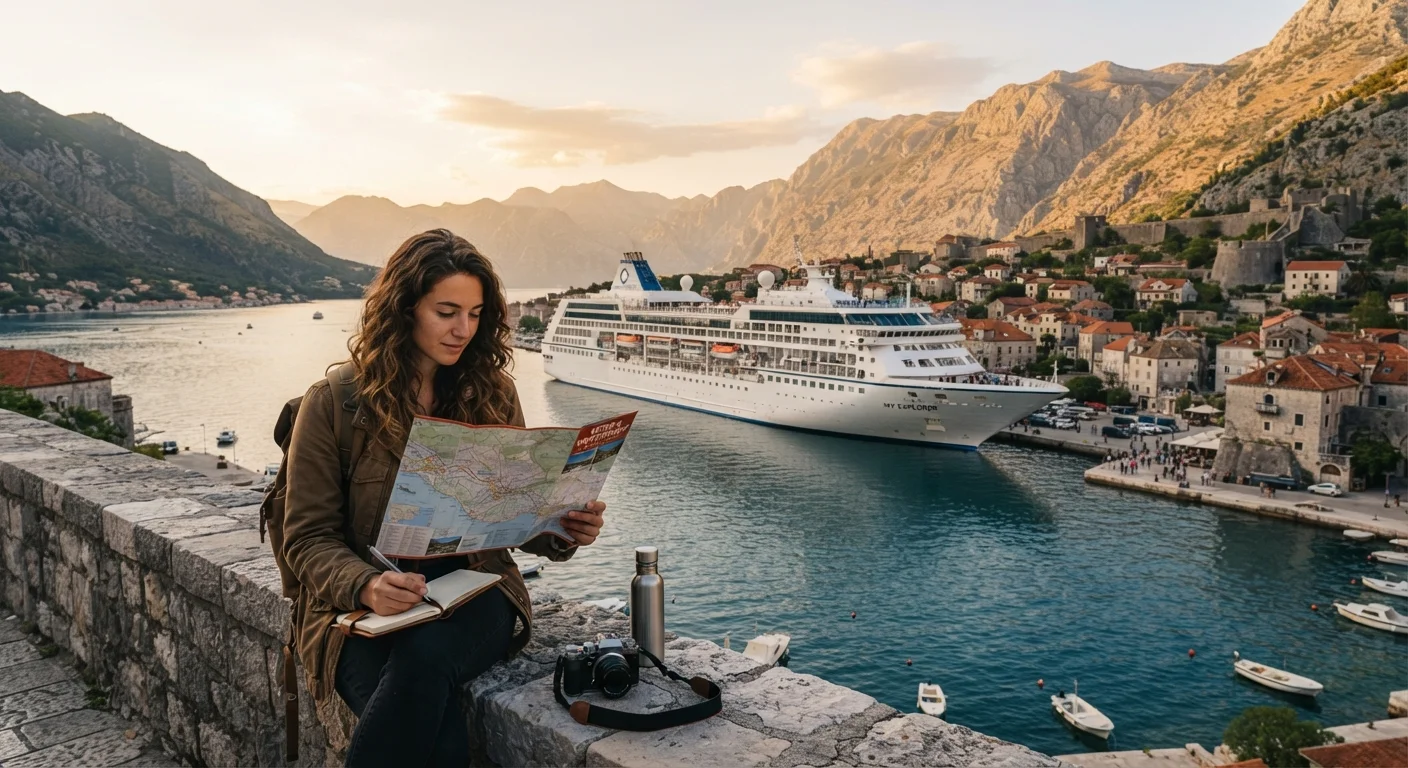
The most concrete advantage small ships hold over megaships is geographic access. Ports with shallow harbors, narrow channels, or limited dock infrastructure - think the archipelagos of the Azores, the inner waterways of Croatia's Dalmatian Coast, or the landing sites of Antarctica - are only reachable by vessels with a modest draft and turning radius. A small ship can anchor in a sheltered bay and use tender boats to reach shore; a 300-meter megaship cannot.
This shapes itinerary philosophy fundamentally. Rather than calling at major commercial ports shared by five or six other ships on the same day, small-ship itineraries often emphasize fewer, less-trafficked stops. Travelers spend more time at each destination rather than competing with thousands of fellow passengers for the same taxis and tour buses. For anyone interested in expedition-style routes to remote regions, a small ship is often not a preference but a requirement.
Verify What's Included in the Fare
Many small-ship operators bundle excursions, gratuities, alcoholic beverages, or specialty gear into the base fare. Before comparing prices against mainstream cruise lines, confirm what each fare actually covers - the all-inclusive structure can significantly change the net cost of the voyage.
Shoulder-season routing can amplify these benefits further. Planning around shoulder season already reduces port congestion; add a small ship and the difference in crowd levels at popular destinations becomes especially pronounced.
Onboard Social Dynamics and Daily Rhythm
With 200 passengers aboard, you will encounter most of your fellow travelers within the first two days. By the end of a week-long voyage, the dining room feels like a gathering of acquaintances rather than strangers. This social compression is one of the small-ship format's most distinctive qualities - and also one that not every traveler finds appealing.
Dining on a small ship is almost always open seating at a single restaurant, with no specialty dining infrastructure and no need for reservations. Lectures, wine tastings, and naturalist briefings typically happen in one shared lounge. The programming is curated rather than comprehensive. For solo travelers in particular, this environment can be socially rewarding - though it is worth separately evaluating what to look for in a ship when cruising alone, since cabin and supplement policies differ meaningfully across small-ship operators.
Staff recognition of guests by name within 24 to 48 hours is common. The crew-to-passenger ratio on many small ships runs higher than on large vessels, which tends to produce attentive, less transactional service - though the style of that service varies by line and positioning.
What You Give Up - and What You Gain
Small-ship cruising involves genuine tradeoffs, and anyone accustomed to megaship amenities should enter with clear expectations. There are no rock-climbing walls, no Broadway productions, no sprawling casino floors, and typically no more than one or two restaurants. Suite categories and cabin square footage are often more modest than large-ship equivalents at similar price points. Stability at sea is reduced - smaller hulls move more perceptibly in open-ocean swells, which is a meaningful consideration for anyone sensitive to motion.
Motion Sensitivity Is a Real Factor
Smaller hulls move more noticeably in open-ocean swells than large ships, regardless of stabilizer technology. Travelers with a history of seasickness should research the typical sea conditions on their chosen route and consult a healthcare professional about prevention strategies before departure. Coastal and sheltered-water itineraries are considerably calmer than trans-oceanic or polar routes.
In return, what travelers gain is concentration. Every onboard element - the guest list, the programming, the excursion design, the meal service - is oriented around a specific experience rather than a mass-appeal menu of options. The details experienced cruisers evaluate before booking - such as hull stabilization specs, included excursion value, and expedition team credentials - matter more on a small ship, where the environment offers fewer fallbacks if expectations are misaligned.
It is also worth noting that small ships from different operators can vary enormously in character. As the variation within a single cruise line's fleet illustrates, the name on the hull tells only part of the story.
Who Small-Ship Cruising Suits Best
Small-ship cruising rewards travelers who prioritize destination over shipboard spectacle. If the primary appeal of a cruise is the ports - their remoteness, their authenticity, or the quality of access - a small ship is almost always the better vehicle. The format also suits travelers who find large anonymous crowds fatiguing and who value a coherent, curated social environment over an exhaustive menu of onboard options.
The format is particularly well-matched to practical cruising strategies that emphasize local immersion: early-morning landings before day-trippers arrive, off-vessel excursions led by specialists, and itineraries built around natural or cultural phenomena rather than commercial port infrastructure. Explore the full range of small-ship and expedition itineraries worldwide to understand the breadth of routes this format makes possible.
Travelers who thrive on resort-scale amenities, who want a wide selection of dining venues, or who prefer the stability of a large hull on open-water crossings will likely find the tradeoffs less compelling. That is not a flaw in the format - it is simply a question of fit. Knowing which category you fall into before booking is the most valuable preparation a prospective small-ship cruiser can do.
Expedition Cruising Route Guide
An overview of how expedition itineraries are structured, what destinations they reach, and what travelers should understand before committing to a polar or remote-island voyage.
Ship Size Comparison Tool
Useful for comparing passenger capacity, crew ratios, and gross tonnage across vessels when researching how a specific ship's scale will shape the onboard experience.
Shoulder Season Cruise Planner
A planning resource for matching small-ship itineraries to shoulder-season windows, helping travelers balance port access, weather windows, and crowd levels.