
A Mountain Range Hiding in Plain Sight
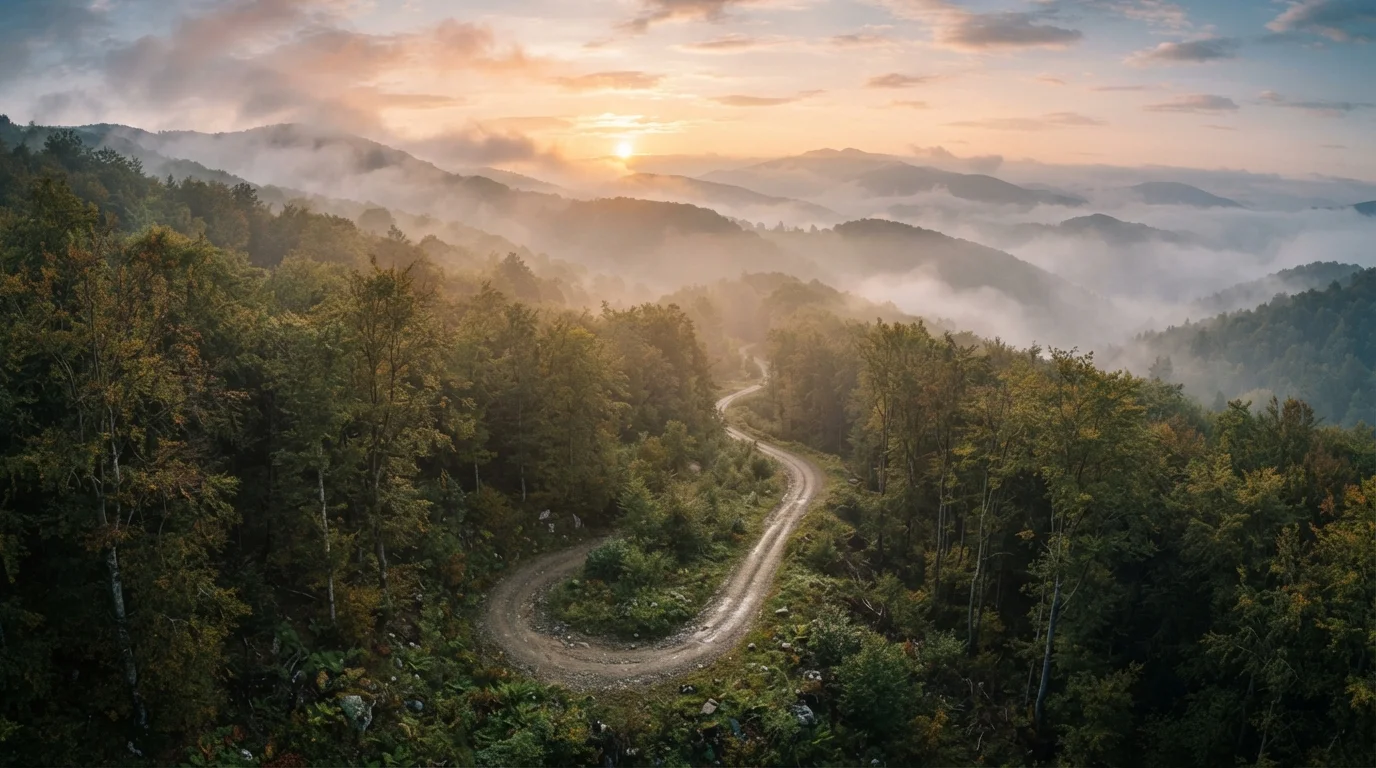
Mention the Carpathians to most frequent travelers and you'll get a vague nod of recognition - something between the Alps and the Balkans, broadly Eastern European, associated perhaps with Transylvania and little else. That vagueness is exactly the problem. The Carpathian arc runs for roughly 1,500 kilometers, sweeping through the Czech Republic, Slovakia, Poland, Ukraine, Romania, Serbia, and Hungary. It contains the largest expanse of primeval temperate forest in Europe, hosts wolf, lynx, and brown bear populations that have long since vanished from Western ranges, and shelters an extraordinary layering of cultures - Saxon, Székely, Hutsul, Rusyn, and Vlach, among others - that rarely make it into mainstream travel narratives.
The mistake isn't ignoring the Carpathians entirely. It's treating them as scenery to be glimpsed from a train window or a one-night stopover en route somewhere else. The seven mistakes below are what experienced Carpathian travelers consistently identify as the ones that cost visitors the most.
Treating the Carpathians as a Romanian attraction rather than a transnational range.
Why it happens: Transylvania's marketing reach is considerable, and Dracula tourism has anchored Western awareness firmly in Romania. Most itinerary builders simply don't visualize the range continuing north and west through five other countries.
Allocating only two or three days to a region that realistically requires ten or more to experience meaningfully.
Why it happens: The Carpathians don't have an iconic single landmark equivalent to Plitvice or the Matterhorn, so travelers underestimate their spatial scale and treat them as a side trip rather than a primary destination.
Assuming a single main road covers the most interesting terrain.
Why it happens: GPS routing defaults to efficiency, sending drivers through valley corridors and bypassing the ridge roads and transhumance tracks where the landscape and cultural heritage actually concentrate.
Skipping the pastoral and village culture in favor of only the mountain summits and castle ruins.
Why it happens: Visual content from the region disproportionately features dramatic peaks and medieval fortifications, which is what draws travelers - but the living culture of shepherd communities, wooden churches, and weekly markets is often what stays with people longest.
Overlooking the Carpathians' wildlife access, which is among the most significant in continental Europe.
Why it happens: Travelers don't expect to encounter megafauna in Europe outside of Scandinavia, and wildlife-focused tour options in the region are underrepresented in mainstream travel planning tools.
Assuming border crossings between Carpathian countries are uniformly straightforward and fast.
Why it happens: EU freedom of movement has made many Western European travelers complacent about border logistics, and they don't always verify which crossings are open to private vehicles, have extended hours, or accept rental cars from foreign agencies.
How to Travel the Carpathian Route with the Depth It Deserves
Understanding what the region actually requires - in time, in flexibility, and in attitude - transforms a rushed transit into one of Europe's genuinely formative travel experiences.
~1,500 km
Length of the Carpathian arc
The Carpathian Mountains stretch approximately 1,500 kilometers across Central and Eastern Europe, spanning seven countries from the Czech Republic to Serbia.
~250,000 km²
Total Carpathian watershed area
The Carpathian Convention, a multilateral environmental treaty signed by the seven arc countries, covers roughly 250,000 square kilometers of mountain ecosystem.
~8,000
Brown bears in Romania's Carpathians
Romania holds one of Europe's largest brown bear populations, concentrated in the Carpathian forests - a figure cited in conservation assessments by the WWF Danube-Carpathian Programme.
Slovakia's Tatra Mountains reward those who linger past the main Štrbské Pleso viewpoint; the trail east toward Lysá Poľana passes through valleys that see a fraction of the western entry crowds. In Romania, the Apuseni plateau in the western Carpathians offers karst caves, wooden churches, and agricultural villages largely untouched by domestic tourism, let alone international. For context on the richer story Transylvania's Carpathian foothills contain, see our deep-dive into Saxon villages and bear trails.
Timing matters considerably. The Carpathians at peak summer are busy at well-known entry points but genuinely empty at the ridge level and in the agricultural valleys below. Late May and September offer mild conditions, functioning guesthouses, and wildflower or harvest-season landscapes respectively. For a fuller picture of how shoulder-season logistics play out in Eastern Europe more broadly, our off-season travel guide for secret Europe covers the closures, transport shifts, and gains worth planning around.
Verify Entry and Rental Permissions Before You Go
Visa requirements, border crossing hours, and rental car cross-border policies vary across the seven Carpathian countries and can change with limited notice. Always check current entry requirements with the official embassy or government travel advisory of each country you plan to visit, and confirm vehicle permissions directly with your rental provider before departing. Do not rely solely on travel blogs or booking platform descriptions for this information.
Ground logistics across the arc vary sharply. Romania's Moldovita and Sucevita monasteries in the painted Bucovina region require a rental car or a dedicated local guide - bus connections exist but are infrequent. Poland's Bieszczady range, in the far southeastern corner bordering Ukraine, has almost no tourist infrastructure outside Ustrzyki Dolne, which is precisely why it feels like the Carpathians of forty years ago. Travelers who misread this as underdevelopment rather than authenticity miss one of the most rewarding stretches on the entire route. If persistent myths about Eastern European travel are holding you back, our piece on common misconceptions addresses the safety and logistics questions that most frequently come up.
The Carpathian route, done honestly, is not a checklist. It is a corridor through a Europe that developed differently - and for travelers who have already done Slovenia end to end or pushed into North Macedonia's lake country, it represents the logical next step outward from the edges of familiar Europe.