
How Onboard Dining Is Structured
Modern cruise ships - particularly larger ocean vessels - organize dining into three broad tiers: the all-included main dining room, the grab-and-go buffet (also included), and specialty restaurants that carry a per-person or per-meal surcharge. The specific lineup varies considerably depending on ship class and cruise line, so it's worth reviewing what's aboard your particular vessel before sailing. For a broader look at how dining structures differ across lines and ship types, see our overview of cruise ship dining structures.
Understanding the tradeoffs between these venues - atmosphere, cost, flexibility, and quality - lets you plan a sailing where meals become a highlight rather than an afterthought. Ship size also plays a role: a 6,000-passenger megaship may have a dozen specialty restaurants, while a smaller vessel might offer one or two. Ship size shapes the entire dining ecosystem, from crowd levels at the buffet to how easily you can snag a last-minute specialty reservation.
Specialty Restaurants: Elevated Experiences at a Price
Specialty restaurants represent the top of the onboard culinary hierarchy. Expect focused menus - a Japanese teppanyaki room, a steakhouse, an Italian trattoria, or a chef's-table tasting experience - alongside more attentive service ratios and distinct décor that sets them apart from the ship's general dining spaces.
The surcharge typically ranges from roughly $25 to $75 or more per person depending on the concept and cruise line, with chef's table formats often sitting at the higher end. Many lines bundle specialty dining packages at a discount when purchased before embarkation, though the value depends on how many nights you'd realistically use them.
Book Specialty Dining Before You Board
Most cruise lines allow specialty restaurant reservations through their app or website before embarkation. Popular venues - particularly chef's table formats and steakhouses - fill quickly on sea days. Securing your preferred time slot in advance avoids the frustration of finding only early or very late seatings available once you're onboard.
Where specialty restaurants truly shine is on sea days, when the pacing of a long meal feels like part of the experience rather than an obstacle. They also work well for anniversaries, birthdays, or any evening where atmosphere matters as much as the food itself. One practical note: experienced cruisers typically review specialty dining options before booking, since the lineup varies widely between ships even within the same fleet.
The Main Dining Room: The Classic Cruise Standard
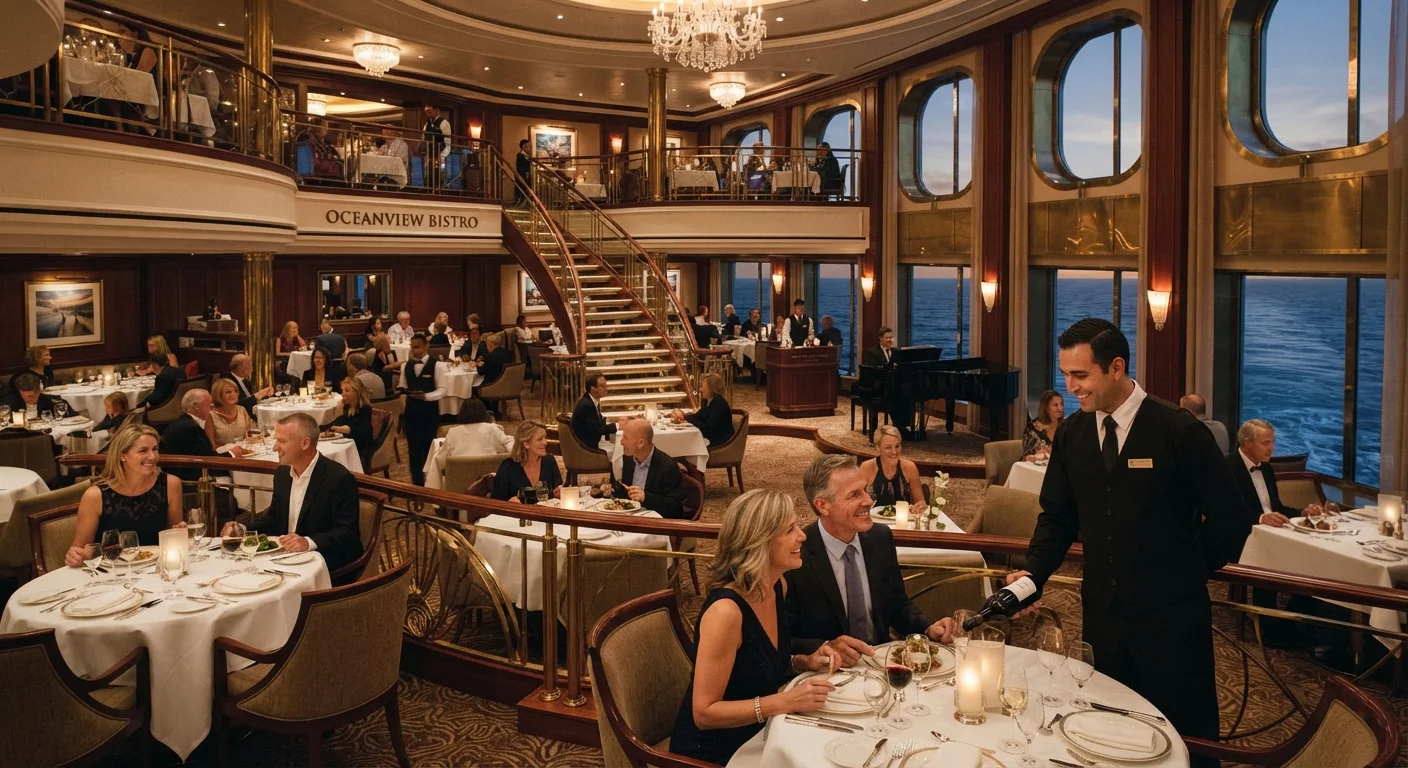
The main dining room (MDR) is the backbone of onboard dining - a multi-course, waiter-served restaurant included in the base fare. Most ships offer two seating options: traditional fixed seatings (early and late) or a flexible anytime-dining format where you arrive when you like and are seated as tables become available.
Menus rotate nightly and typically include regional specials alongside familiar options, with vegetarian and dietary-accommodating dishes becoming increasingly standard. The service is attentive and the formality sits somewhere between casual and dressed up, depending on whether the ship schedules formal nights.
| Specialty Restaurant | Main Dining Room | Buffet | |
|---|---|---|---|
| Included in fare | No - surcharge applies | Yes | Yes |
| Atmosphere | Intimate, concept-driven | Classic, semi-formal | Casual, open-plan |
| Service style | High ratio, attentive | Waiter-served, multi-course | Self-serve |
| Flexibility of timing | Reservation required | Fixed or anytime seatings | Extended hours, walk-in |
| Menu variety | Focused, curated | Rotating nightly menu | Broad, station-based |
| Best suited for | Occasions, sea days | Consistent nightly dining | Port days, casual meals |
| Typical meal duration | 90-120 minutes | 75-100 minutes | 20-40 minutes |
The MDR's main limitation is time: a full dinner can take 90 minutes or more, which doesn't suit every evening - particularly when you've spent a long day in port. It also tends to be busiest between 7 and 8 p.m., so arriving at off-peak times under anytime dining can reduce wait times considerably. For those who appreciate uncrowded spaces generally, the ship's quieter spaces and off-peak dining spots are worth seeking out across the board.
The Buffet: Maximum Flexibility, Varying Quality
The buffet - often called the Lido Restaurant, Windjammer, or a line-specific branded name - operates on an extended schedule, typically from early morning through late evening, with some form of late-night offering on many ships. It's entirely included, self-serve, and designed for speed and variety rather than occasion.
Quality varies more at the buffet than anywhere else onboard. Breakfast tends to be consistently strong across most lines. Dinner can range from surprisingly well-executed regional stations to straightforward steam-table fare. On port-intensive itineraries, the buffet's ability to accommodate an 11:30 a.m. lunch or a rushed 6:30 p.m. dinner before an evening excursion makes it genuinely valuable - not a fallback, but a practical tool.
Crowd dynamics matter here too. Passenger volume directly shapes the buffet experience - a mid-sized ship at peak hours can feel congested in ways that undercut the casual convenience the format promises. Arriving 20 to 30 minutes ahead of peak meal times largely solves this.
Choosing the Right Venue for Each Night
The most seasoned cruisers don't default to one venue for the entire sailing - they read the day and choose accordingly. A rough framework that holds across most ships:
- Sea days: Specialty restaurant for dinner, MDR for a relaxed lunch if offered, or the buffet for a casual breakfast.
- Port days: Buffet for flexible timing; MDR if you're back early and want a proper sit-down without the surcharge.
- Formal or celebration nights: MDR or a specialty restaurant - both rise to the occasion.
- Early departures or late port returns: Buffet, without question.
It's also worth remembering that dining options and quality shift between ships within the same brand. The same cruise line can feel entirely different depending on the ship, and that extends to the dining program. Reviewing menus, checking which specialty restaurants are aboard your specific vessel, and booking coveted reservations early - ideally before you board - will get you the most out of every meal at sea.