
The Baseline: What Every Cruise Fare Typically Covers
Regardless of cruise line or ship size, a standard fare almost always includes two core dining venues: a main dining room and a lido buffet. These are the anchors of the onboard food program and require no additional payment or reservation.
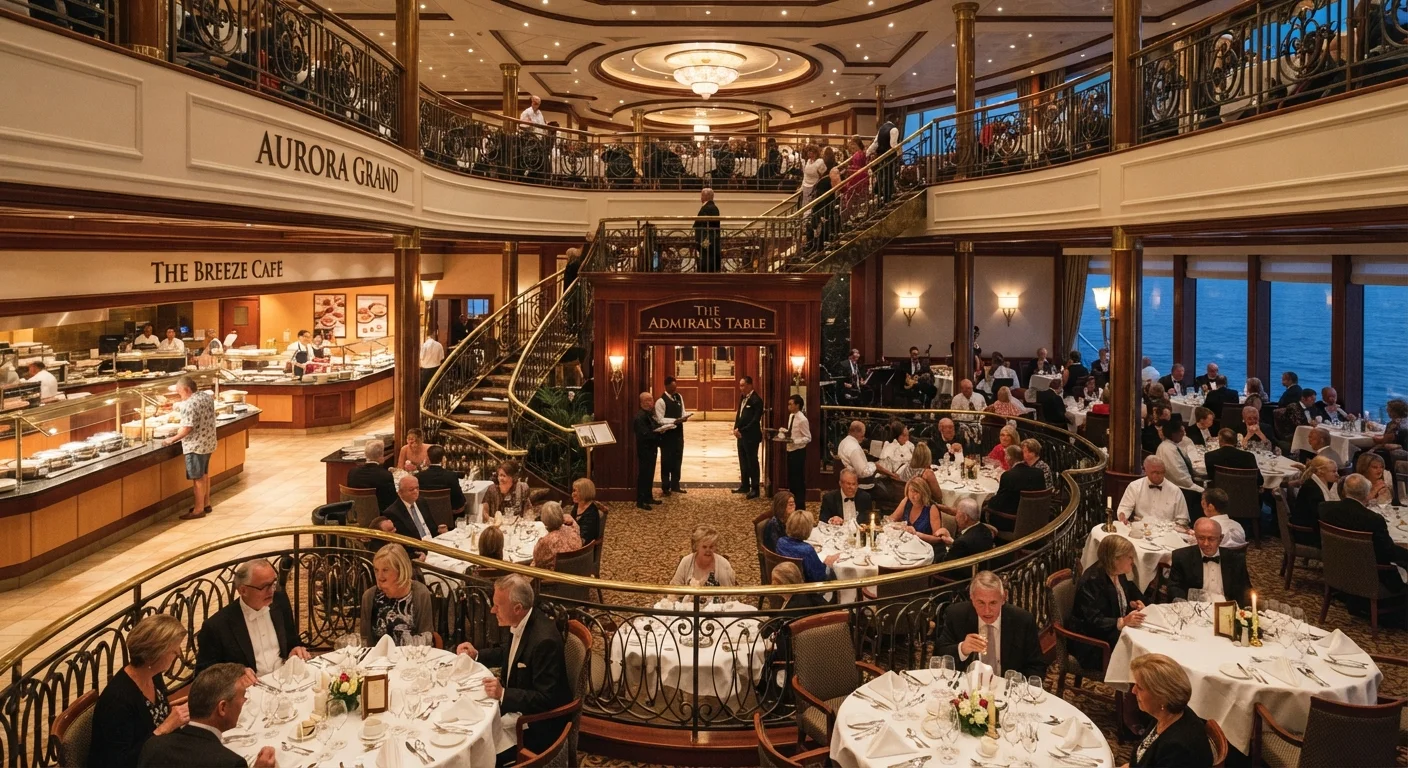
The main dining room is typically a formal or semi-formal multi-course venue serving breakfast, lunch, and dinner on a rotating menu. Buffets - usually located on an upper pool deck - run longer hours and trade plated service for self-serve convenience. On shorter or budget-oriented sailings, these two venues may represent the entirety of complimentary dining. On larger or premium ships, the included tier often expands to include a casual bistro, a poolside grill, or a café.
Understanding what's genuinely included before you sail matters, because the gap between lines can be significant. As explored in our guide to how experiences vary within a single brand, even ships under the same cruise line name can differ in their complimentary dining breadth depending on ship class and age.
8-15
Distinct dining venues on a typical megaship
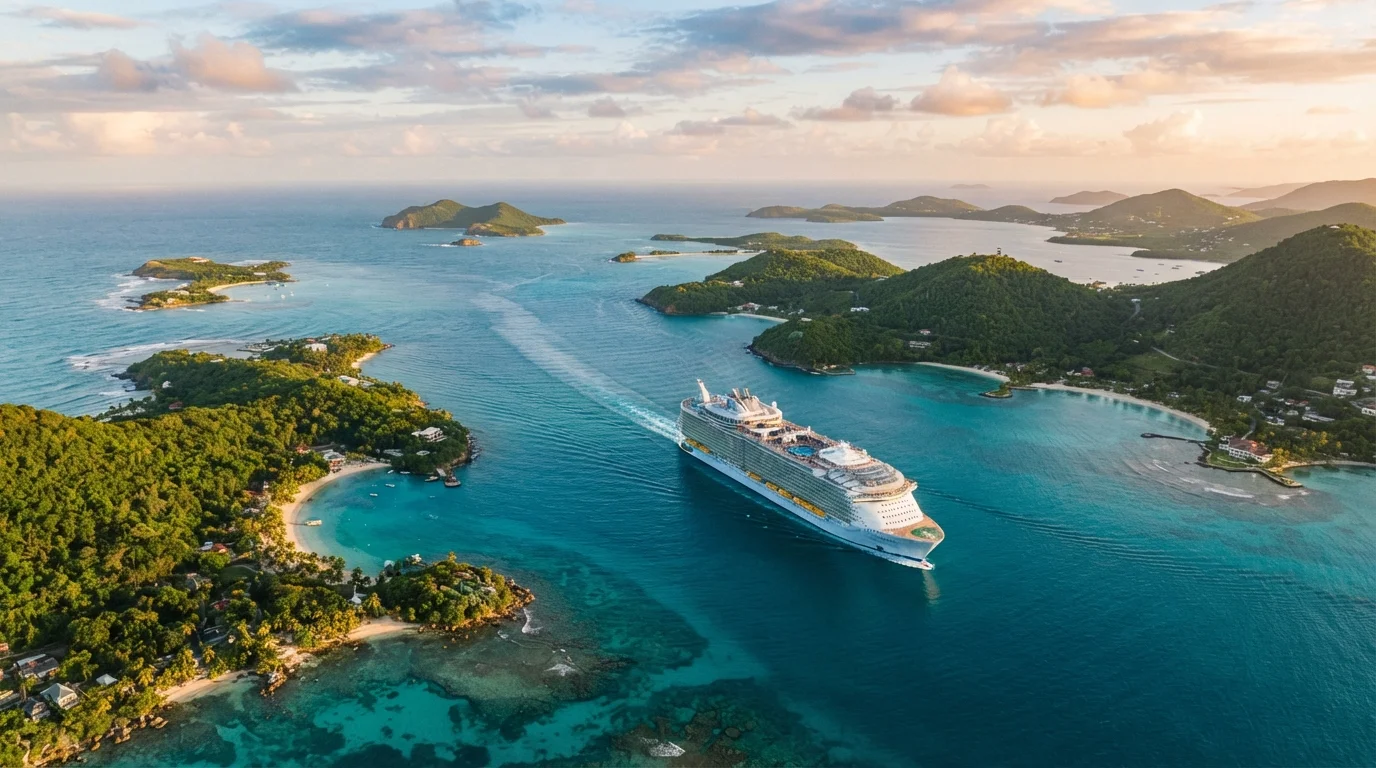
Large contemporary ships carrying 4,000+ passengers commonly feature this range of specialty and complimentary restaurant concepts.
$20-$60+
Typical specialty restaurant surcharge per person
Per-visit fees at specialty restaurants vary widely by cruise line and venue type; chef-branded or premium concepts tend to sit at the upper end of this range.
1-2
Dining venues on small expedition ships
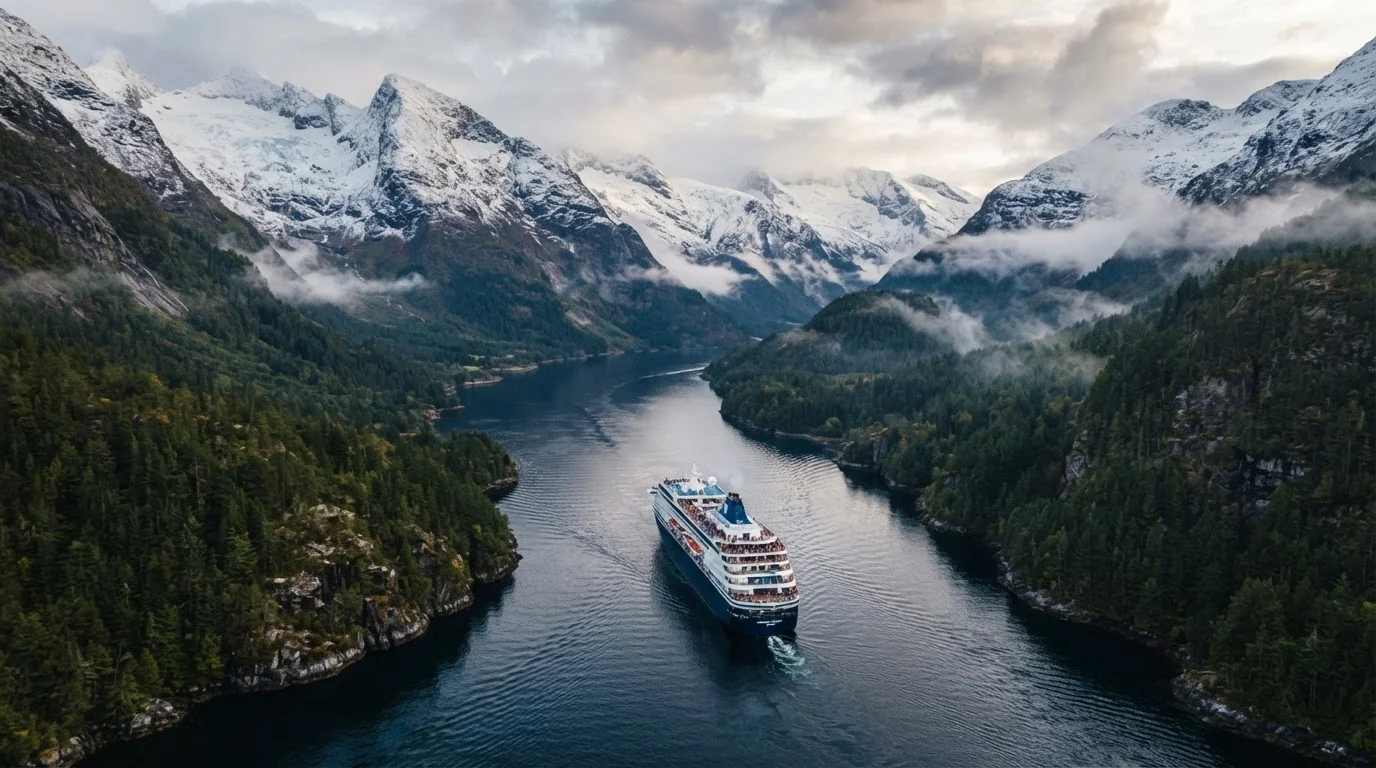
Boutique and expedition vessels with under 300 guests often concentrate dining into a single main restaurant and a casual alternative, emphasizing quality over variety.
Seating Formats: Fixed vs. Flexible Dining
How you access the main dining room depends on the line's seating philosophy, and this affects your entire evenings-at-sea rhythm.
- Traditional fixed seating: Passengers are assigned a specific dinner time - typically early (around 6 p.m.) or late (around 8:30 p.m.) - and a permanent table for the voyage. This structure suits travelers who prefer routine and enjoy building rapport with the same waitstaff nightly.
- Anytime/open seating: Passengers dine whenever they choose during service hours, seated with different guests each night. Popular with independent travelers, though it can mean wait times during peak hours.
- Hybrid models: Many contemporary ships now offer both options, letting passengers choose per sailing or even per evening in some cases.
River cruise lines and smaller expedition vessels often operate a single-seating arrangement for all passengers - everyone dines together at the same time, creating a more communal, lodge-like atmosphere that feels distinct from ocean cruising's scale.
Book Specialty Restaurants Early
Popular specialty venues on large ships - particularly chef-branded or tasting-menu concepts - can fill up quickly. Many lines allow dining reservations to be made before sailing through their online portals. Booking ahead, especially for the first and last nights when demand peaks, helps you secure your preferred time without disappointment.
Specialty Restaurants: The Surcharge Tier Explained
Specialty dining represents the premium layer of any ship's food program - venues that charge a per-person fee above your fare in exchange for a more refined or niche culinary experience. On large contemporary ships, this can mean a dozen or more concepts: Japanese teppanyaki, dry-aged steakhouses, Italian trattorias, or chef-branded tasting menus.
Surcharges are structured in one of two ways: a flat cover charge per person per visit, or à la carte pricing where individual dishes carry separate costs. Dining packages - pre-purchased bundles of specialty restaurant visits - are offered by most mainstream lines and can represent reasonable value on voyages of seven nights or more if you intend to visit multiple venues.
The breadth of specialty options correlates closely with ship size. Megaships carrying 4,000+ passengers routinely feature eight to fifteen distinct restaurants; boutique vessels with 200-500 guests may offer one or two. Our breakdown of how ship size shapes the onboard experience covers how passenger capacity affects dining density alongside other onboard factors.
Luxury Lines and All-Inclusive Dining
At the luxury and ultra-luxury end of the market, the surcharge model largely disappears. Lines operating in this space typically bundle specialty dining into the base fare, meaning passengers move freely between venues - from a casual terrace lunch to a formal tasting menu dinner - without tracking costs. This all-inclusive philosophy extends in many cases to premium beverages and in-suite dining as well.
The trade-off is a higher per-night fare that can be considerably steeper than mainstream alternatives. For frequent cruisers who find specialty dining surcharges accumulating quickly, the arithmetic can favor an all-inclusive sailing. Whether that math works for your itinerary and travel style is a planning consideration worth assessing before booking - see our pre-sailing research framework for a structured approach to comparing ships before you commit.
“Dining is no longer just sustenance on a cruise - it has become a central part of the product itself, with food and beverage programs now engineered to shape the entire onboard identity of a ship.”
— Cruise Industry Analysts, Cruise industry commentary, widely cited in trade reporting on onboard revenue trends
World cruises represent perhaps the most demanding dining-structure test: passengers eating onboard for 100+ nights need variety and quality to hold. Our port-by-port look at world cruise structure covers how extended voyages handle this challenge across months at sea.
For practical strategies on navigating onboard dining choices once you're aboard, explore the Cruise Life Hacks hub for tips from experienced cruisers.