
How Each Technology Actually Works
Understanding the underlying mechanism of each option is the fastest way to set realistic expectations before you board.
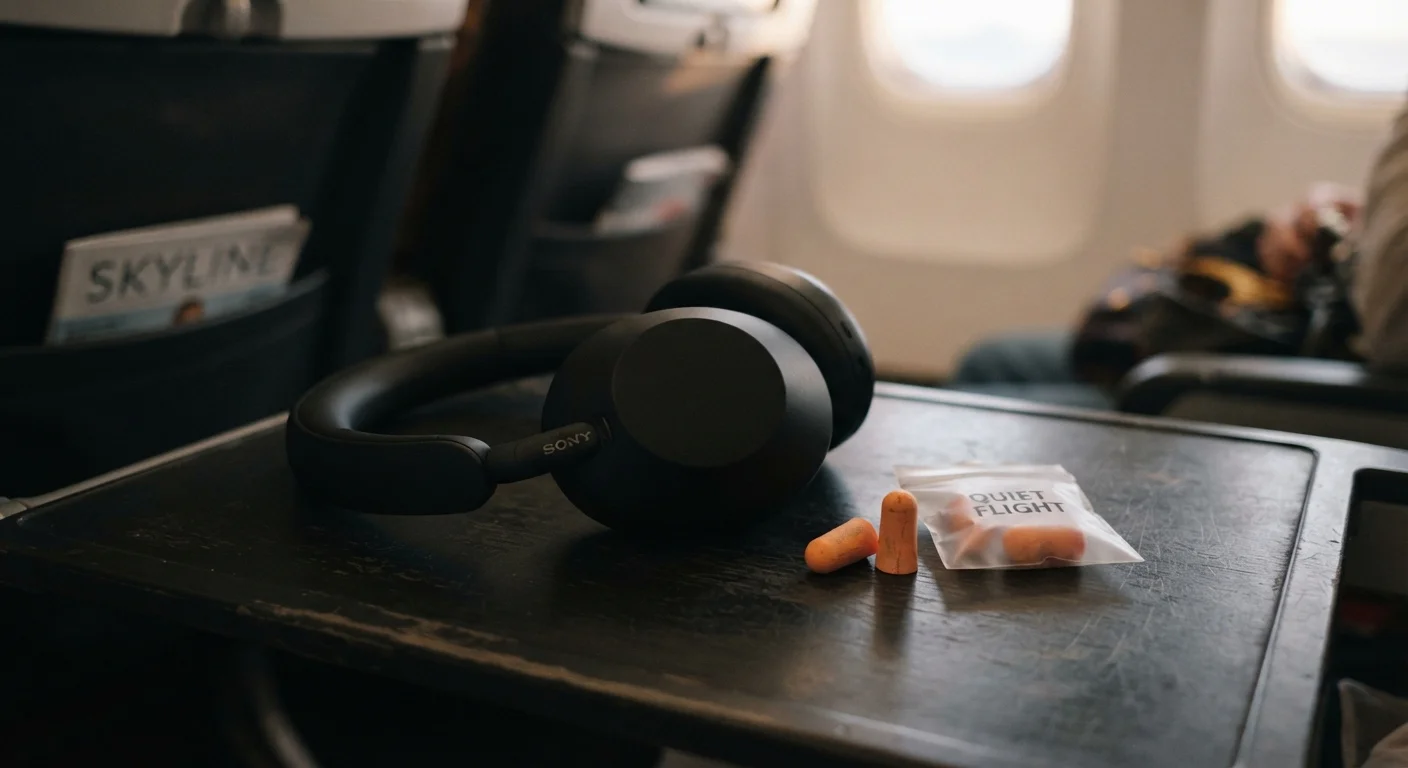
Earplugs work through passive attenuation - they physically block the ear canal, creating a barrier that reduces the sound pressure reaching your eardrum. Foam earplugs are rated by a Noise Reduction Rating (NRR), a standardized measure developed under U.S. EPA guidelines. High-quality foam plugs can achieve NRR values of 30 dB or higher, which is meaningful in a cabin environment typically measuring around 85 dB during cruise. They reduce higher-frequency sounds - voices, announcements, crying infants - quite effectively. Engine rumble, which sits at lower frequencies, is attenuated less efficiently by passive plugs alone.
Noise-cancelling headphones use active noise cancellation (ANC): small microphones on the ear cups sample ambient sound, and onboard processors generate an inverse sound wave to cancel it out before it reaches your ears. This approach is specifically effective against the steady, predictable low-frequency rumble of jet engines - exactly the sound that passive earplugs handle least well. ANC requires a charged battery to function; without power, most models still provide some passive isolation through their padded ear cups, but ANC performance drops to zero.
Earplugs and Ear Pressure: A Common Misconception
Some travelers assume wearing earplugs during ascent and descent will help with ear pressure pain. They will not - pressure equalization is a physiological process involving the Eustachian tube, not sound blocking. Earplugs may actually make it harder to notice early pressure build-up. Always verify any health-related concerns with a qualified healthcare professional before flying.
If you experience ear pain during ascent or descent, note that neither earplugs nor ANC headphones are designed to equalize pressure - that's a separate mechanism. See our guide to managing ear pressure and barotrauma for strategies specific to that problem.
Practical Trade-offs: Comfort, Convenience, and Cost
| Criterion | Noise-Cancelling Headphones | Earplugs |
|---|---|---|
| Noise reduction mechanism | Active (electronic cancellation) | Passive (physical barrier) |
| Best at reducing | Low-frequency engine rumble | Mid/high-frequency voices, announcements |
| Requires battery | Yes | No |
| Weight and bulk | Significant (150-350g typical) | Negligible (under 5g) |
| Audio playback | Yes | No |
| Typical cost range | High | Very low |
| Long-wear comfort | Moderate (ear cup pressure, heat) | Moderate (canal pressure over time) |
| Sleep-position flexibility | Lower (bulk limits positions) | Higher (low profile) |
Beyond the technology, the real-world experience of wearing each option for eight or more hours matters considerably.
Foam earplugs become uncomfortable for many travelers after two to three hours of continuous wear, particularly for side sleepers who press their ear against a seat or pillow. Flanged silicone earplugs conform more precisely to the ear canal and are often tolerated longer, though fit varies significantly by individual anatomy. Neither type can be adjusted mid-flight without removing them entirely.
Over-ear ANC headphones introduce their own comfort challenges: pressure on the ears and head from clamping force, heat buildup around the ear cups, and the physical size that makes rest positions more awkward. For travelers trying to sleep against a window, a bulky headphone cup can make achieving a comfortable angle genuinely difficult - pairing headphones with a well-fitted travel pillow helps. Our guide to choosing a travel pillow for your sleep position covers how to match pillow design to headphone use.
Cost is a straightforward differentiator. Disposable foam earplugs cost cents per pair; reusable silicone options cost a few dollars and last many trips. ANC headphones represent a significantly larger investment. The question for frequent flyers is whether the comfort return - particularly on overnight flights - justifies that gap.
Making the Right Call for Your Flight
There is no universal answer, but flight length and your in-flight priorities narrow the decision considerably.
~85 dB
Typical cruise-phase cabin noise level
Aircraft cabin noise during cruise is generally measured in the 80-85 dB range, comparable to heavy city traffic, according to aviation research literature.
NRR 33
Maximum noise reduction rating for foam earplugs
The highest-rated foam earplugs on the U.S. market carry an NRR of 33 dB under EPA standardized testing conditions; real-world attenuation is typically lower due to fit variation.
20-30 dB
Typical ANC reduction for low-frequency noise
Independent audio testing has found that leading ANC headphones reduce steady low-frequency sounds, such as engine rumble, by roughly 20-30 dB under real-world conditions.
On flights under four hours, earplugs are almost always the more practical choice - the battery anxiety, the bulk, and the setup time of ANC headphones rarely pay off on short hops. On overnight routes exceeding eight hours, the sleep-quality argument for ANC headphones becomes much stronger, particularly if engine noise is your primary disruptor.
Some experienced long-haul travelers use both simultaneously: foam earplugs worn under ANC headphones. This combines passive high-frequency attenuation with active low-frequency cancellation, and reduces the listening volume needed when using headphones for audio - a consideration for anyone optimizing their sleep strategy in economy or premium economy.
If you're undecided, start with high-quality earplugs. They're inexpensive, universal, and genuinely effective. If you find cabin noise continues to disrupt sleep or concentration across multiple long-haul trips, that's the clearest signal that ANC headphones would deliver a meaningful upgrade to your travel experience.